JUL 23 2026 · SACRED VALLEY, PERU · TRAVEL
Peru, Part Two: Into the Sacred Valley
Morning arrived quietly over Lima.
For the first time since stepping onto Peruvian soil, it finally felt as though the real expedition was about to begin as we made our way to Cusco. The bustling capital had welcomed us with open arms, introducing us to the country’s food, culture, and rhythm, but our eyes had been fixed on somewhere much farther away. The Andes were waiting.
Six of Us, Three on the Ground
There were six of us taking part in this journey, although only three had made the trip to Peru.
Here with me were Jacob and Yeshua.
Thousands of miles away, three more people quietly formed the backbone of our little expedition.
Faithe, Kris, and Glenn remained in their own home countries, cheering us on from afar, following our progress through messages and photographs while continuing with their everyday lives.
Faithe, from New Zealand, has spent nearly seven decades walking a deeply spiritual path. She was born into a Māori family with a long lineage of Matakite, a word used to describe seers, healers, and those with heightened intuitive gifts. She is one of six sisters, each of whom she says carries their own unique abilities. Three still live close enough that they regularly support one another, describing themselves as each other’s wingwomen through every season of life.
For more than twenty years, Faithe has traveled the world following what she simply calls “the call.” Those journeys have taken her across continents, introducing her to people she believes are part of her soul family. It was through those experiences, meeting people from vastly different cultures and walks of life, that one conviction became deeply rooted within her: despite our differences, there is ultimately only one race on Earth, the human race.
Faithe often speaks of humanity’s relationship with the Earth and believes that many people choose to incarnate here with a specific purpose. In her view, some arrive as guardians, grid workers, ancestral flame keepers, record holders, or beings connected to what she describes as star lineages. Rather than seeing Earth as a place to escape, she believes it is a place to anchor into, helping restore harmony by living from coherence instead of sacrifice.
Much of her work centers on creating gentle spaces for integration rather than dramatic transformation. Instead of encouraging people to force change or endlessly analyze themselves, she emphasizes allowing the nervous system to settle naturally, trusting that clarity often arises through presence, patience, and compassion. To support that philosophy, she has even created musical playlists designed to encourage rest, regulation, and quiet reflection.
Here’s one she gave me for nervous system recalibration: her playlist on Suno.
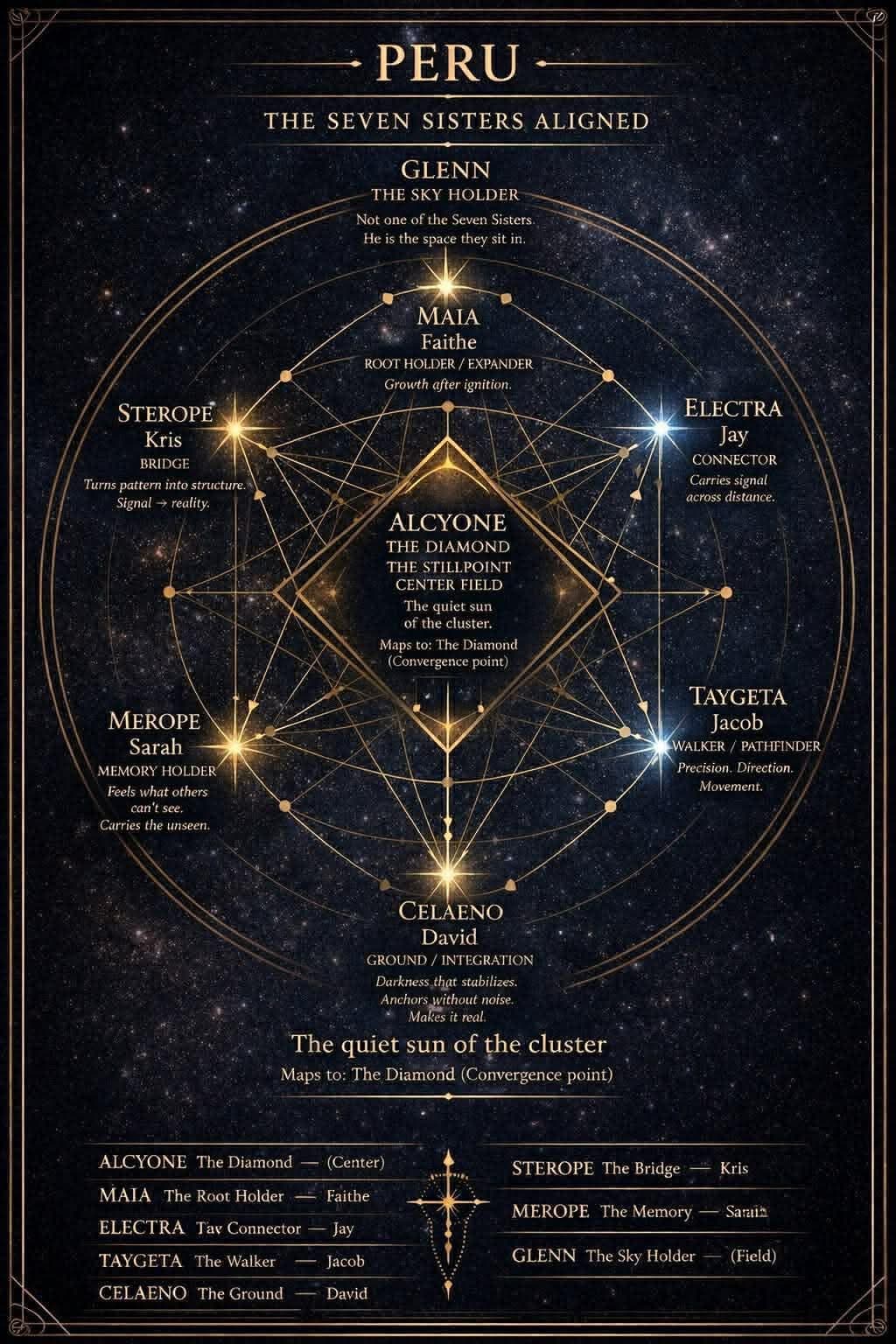
If Faithe carries the quiet wisdom of an elder, Glenn carries an equally steady sense of peace. After spending many years working in the technology and aerospace sector for a government contractor, he now devotes much of his time to meditation, consciousness, and what he calls the remembrance of the Divine Mother.
Whenever life becomes uncertain, Glenn’s advice is remarkably consistent: “Let Divine Mother and the Universe reveal the answer.” His calm presence rarely wavers, and he has a gift for helping others slow down, trust the process, and reconnect with themselves.
Glenn believes many of the world’s challenges stem from an imbalance between masculine and feminine energies. Through practices such as BioGeometry and BG3 energy alignment, he explores the relationship between consciousness, place, and harmony. Long before our Peru expedition, he and I had spent many conversations discussing sacred locations around the world, including Crestone, Colorado, a place many spiritual seekers have come to regard as a modern-day Tibet.
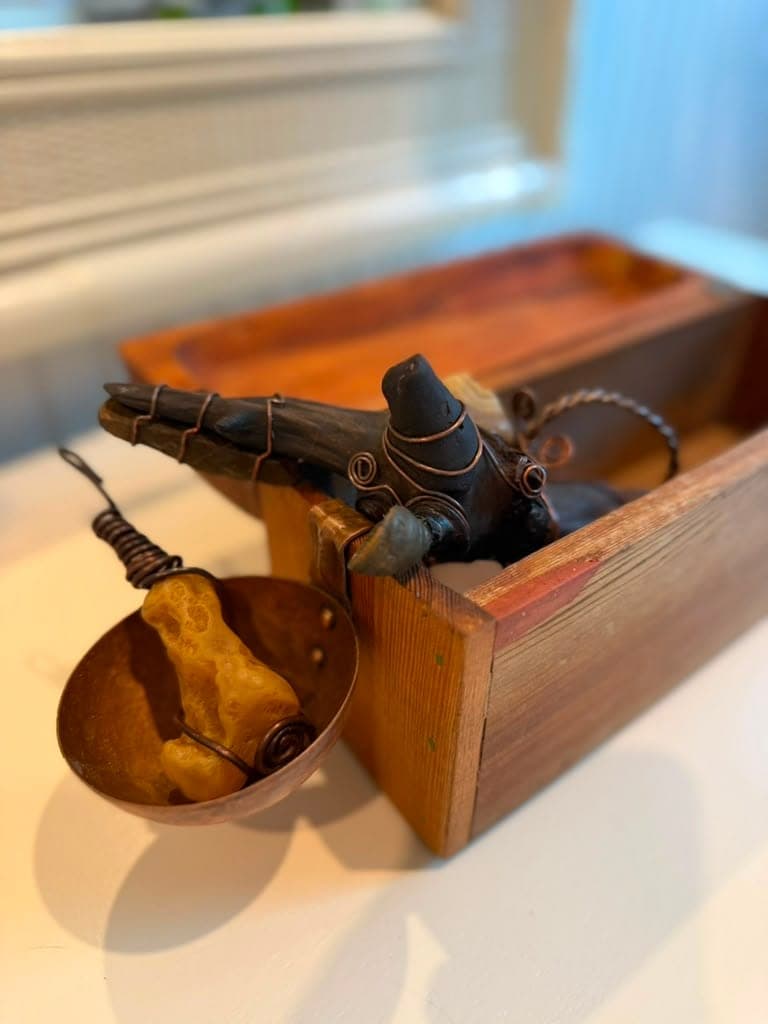
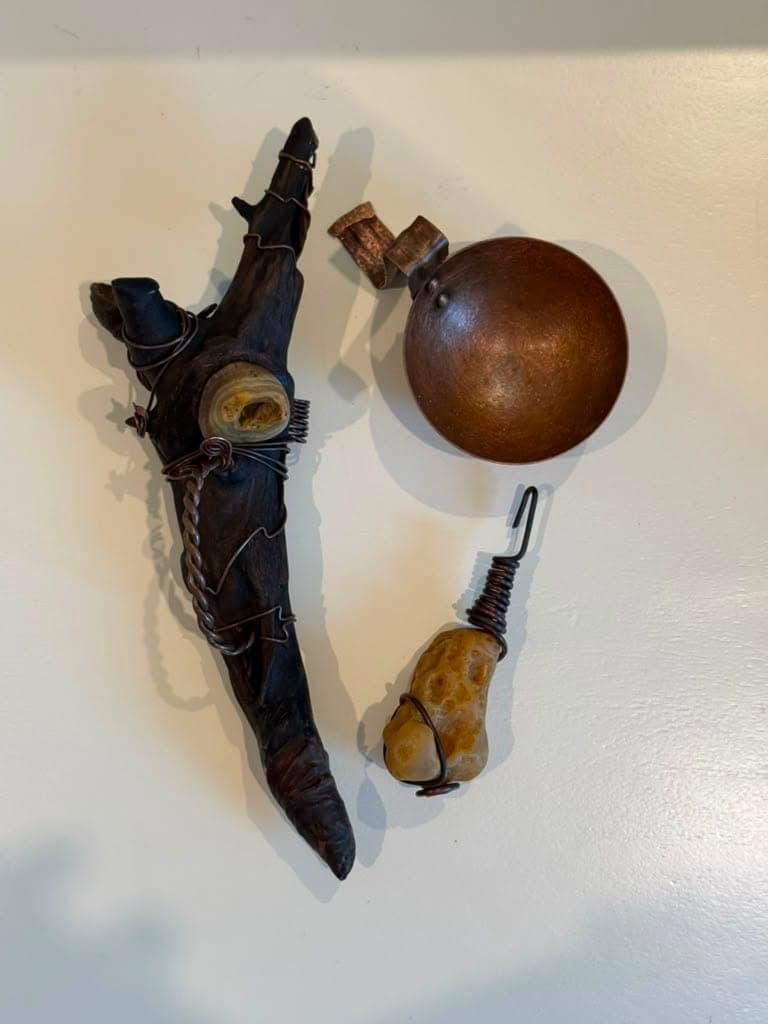
Kris is, without question, the earth wizard of our group. He even jokingly refers to himself as Merlin, and after seeing his artwork, it’s difficult to argue with the comparison.
He has an extraordinary ability to discover ordinary stones, branches, shells, and pieces of nature that somehow become remarkable in his hands. He transforms them into handcrafted wands, sculptures, and ceremonial pieces wrapped in copper and adorned with carefully chosen natural elements. Shortly after I returned from Peru, one of his custom-made wands finally arrived in the mail. The craftsmanship and attention to detail were unlike anything I had ever owned.
For reasons none of us could ever explain, technology never seemed entirely cooperative around Kris. Phone calls often sounded distorted, microphones misbehaved, and electronic devices developed minds of their own. We laughed that perhaps his connection to the natural world simply operated on a frequency that modern electronics hadn’t quite figured out how to handle. Whether coincidence or something more mysterious, it became one of those endearing traits that made Kris unmistakably himself.
Ceviche Declares War
The evening before, Jacob had enjoyed one of Peru’s most celebrated dishes: ceviche.
If you’ve never experienced authentic Peruvian ceviche, it is difficult to appreciate just how seriously Peruvians take it. Fresh fish is marinated in citrus juices, mixed with onions, peppers, herbs, and a careful balance of flavors that has become one of the country’s national treasures.
By sunrise, it had become painfully obvious that the ceviche had declared war — which was hilarious.
As the rest of us gathered our luggage and prepared for our flight to Cusco, Jacob was making repeated pilgrimages to the airport restroom. With every return he looked just a little paler than before. His face had taken on the color of parchment, and he moved with the cautious determination of someone desperately hoping his body would cooperate for just another few hours.
Little did we know that Jacob’s stomach wouldn’t be the only thing causing problems that morning.
The Flight He Never Made
Everything started off normally at the LATAM Airlines check-in counter.
I checked my suitcase, paid the baggage fee, and watched my luggage disappear down the conveyor belt without giving it another thought.
Jacob stepped up next. Along with his suitcase, he was carrying his yidaki.
Most people know it as a didgeridoo, but yidaki is the traditional Aboriginal Australian name for the instrument. Handcrafted from naturally hollowed eucalyptus, it has been used in ceremony and storytelling for thousands of years. Jacob had carried it all the way from Australia and treated it like the priceless instrument it was.
For reasons we still don’t understand, the airline employee refused to let him pay for his checked bag. Instead, she told him to go to another counter elsewhere in the airport.
So we did.
When we got there, the employees barely looked up. “You’re good.”
That was the entire conversation. No payment. No receipt. No explanation.
His suitcase disappeared onto the conveyor belt, and we continued through security assuming everything had somehow been taken care of.
Looking back, that should have been our first warning.
Meanwhile, Peru had apparently decided to empty his stomach long before the airline emptied his wallet.
Yeshua and I boarded the flight believing the stressful part of the morning was finally over.
Then our group chat buzzed. It was Jacob.
“They won’t let me on the plane.”
My stomach dropped.
Somewhere between security and the boarding gate, someone finally realized his baggage fee had never actually been paid. Instead of simply collecting the payment, they refused to let him board.
The plane left without him.
He always told me that there would always be a few distortions whenever he travelled anywhere, and this definitely rang true during this trip.
Landing in Cusco
Yeshua and I landed in Cusco just before noon.
The moment we stepped outside, I noticed the altitude. At more than 11,000 feet above sea level, even walking felt different.
Cusco immediately felt alive to me. The sun was shining, too, which made it even more glorious.
Ancient Inca stone walls sat beneath Spanish colonial buildings. Narrow cobblestone streets wound through the city while people filled the sidewalks, markets, and cafés. There was so much history packed into one place that it almost felt impossible to take it all in.
I liked it almost instantly, although the traffic still bothered me — the honking horns and the speed bumps.
Jacob, meanwhile, was still back in Lima trying to sort out another flight while recovering from food poisoning.
Into the Sacred Valley
Thankfully, I had arranged for our private driver to meet us. Rather than sitting around the airport for several hours waiting, Yeshua and I began driving toward the Sacred Valley.
After a little while our driver asked if we would like to go see some alpacas. I said sure, why not. The moment I got out of the car, it was almost like I had just gotten off a tilt-a-whirl carnival ride. Dizzy.
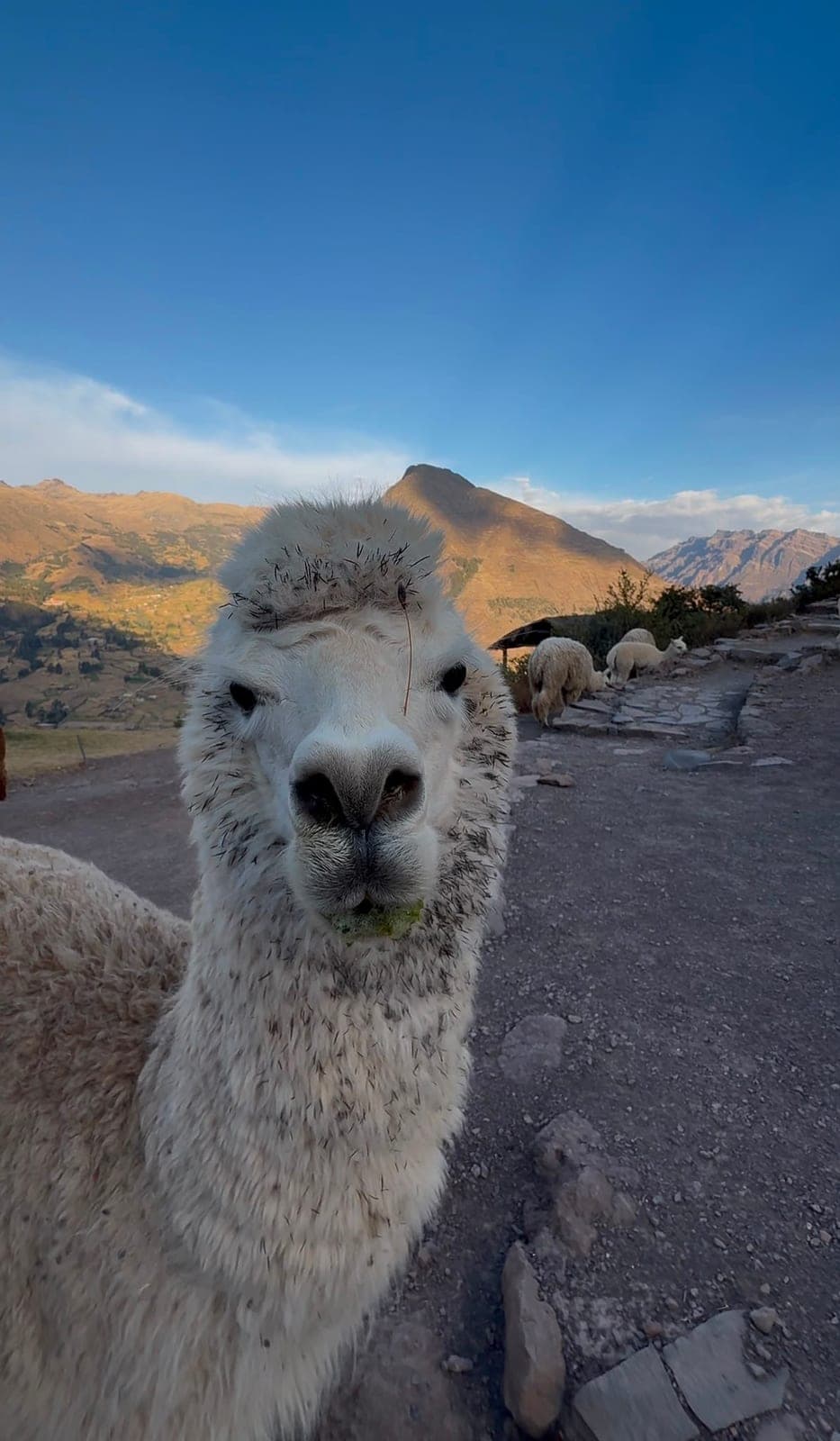
We spent a few minutes walking around looking at alpacas, watching some women making clothing, and it’s also where I got my poncho.
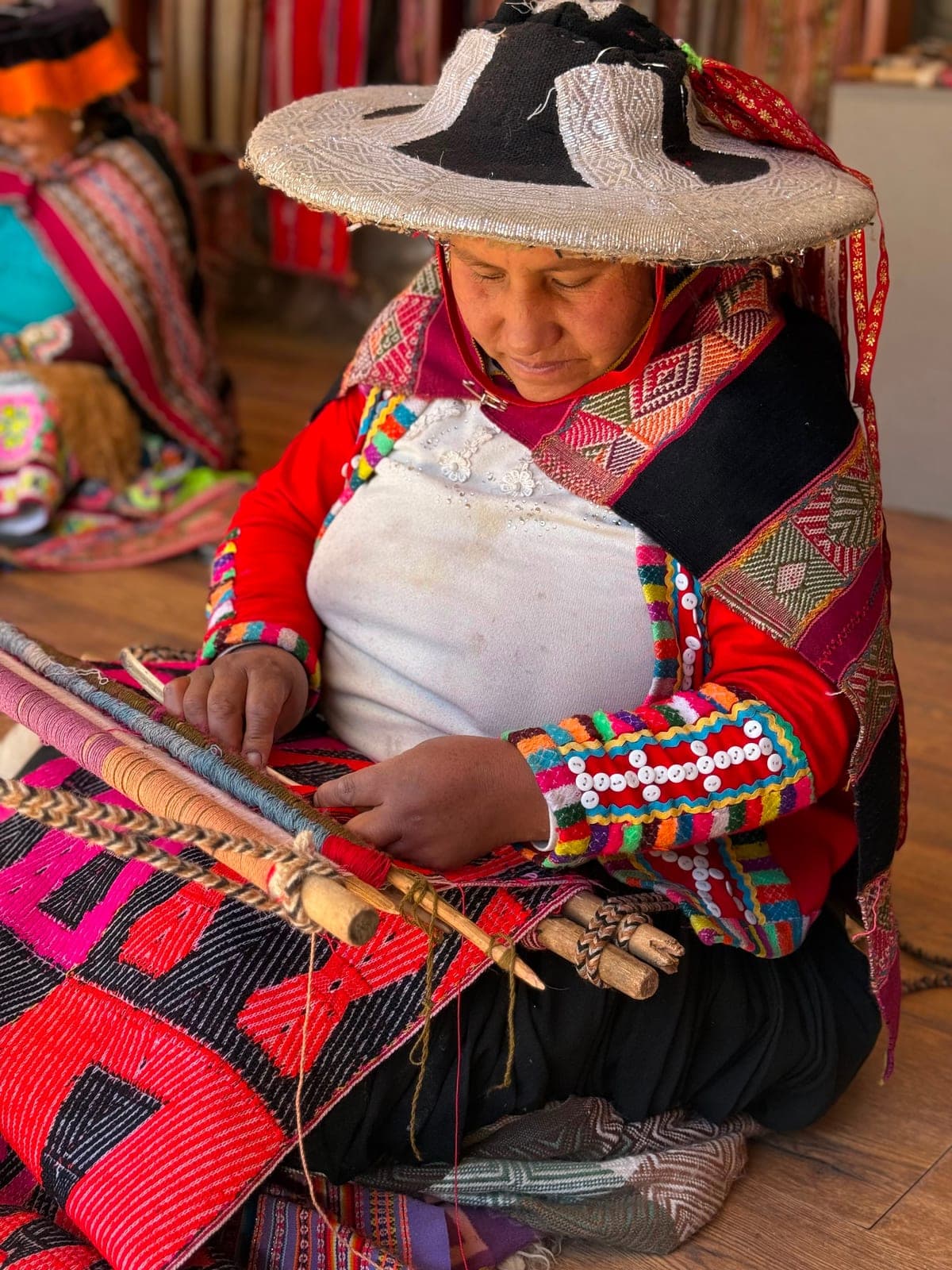
It was such a simple stop, but it marked the moment the trip started feeling different.
The farther we drove, the more Peru changed. The traffic disappeared. The buildings became farms. The mountains kept getting taller until they surrounded us on every side. Beautiful trees started popping up — pine, I believe — mixed in with some eucalyptus.
Eventually we arrived in Calca, a quiet town tucked into Peru’s Sacred Valley. The valley has been considered sacred since the time of the Incas because of its fertile land, rivers, and surrounding mountains. Even today it attracts people from all over the world — farmers, artists, healers, spiritual seekers, and travelers who simply want to slow down for a while.
It was exactly the kind of place I had hoped we would find.
Calca
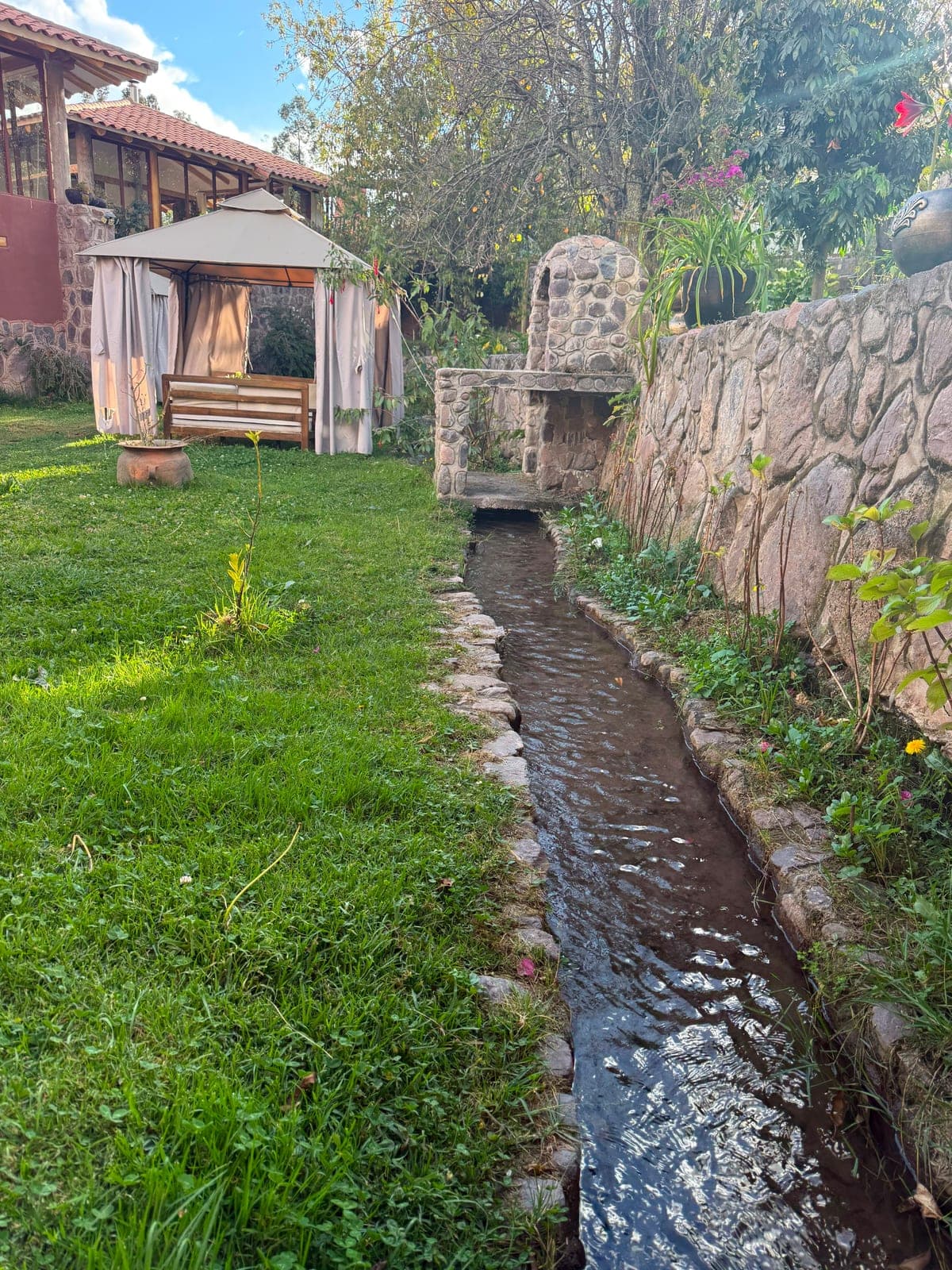
The Airbnb I booked was rather beautiful from a land perspective. There was a sauna, a hot tub, and a gorgeous view of the mountains, with a waterfall that flowed directly through the center of our property.
Although the Airbnb had been booked for three people, the owner informed us that only two guests were actually allowed to stay. Fun.
Not exactly the news we wanted after a full day of traveling.
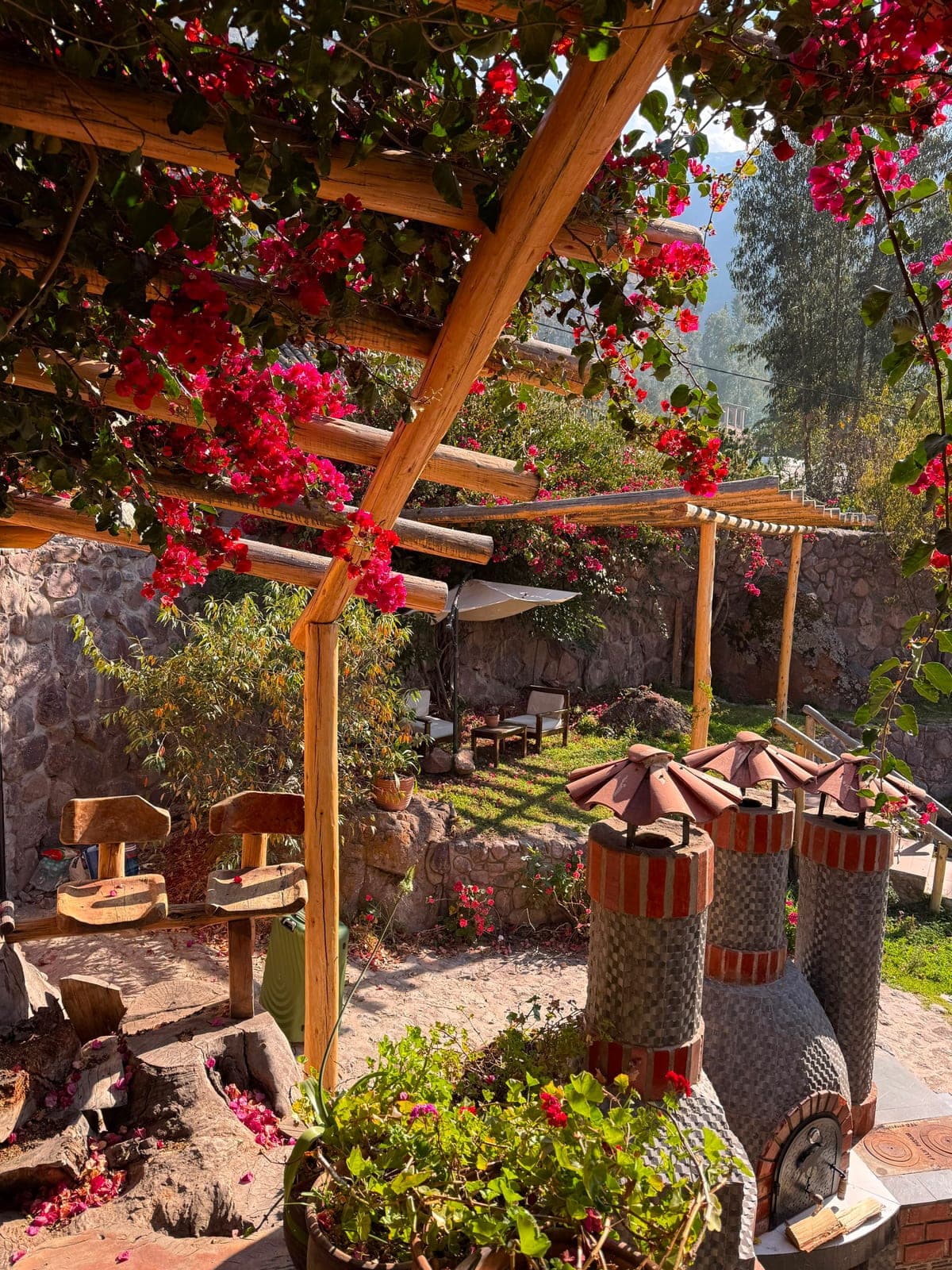
With Jacob still somewhere between Lima and Cusco, we ended up scrambling to find another nearby room. Fortunately, everything worked out. We booked another house she had nearby.
Jacob finally arrived around five that afternoon. He looked exhausted. His face had lost its color.
My cottage was comfortable enough, but I couldn’t help noticing that the neighboring one was much nicer. It had larger windows, an open layout, and a beautiful fireplace.
Jacob has always been drawn to fire. I emphasize Jacob during this trip because it was, in a way, his trip — his mission to walk the land of Peru — and it was all of the difficulties along the way that made it even better, because I think they showcased how important it actually was.
I’ve watched him sit quietly in front of a flame for long stretches of time, almost like it’s a form of meditation. He said it’s like a portal. A way to get clear answers.
That evening, despite looking like he needed nothing more than sleep, he wandered over and asked if he could borrow one of my candles. “Of course.”
I never travel without one. Those long tapered white candles — I had brought twelve with me.
For the past couple of years, I’ve made it a habit to light a simple white taper candle whenever I’m home, or traveling somewhere. There is something about watching a real flame that quiets my mind in a way very few things can. Having a source of light near you is very similar to feeling your soul.
One day I’d love to have a home with a wood-burning fireplace and an old cast-iron stove. There’s just something about real fire that makes a place feel alive.
Anyway, the Airbnb property itself was beautiful. A mountain stream ran directly through it, fed by waterfalls higher up in the Andes.
Before leaving home I had purchased a water purifier that could safely filter untreated mountain water. I didn’t use it often, but there was something satisfying about filling my bottle straight from a stream that had just come down from the mountains.
The sound of rushing water was constant. Cool air drifted through the valley all day. Everything felt calm. After the noise of Lima, it was exactly what I needed.
The Little Market Down the Hill
Over the next few days we met people from all over the world. Two men from Ireland had settled permanently in Peru and owned a small hotel in Pisac. Others had come searching for healing, meditation, or simply a different way of living.
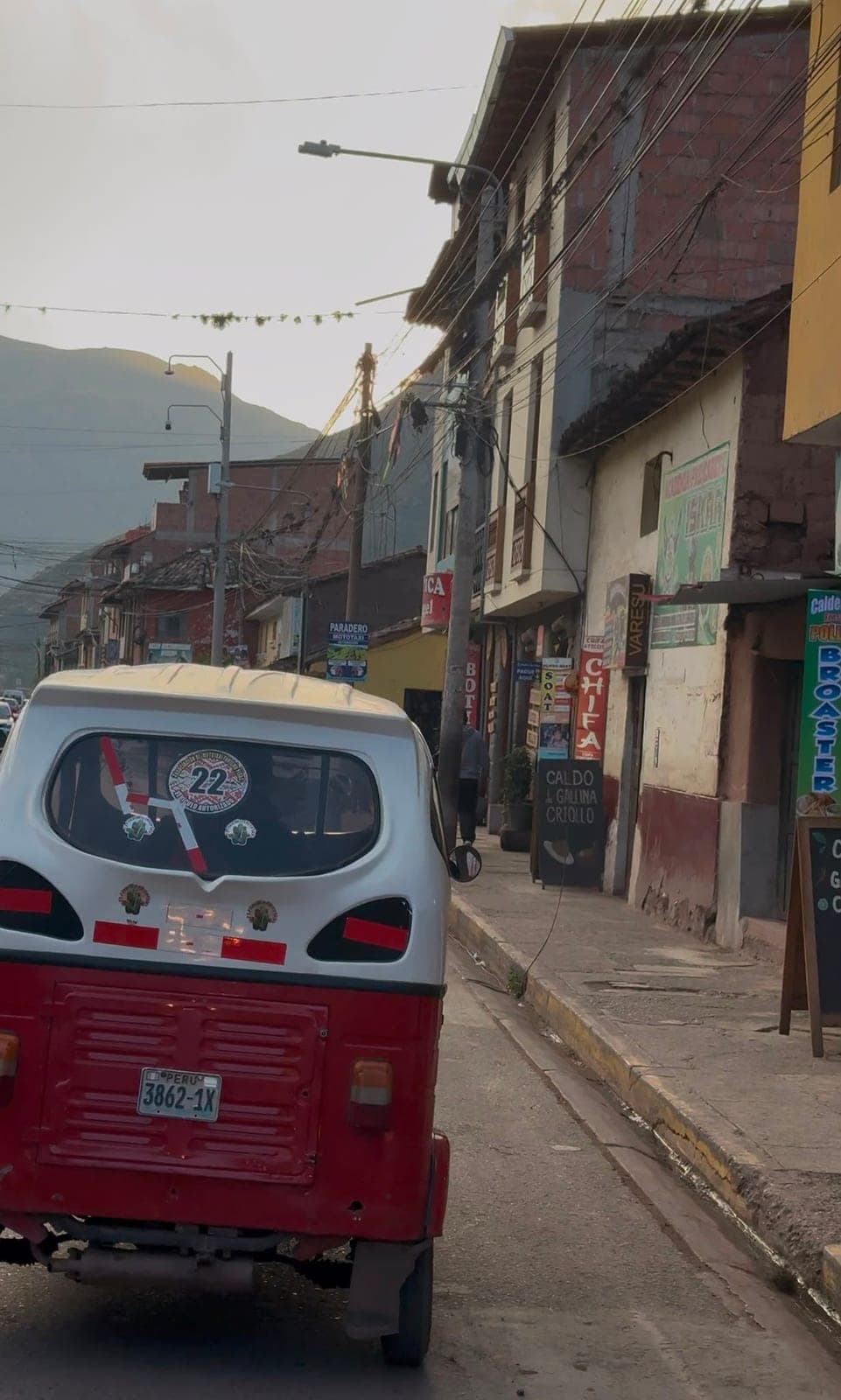
Thankfully, there was a small neighborhood market just down the hill. When we all got to the Airbnb, we were unsure of how or where we were going to get food. The Sacred Valley isn’t like America, where there’s a gas station on every corner or even a restaurant nearby.
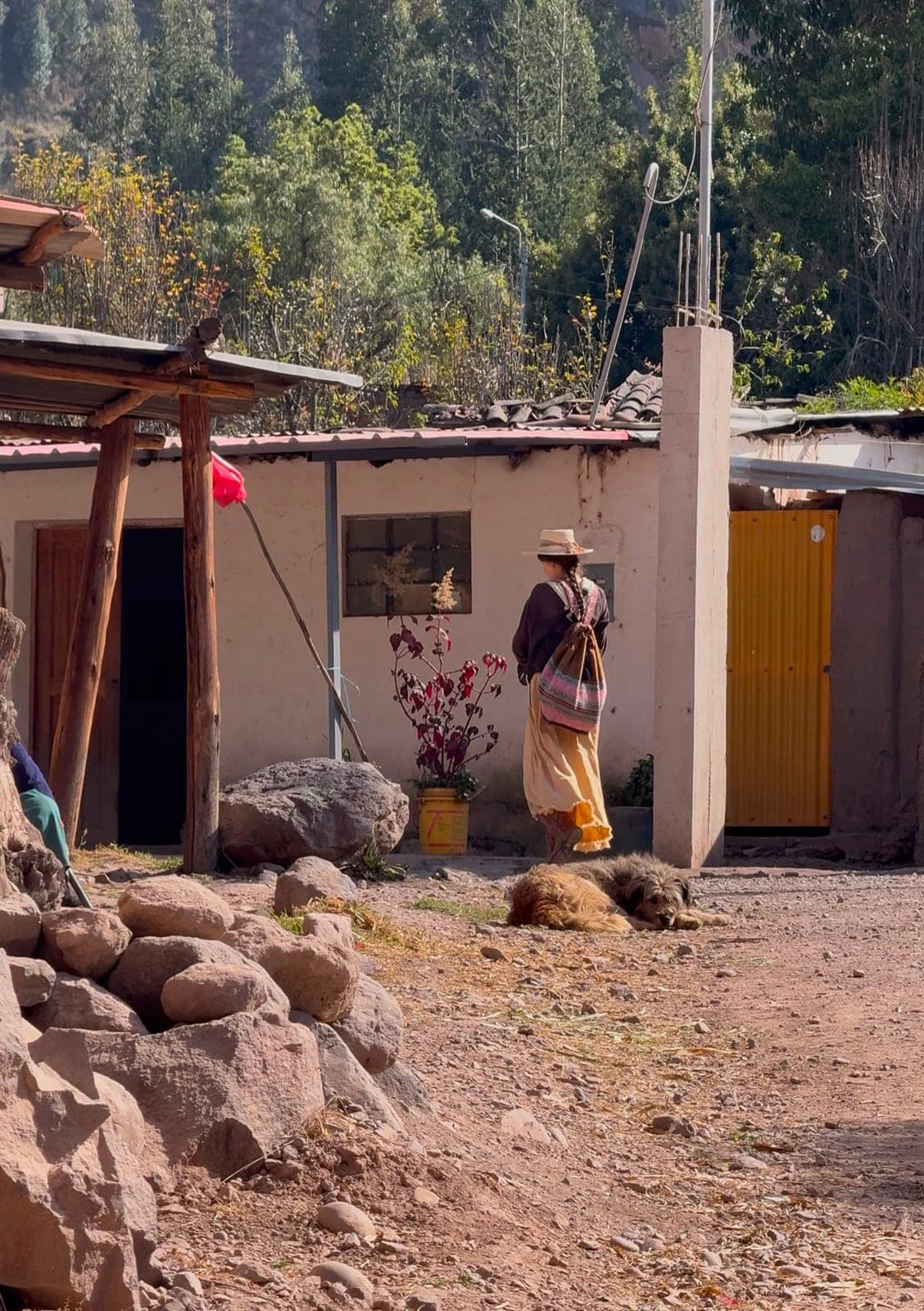
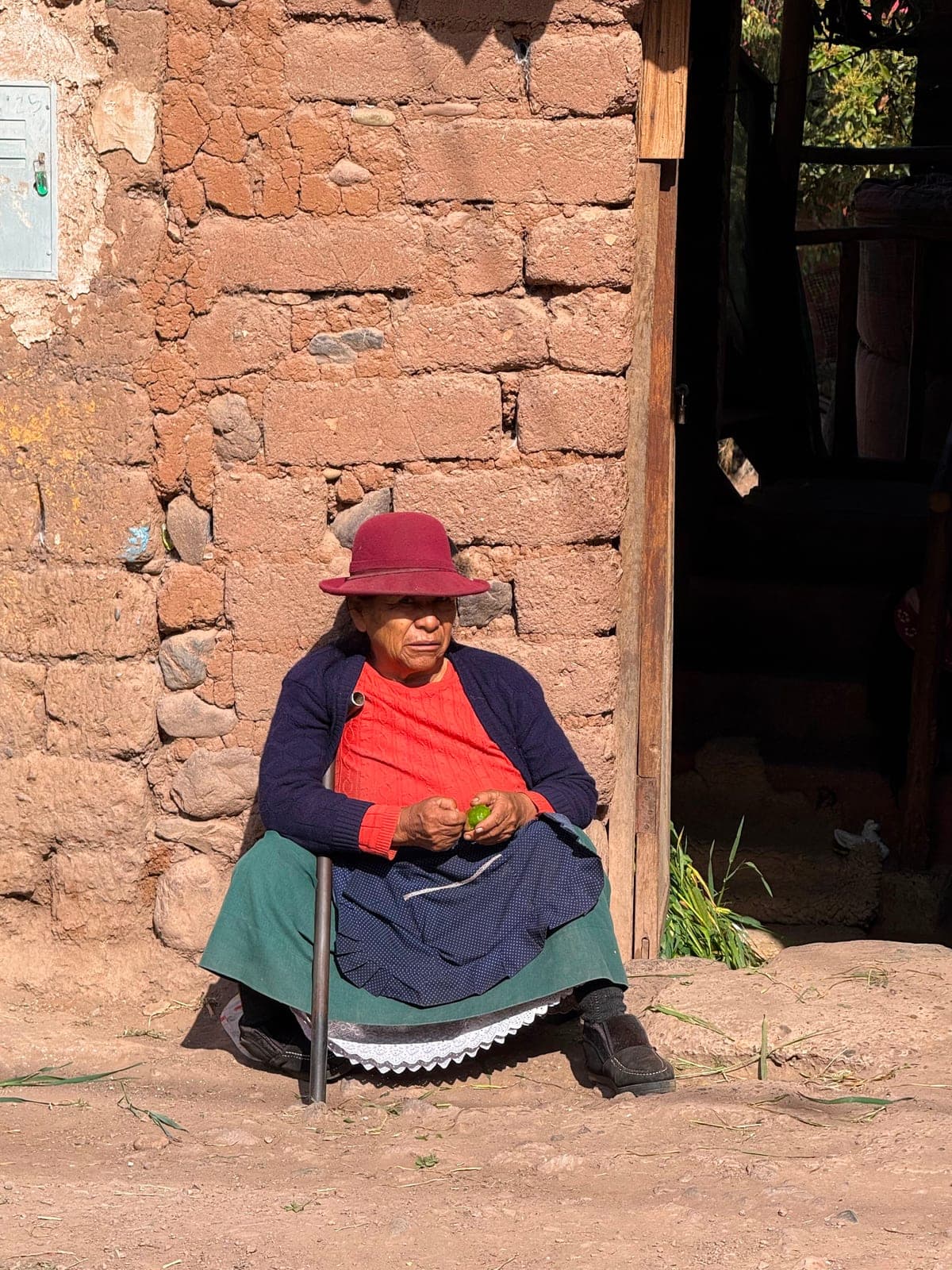
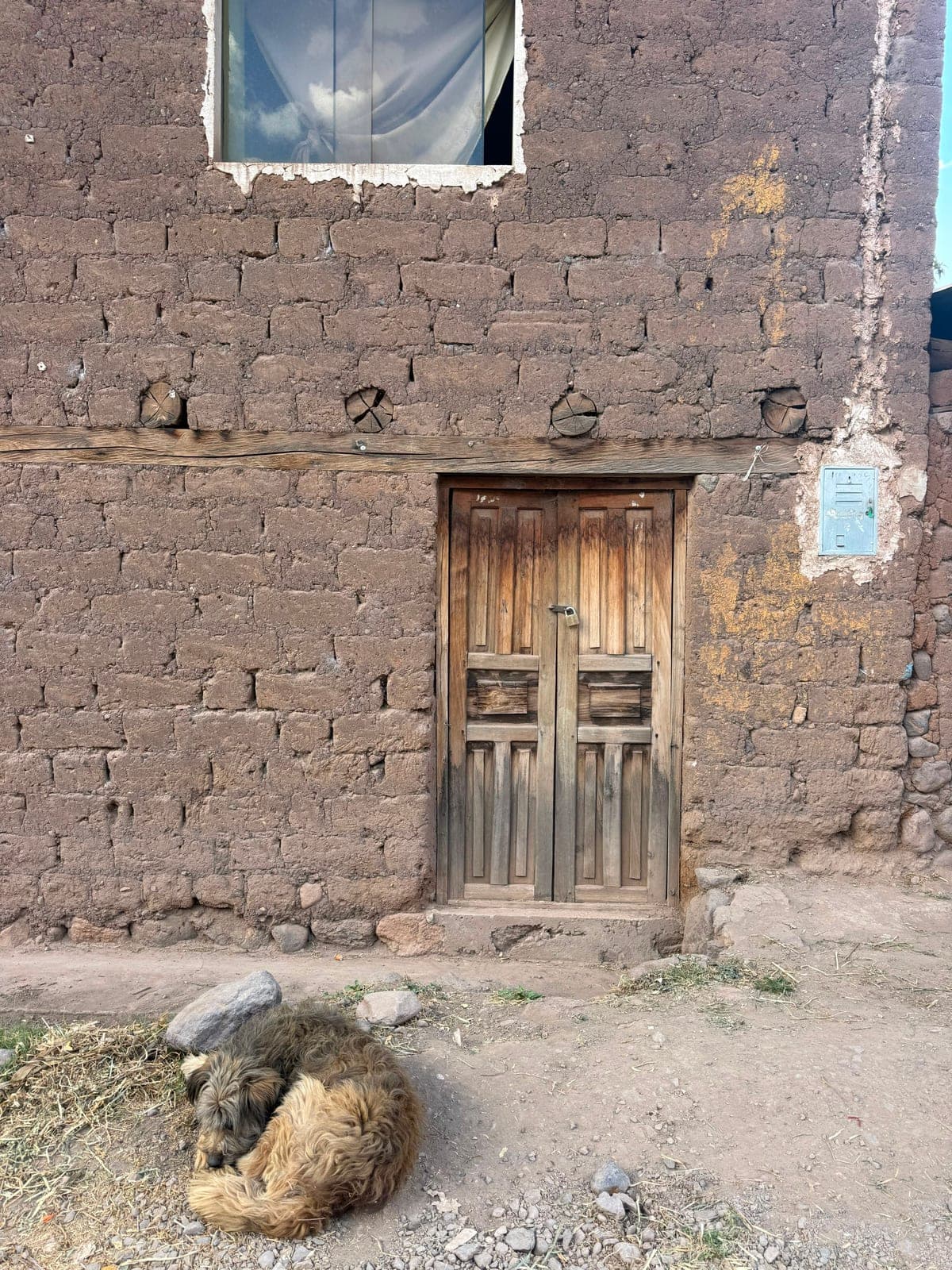
This was a small village where people had dirt floors and there was a stray dog every fifteen feet.
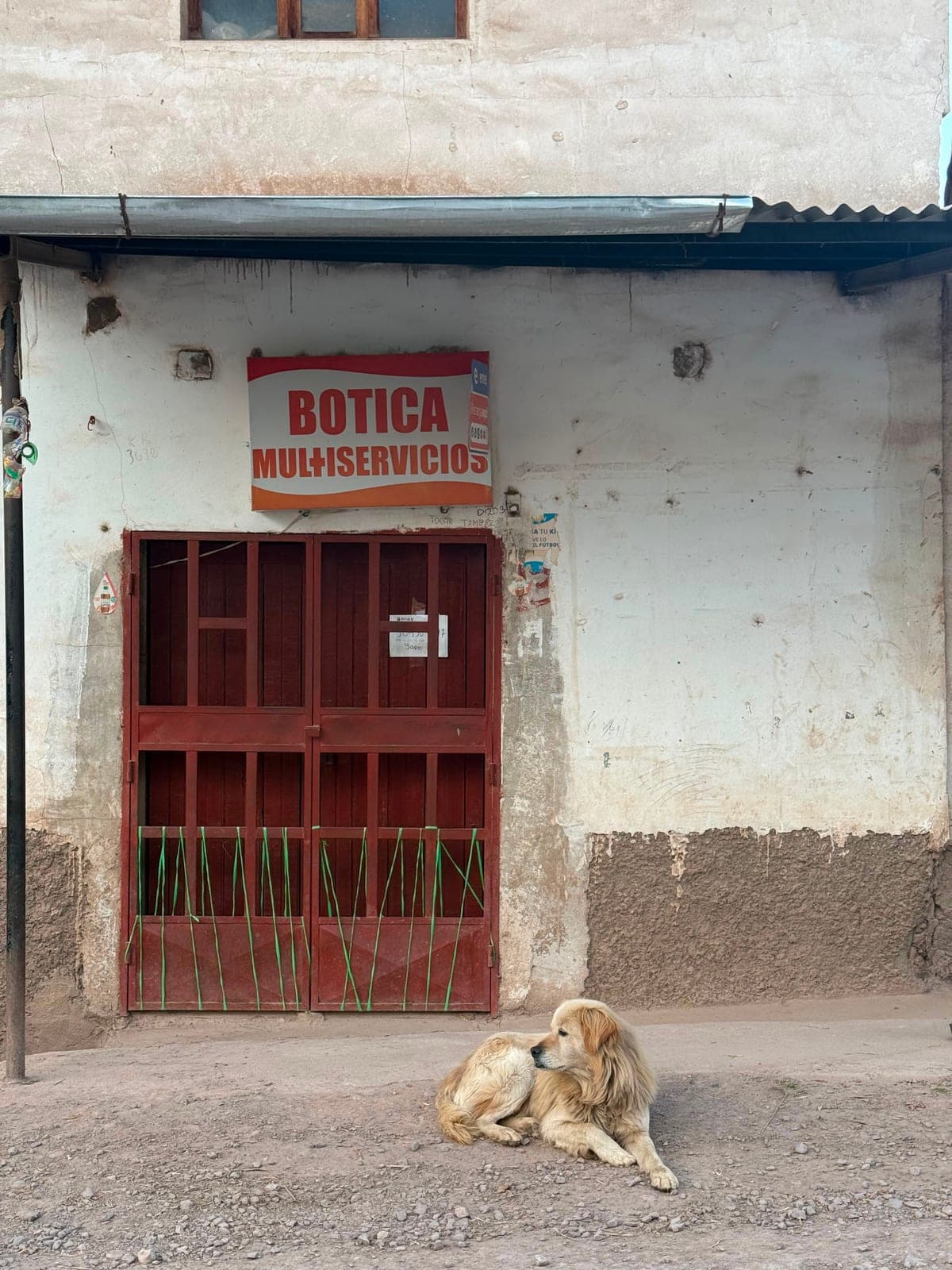
It wasn’t built for tourists. It was simply where local families bought groceries.
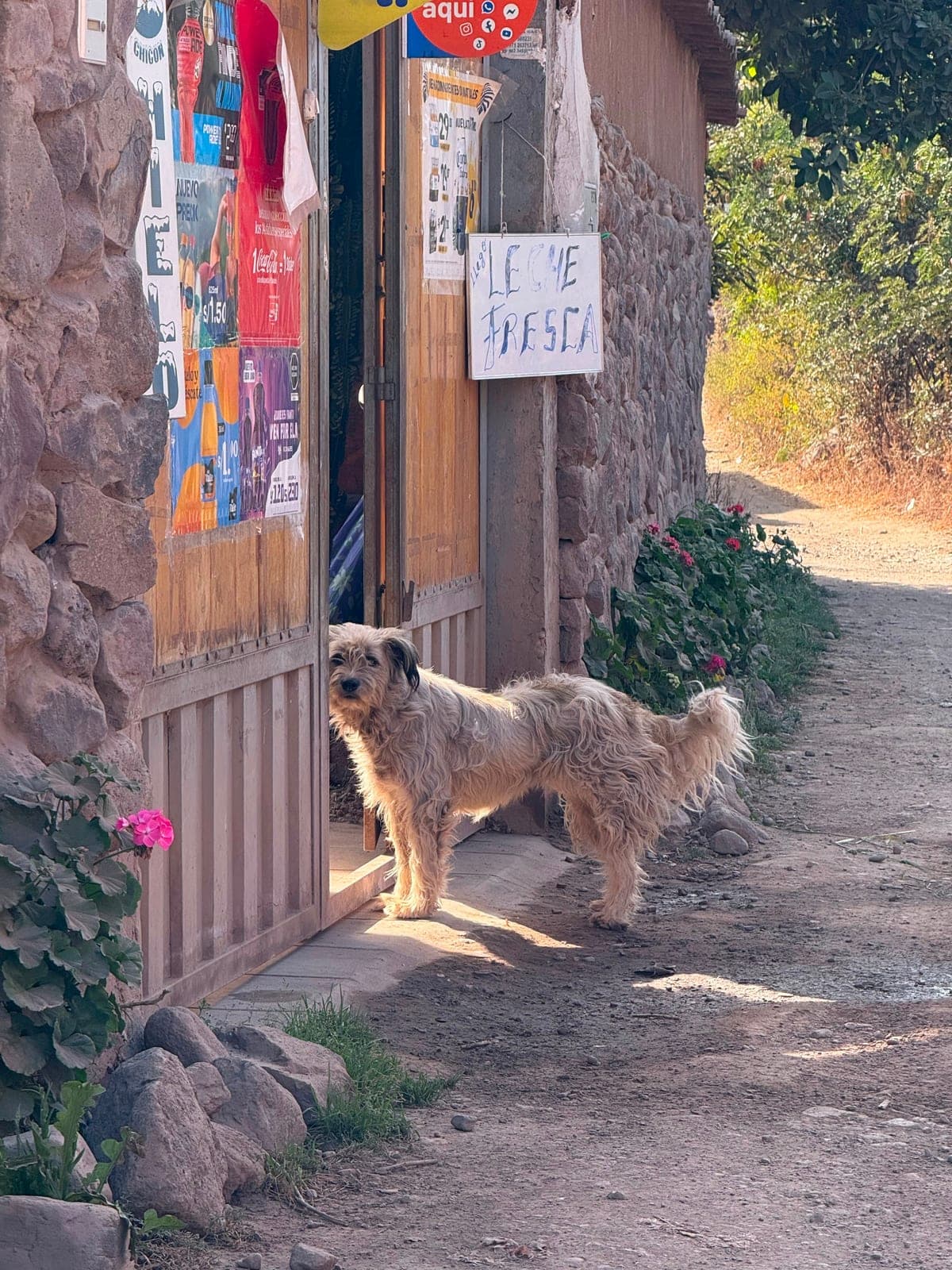
Fresh fruit sat outside. Vegetables filled wooden crates. Inside were shelves stocked with rice, meat, and everyday essentials.
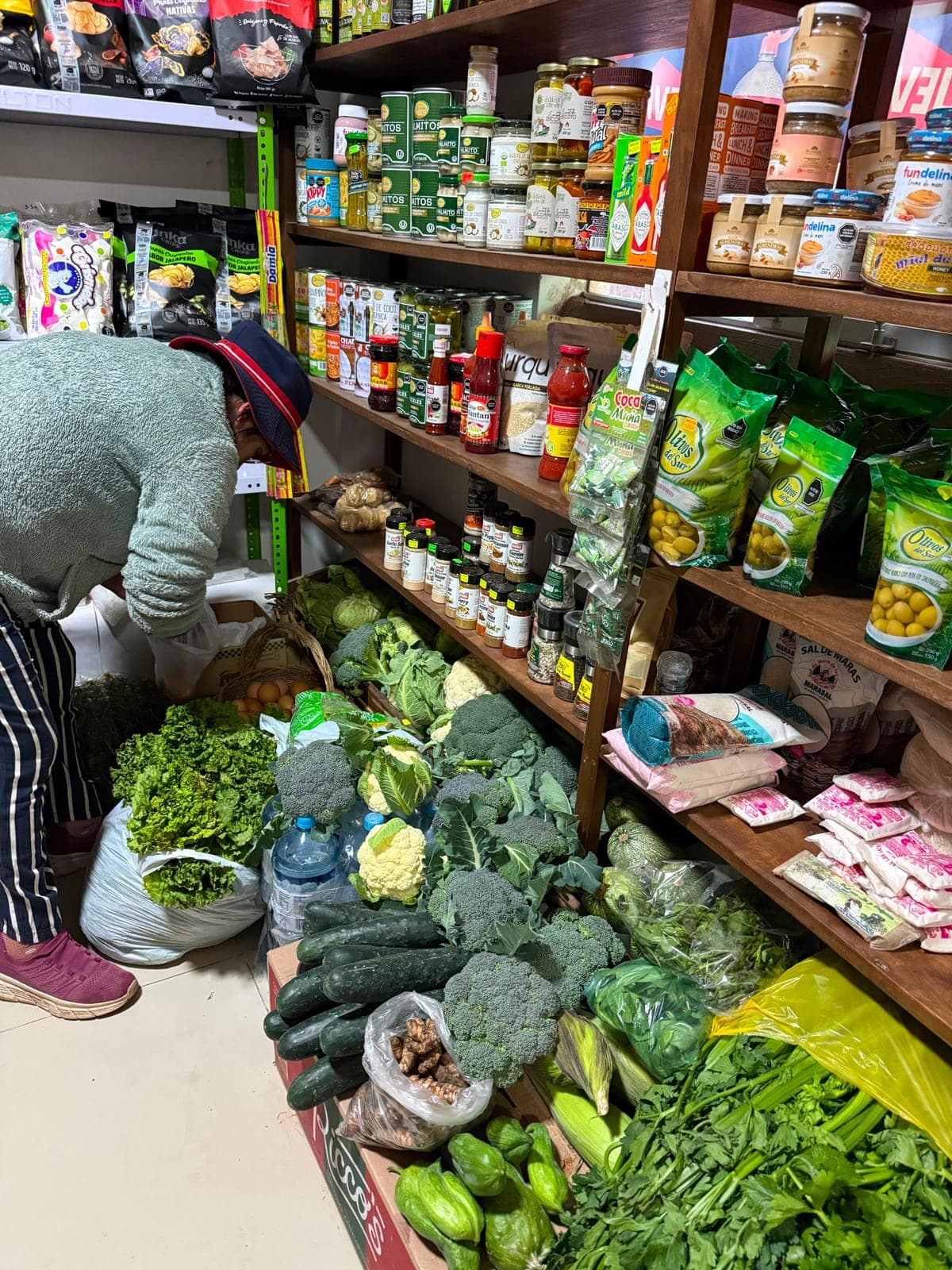
I picked up enough food to make dinner and was grateful not to be living on airport snacks anymore.
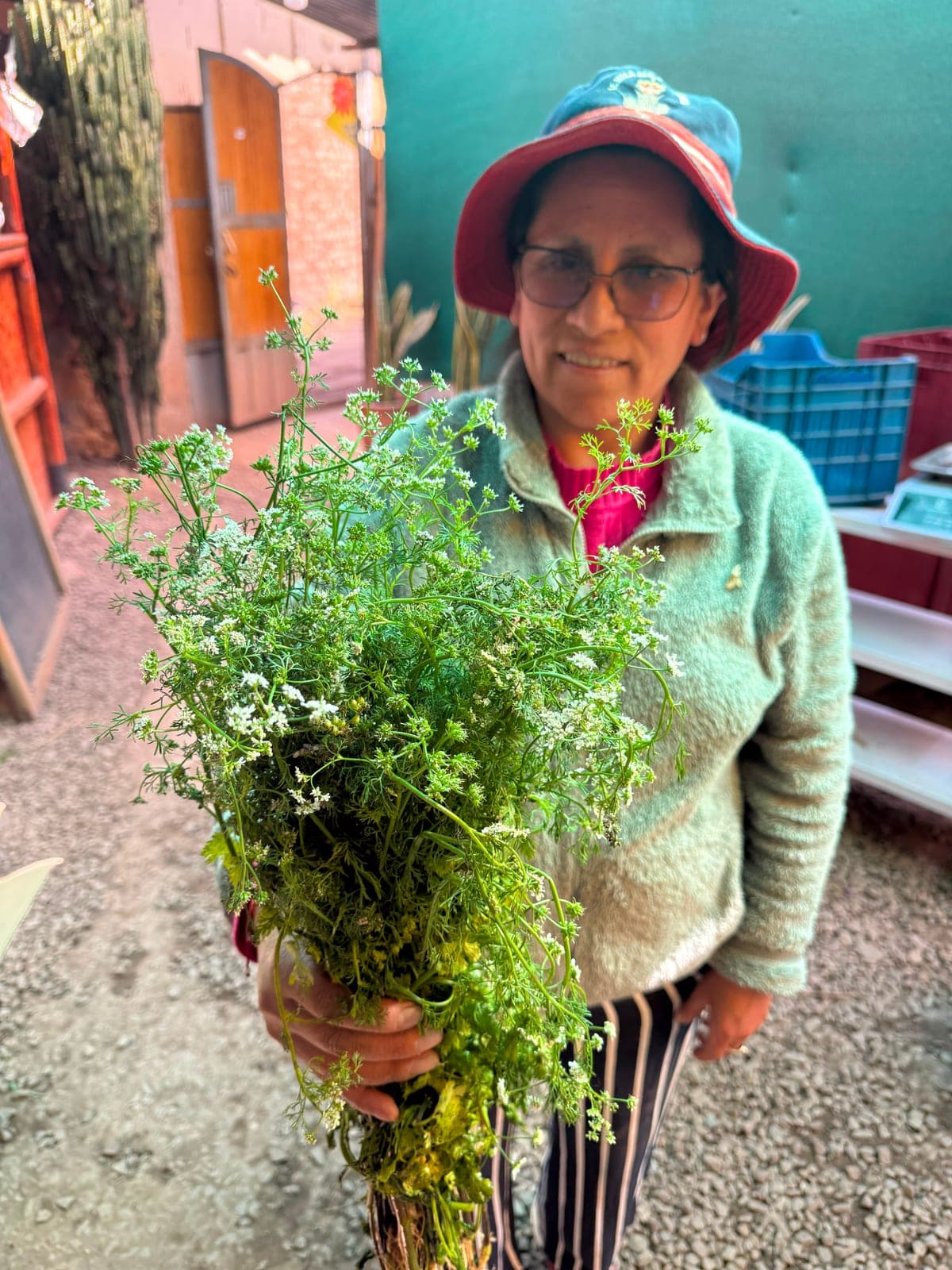
Jacob also picked up a few groceries.
One thing I noticed about him throughout the trip was how simply he ate. He would always say: “The electrical current and the biophotons inside of fruit are untampered with by metatronic man. It’s frequency enhancing.” His favorite part of the trip so far was the soursop.
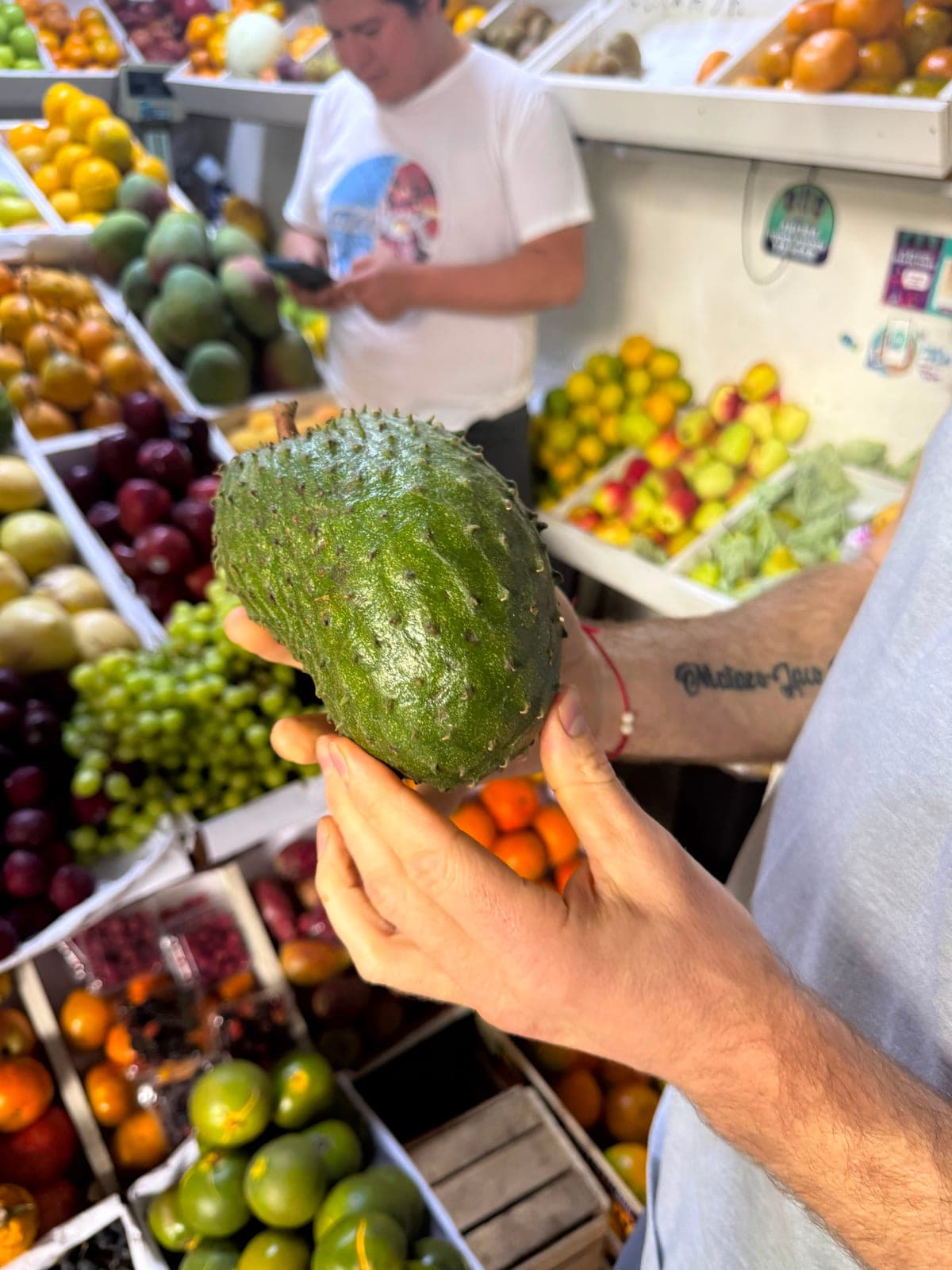
Most mornings it was fresh fruit and water. Nothing processed. Nothing heavy. Later in the day he’d eat rice, vegetables, or chicken. I’d try to copy him.
Before leaving the United States, I had packed a handful of supplements for him, including shilajit and Dragon’s Blood capsules, hoping they might help while his body recovered.
He tried them for a short time. Eventually he stopped taking everything. He didn’t want anything in his body that wasn’t natural. He wanted to heal.
It wanted sleep. It wanted water. It wanted time. Sometimes that’s all healing really is.
That evening I stood outside listening to the stream as darkness settled over the valley. The stars were brighter than anything I was used to seeing at home — a completely black night with bright stars scattered everywhere and zero light pollution.
Just twenty-four hours earlier we’d been dealing with missed flights, food poisoning, airline confusion, and unexpected changes to our accommodations.
Now we were standing in the middle of Peru’s Sacred Valley with the sound of rushing water echoing through the mountains.
It had been a chaotic beginning. But somehow it already felt like we were exactly where we were supposed to be.
A Hundred Dollars for a Hundred Soles
Little did we know that our first full day in Peru would become one of my favorite memories of the entire journey.
The evening before, after settling into our Airbnb in the Sacred Valley, we wandered no more than a hundred feet down the road to a tiny local market where the tourists rarely seemed to venture. There were no English menus and very little communication beyond smiles, hand gestures, and Google Translate. More than once we found ourselves pulling out ChatGPT to translate conversations, laughing as technology somehow bridged two completely different worlds.
One of our first lessons in Peruvian currency came almost immediately.
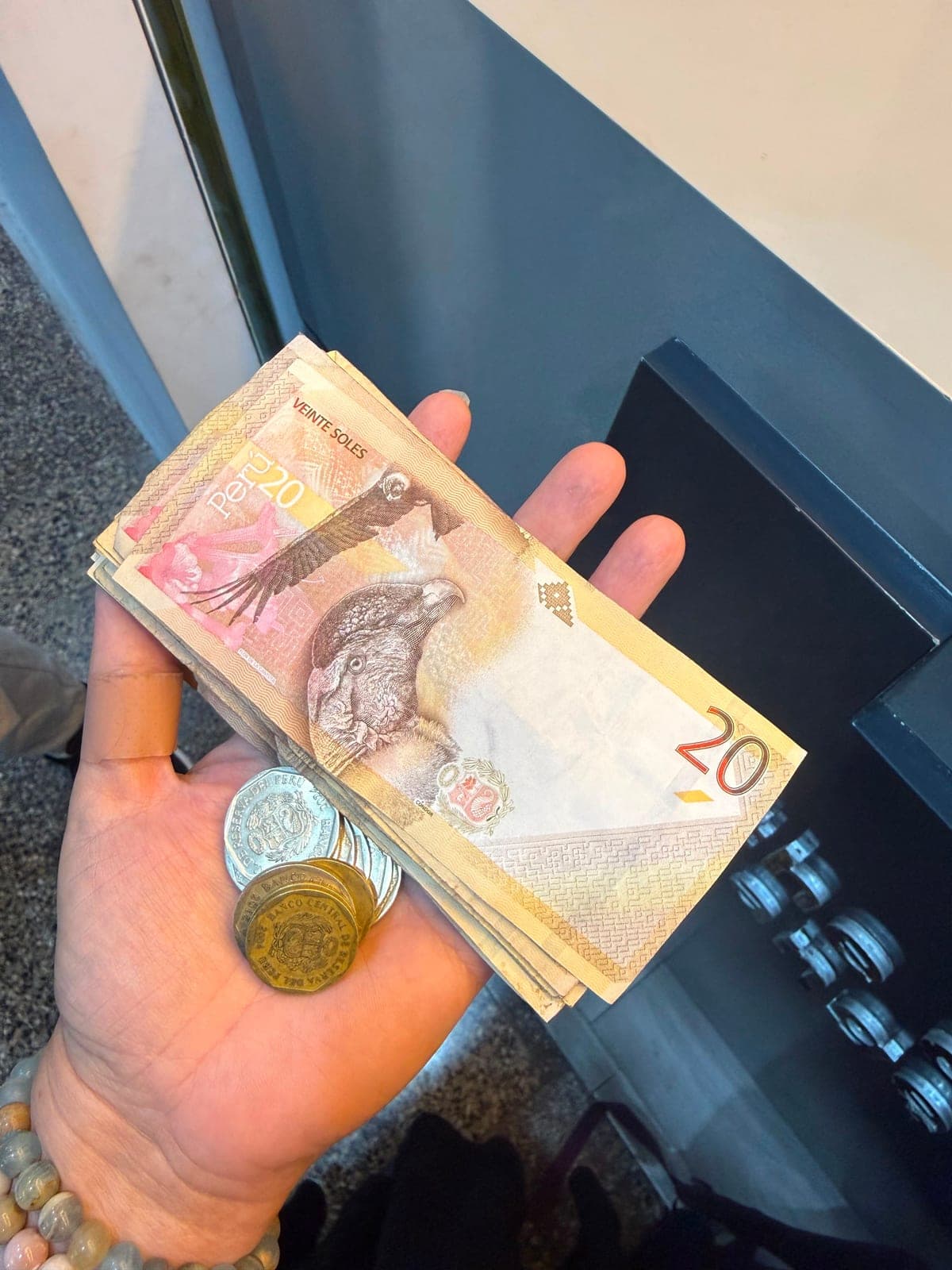
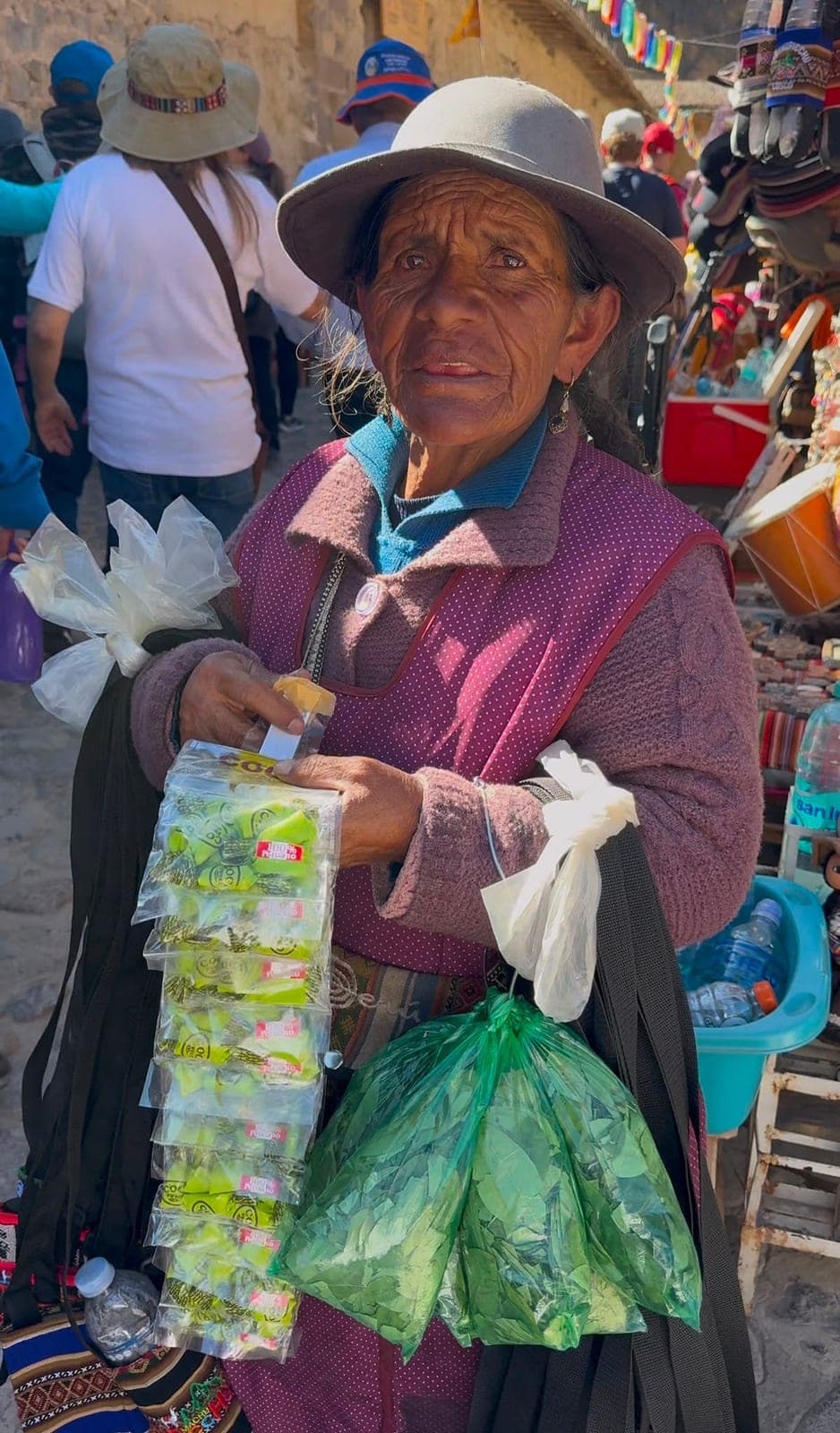
Wanting some Peruvian soles, we gave her $100 from Apple Pay — of course, with all the confidence of a tourist — and asked her to give us back 100 soles. She happily agreed.
It was not until two days later that I realized we should have received well over 300 soles based on the exchange rate at the time. We had unknowingly traded a hundred U.S. dollars for only one hundred soles. The joke, of course, was on us. It was an inexpensive lesson in slowing down, doing the math first, and accepting that every new country comes with a few rookie mistakes.
Pisac
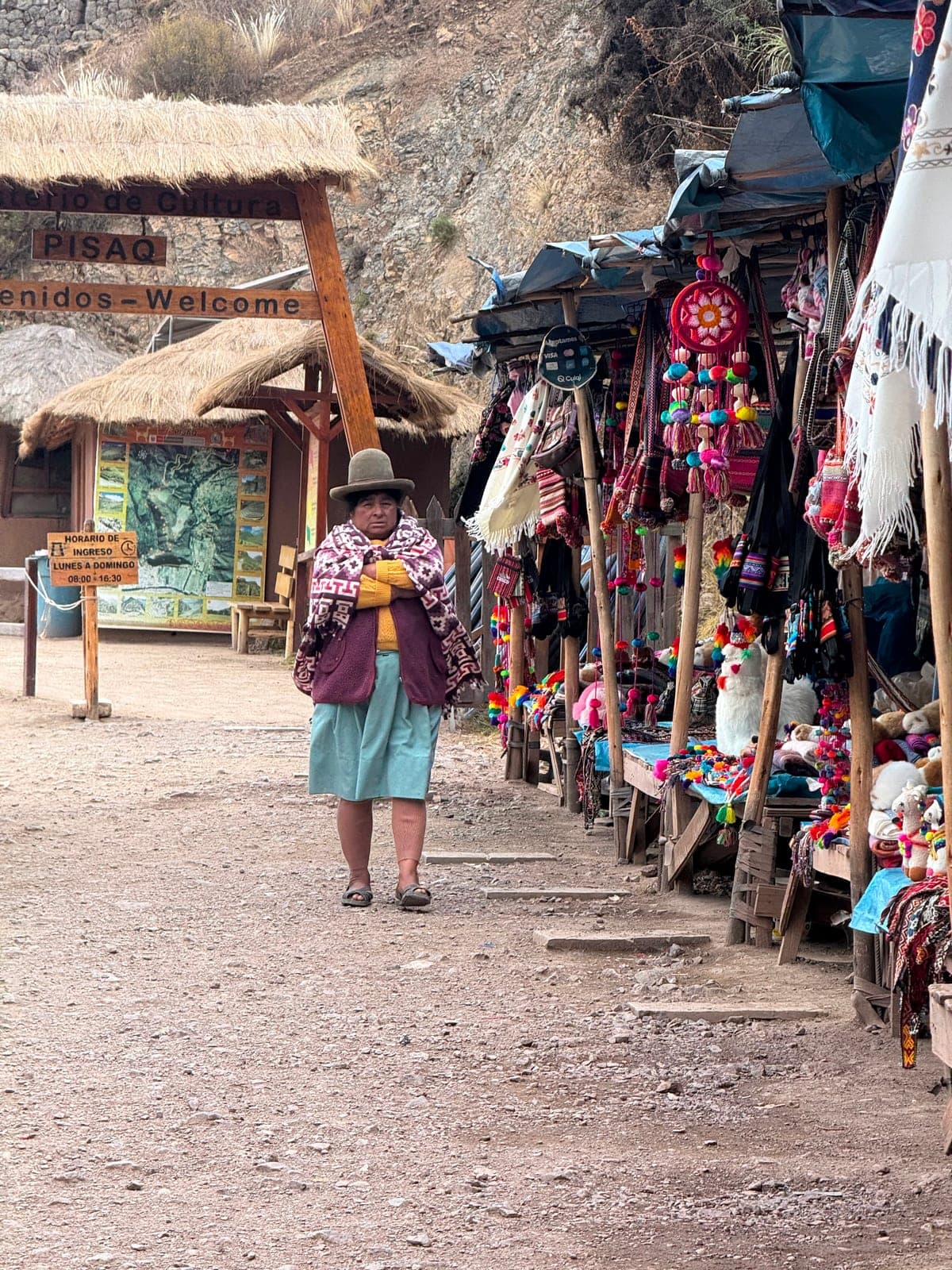
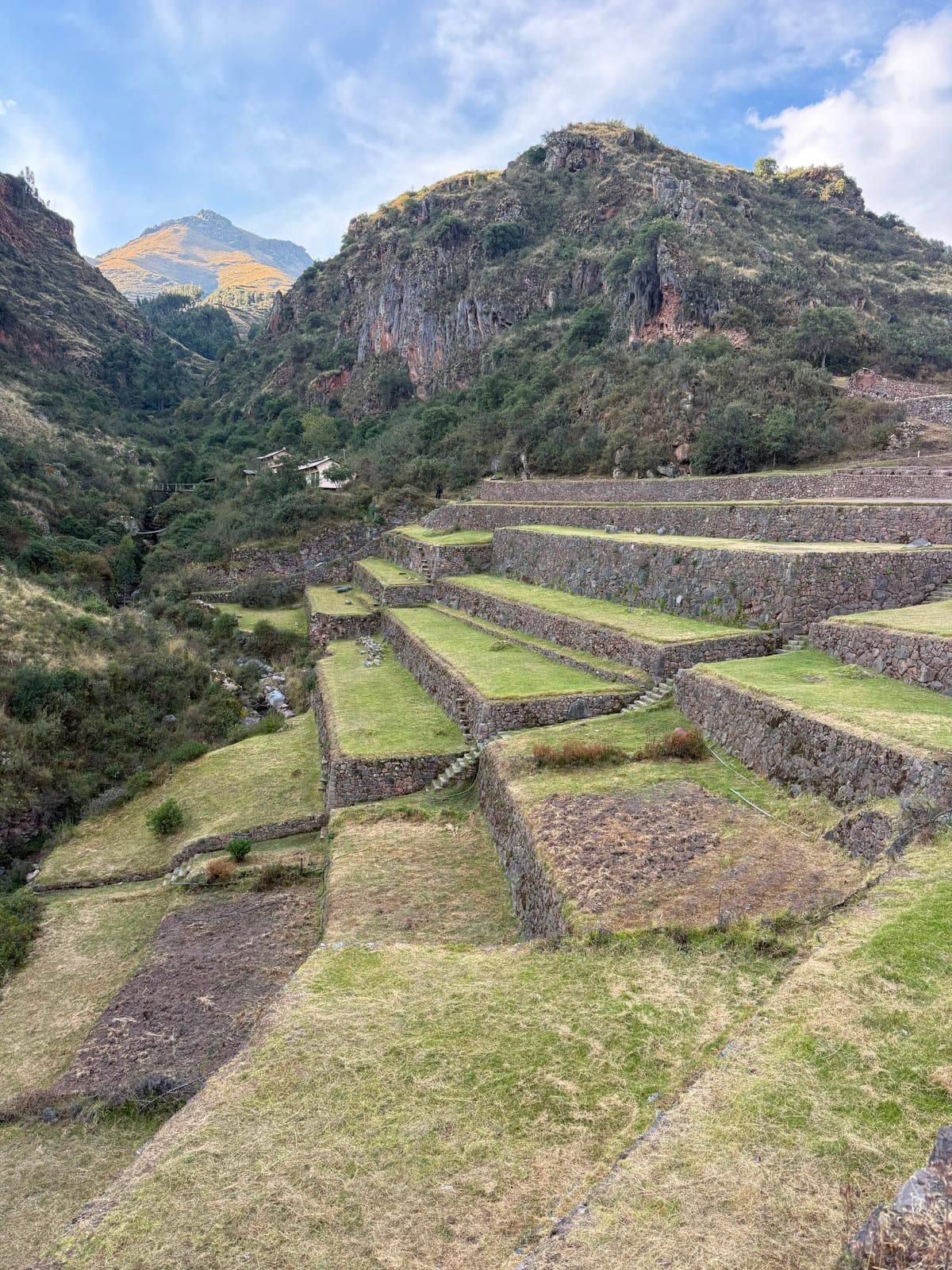
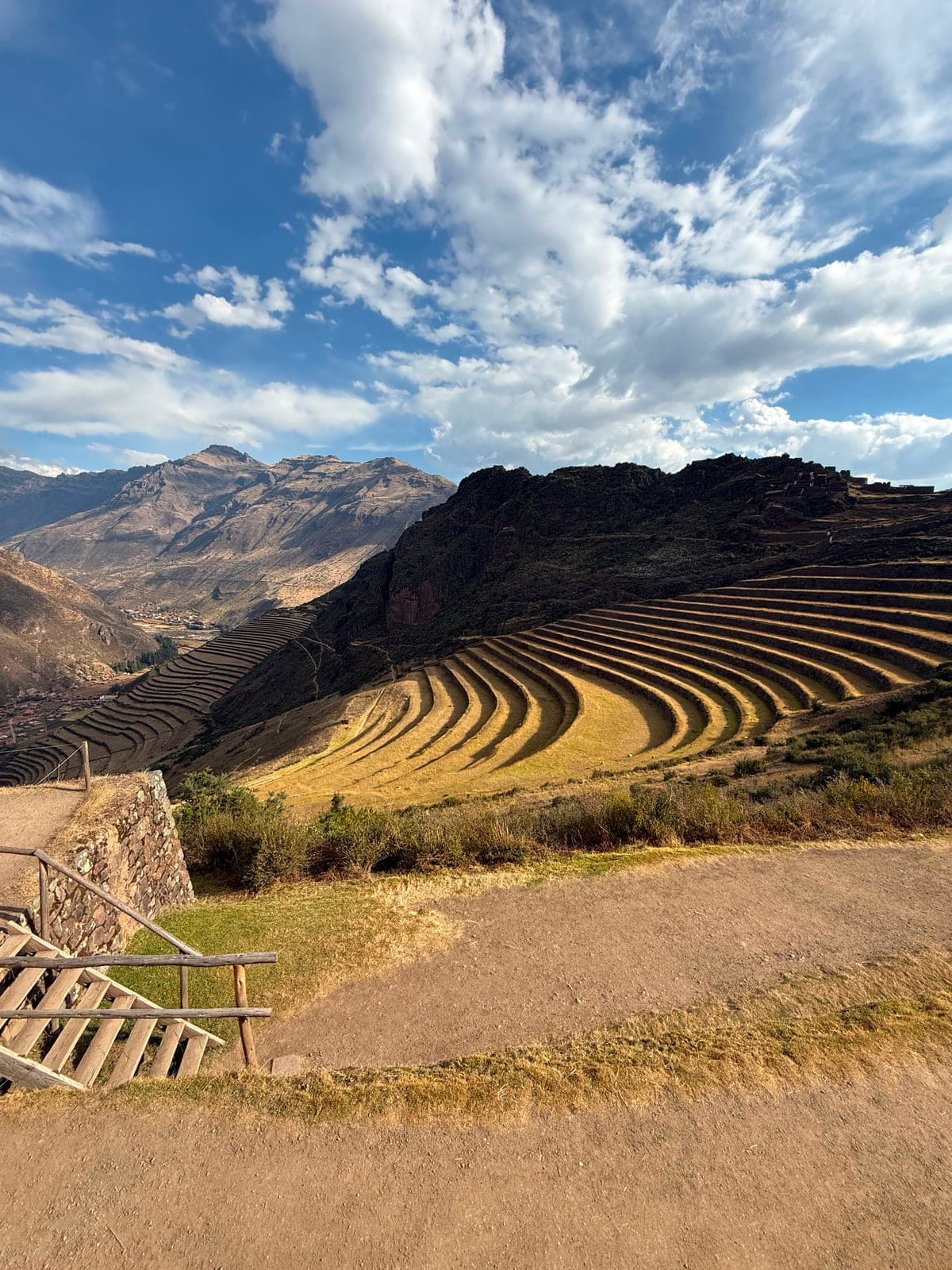
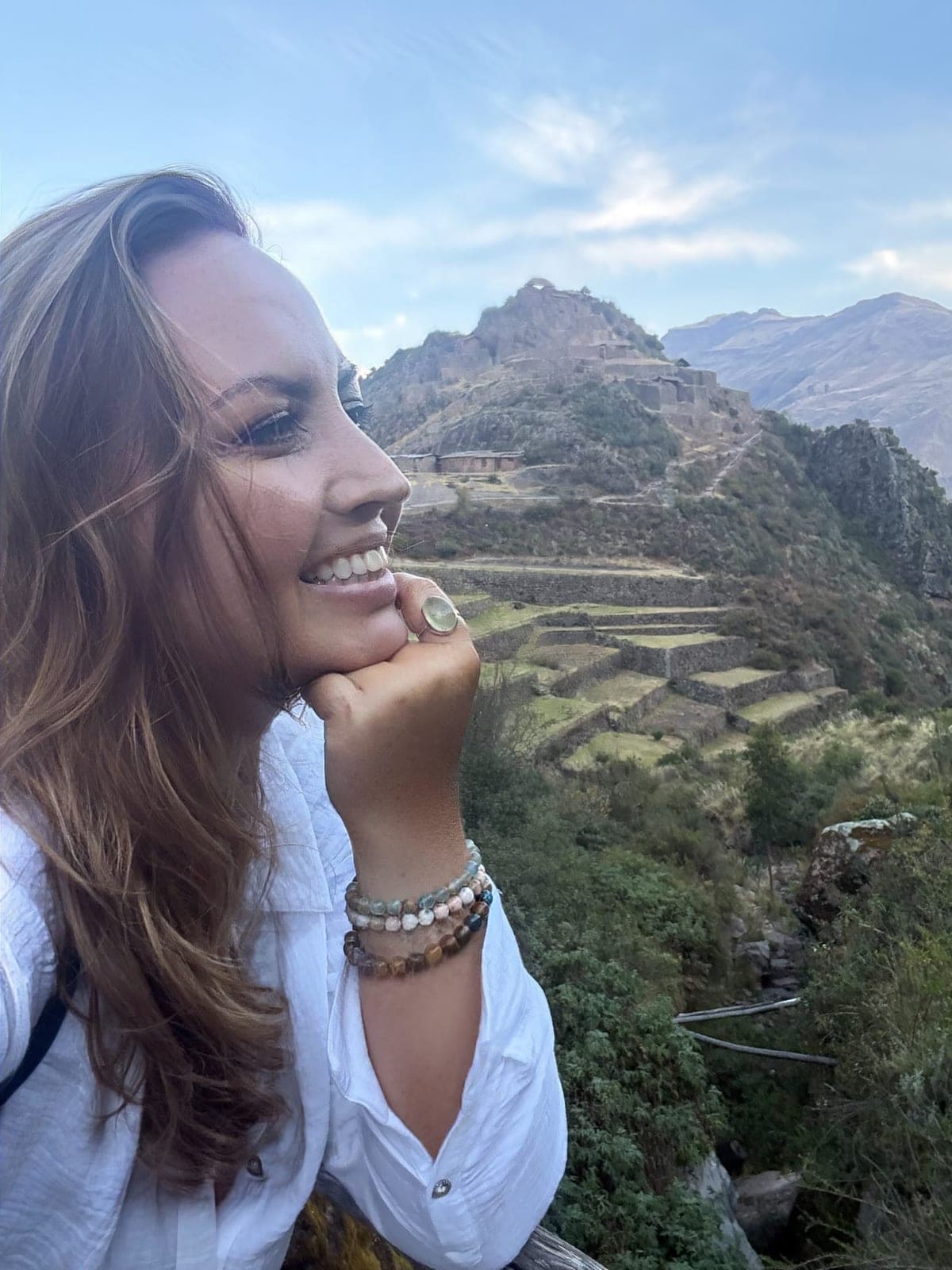
Anyway… the next morning our private driver arrived to take us to Pisac, where ancient Inca engineering and living Andean culture exist side by side. It sits between dramatic green mountains and the winding Urubamba River. The town is best known for its impressive Inca citadel perched high above the valley, featuring sweeping agricultural terraces, ceremonial temples, and breathtaking panoramic views. Below, the colonial village is centered around a charming plaza lined with cafés, artisan shops, and one of Peru’s most celebrated handicraft markets, where local Quechua families sell handwoven textiles, silver jewelry, pottery, and traditional crafts.
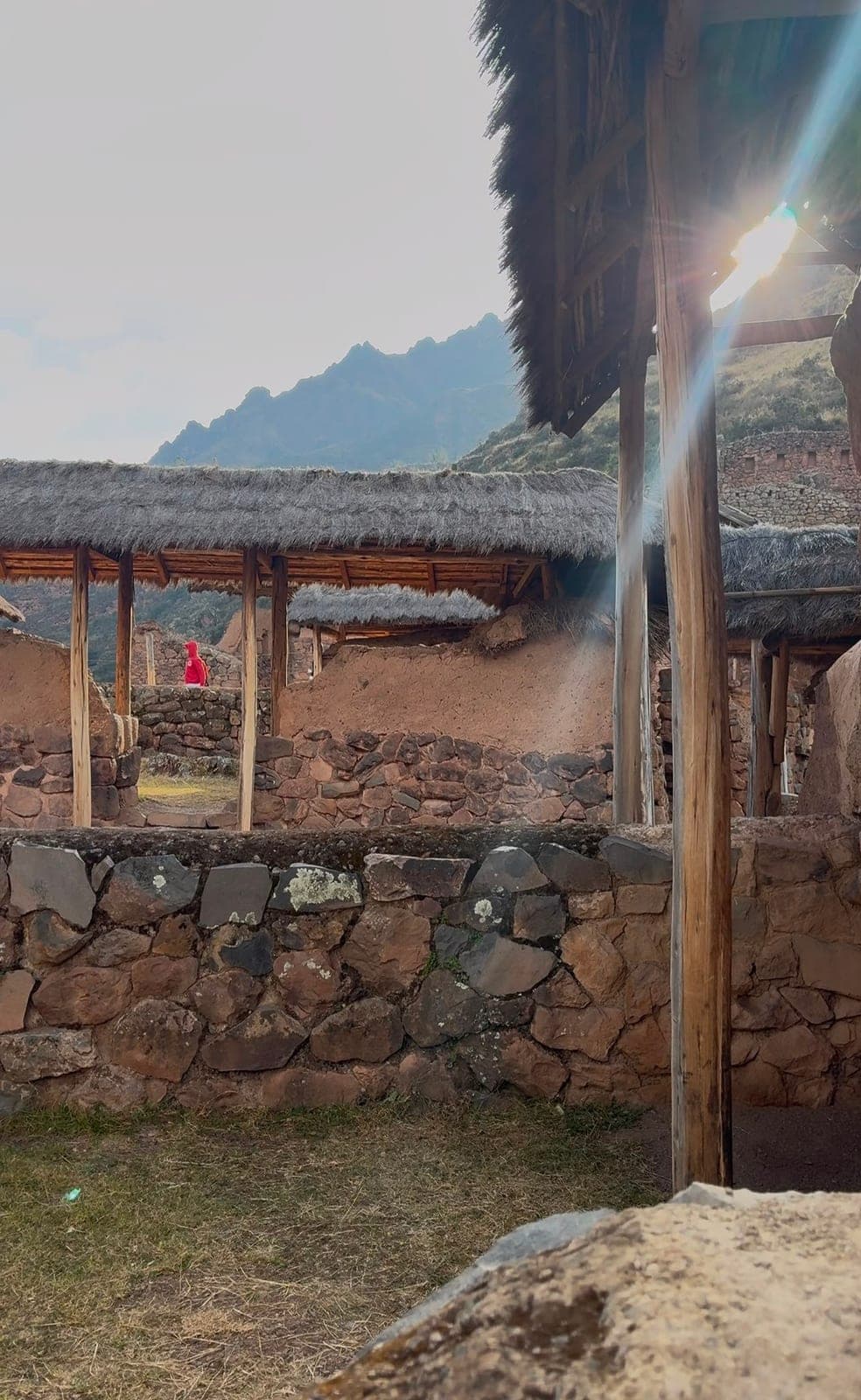
Its massive agricultural terraces and stone temples have watched over the valley for centuries, surviving both the rise of the Inca Empire and the arrival of the Spanish. It was difficult not to wonder how many thousands of people had walked these same paths long before us.
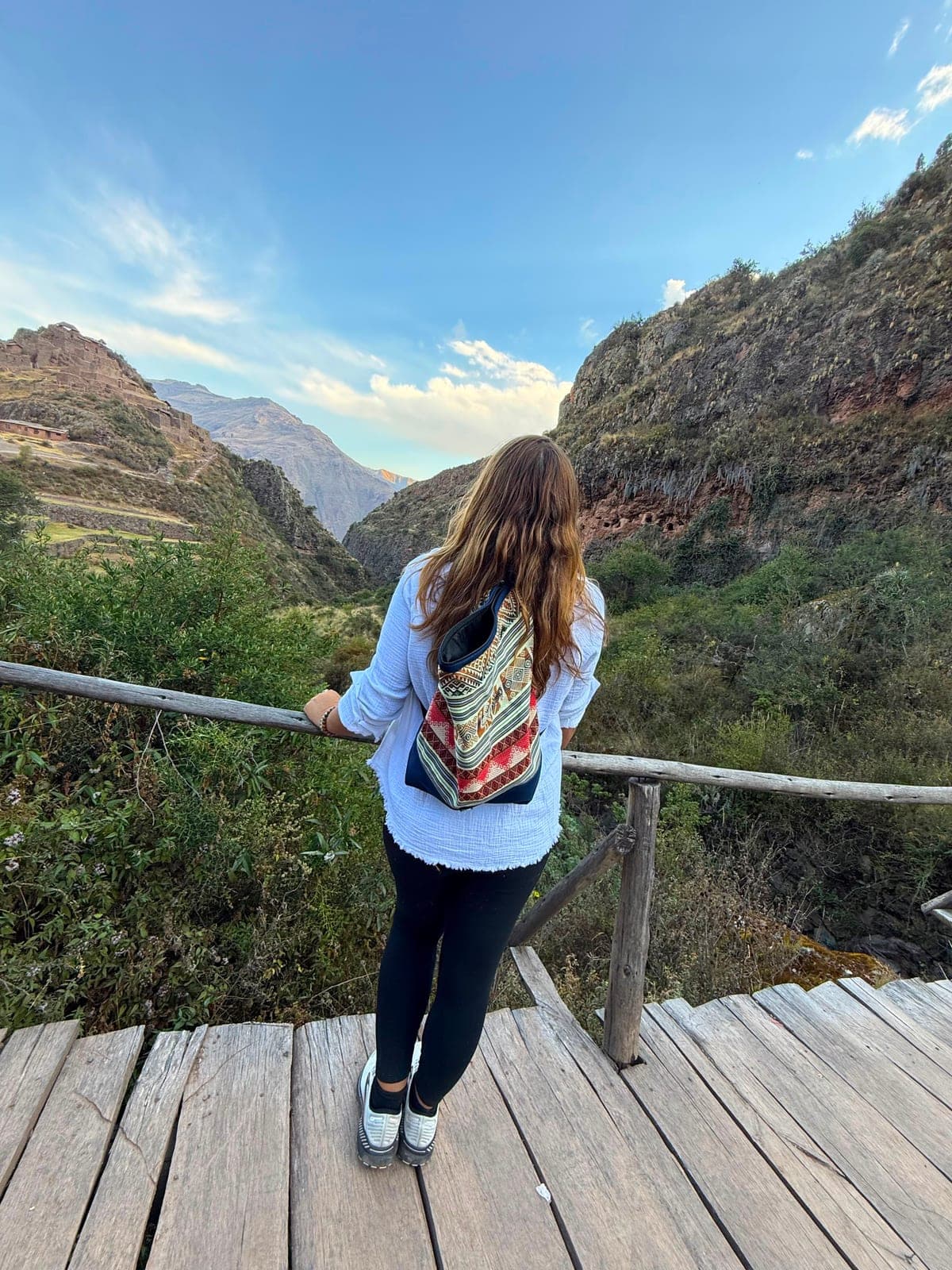
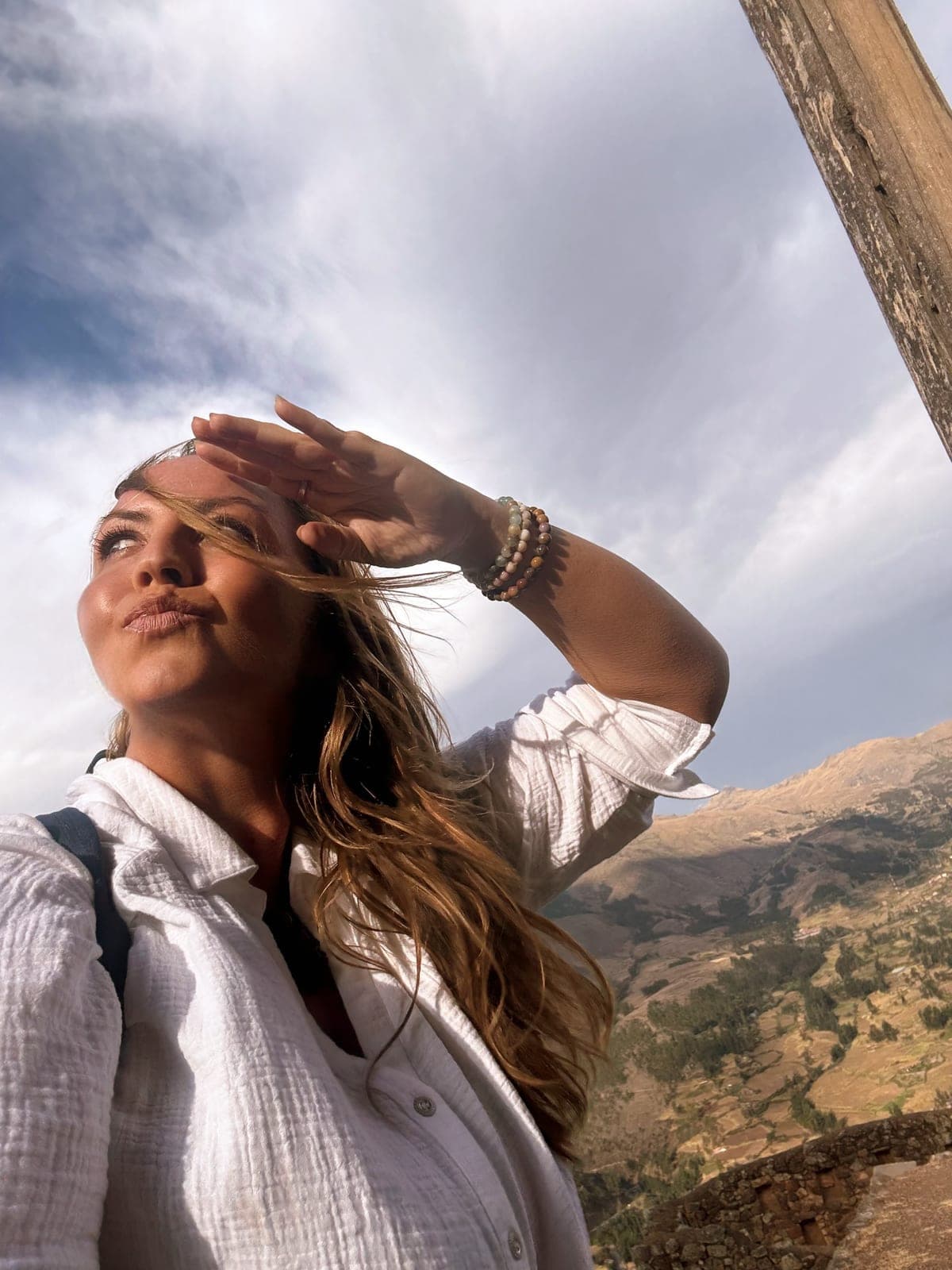
I knew we would not be doing any serious hiking that day, so I reached for a simple natural-fiber shirt. Somehow it just felt right. It seemed more fitting for the surroundings than modern synthetic clothing, as though blending into the landscape mattered just a little more.
The entrance was lined with local artisans selling colorful textiles, handmade crafts, jewelry, and woven goods. Before long I found a beautifully handcrafted backpack covered in the vibrant colors Peru is known for. It was the perfect size — small enough to carry comfortably all day yet large enough to hold everything I needed. I put it on immediately, and before the trip was over, it had become my favorite backpack.
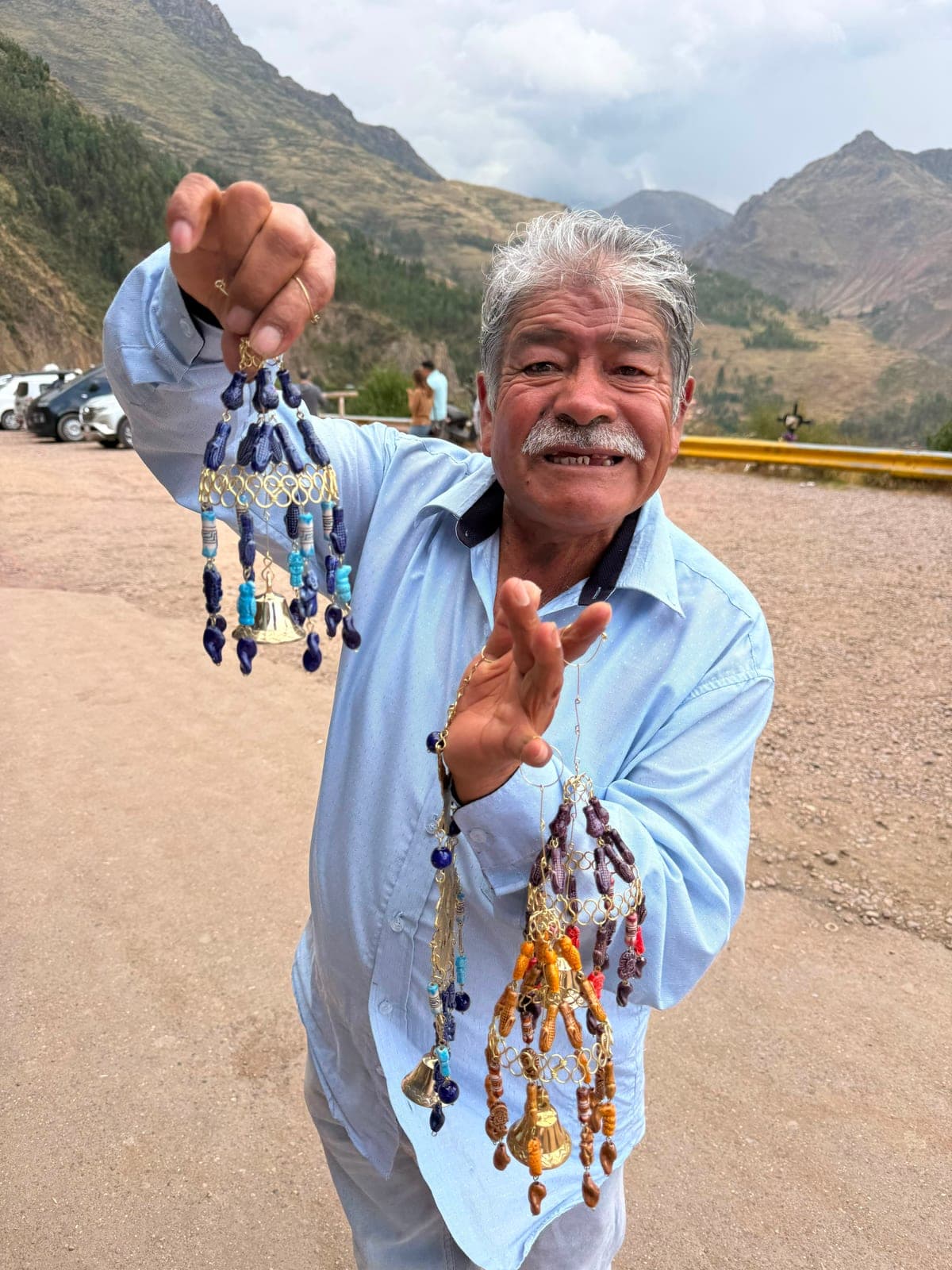
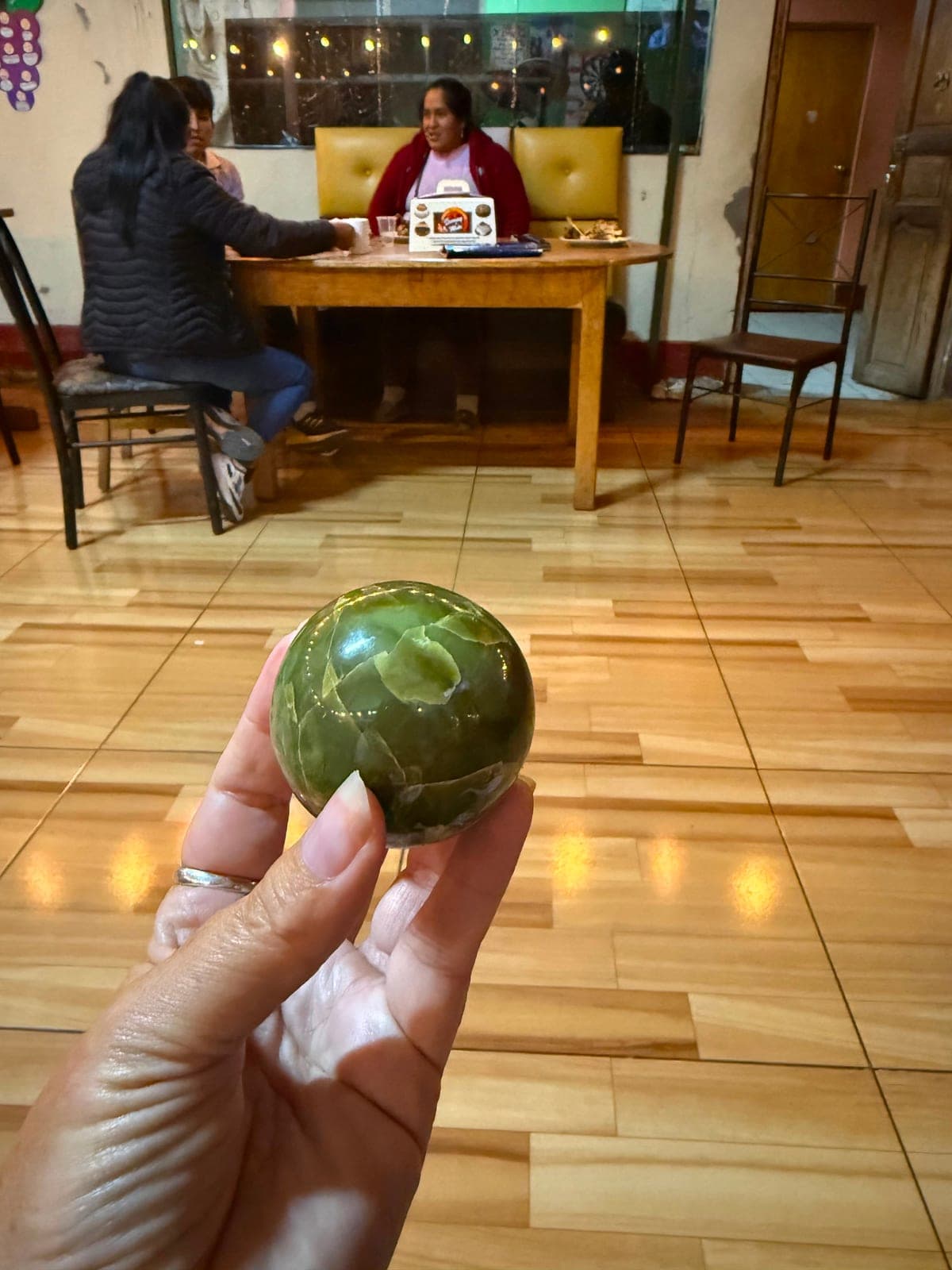
I also picked up a small crystal before rewarding myself with a glass of freshly squeezed orange juice. Between the altitude and the walking, I could already feel my energy fading.
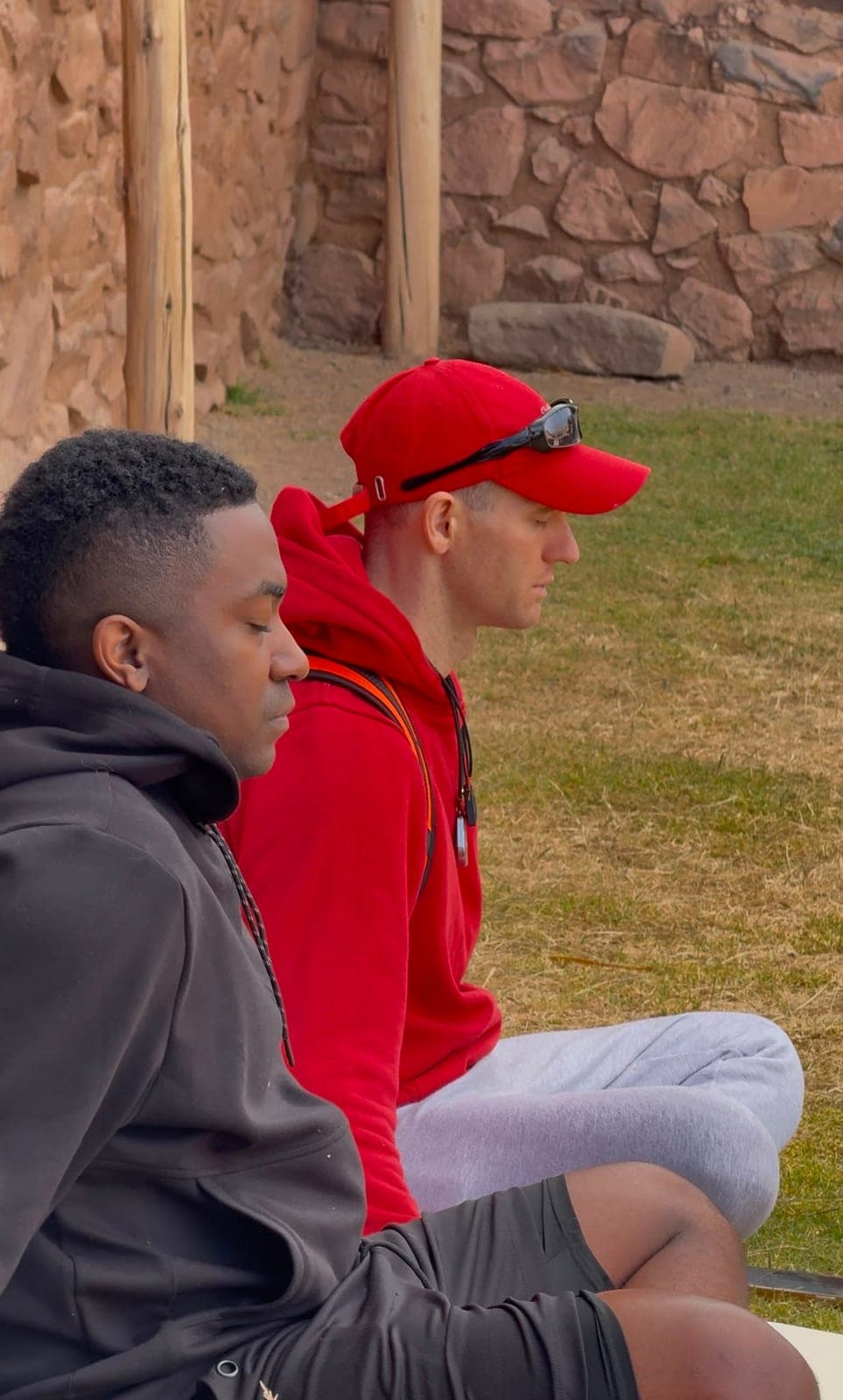
As the others explored and meditated together, I found myself drifting away from the group. It is something I have done for as long as I can remember. While everyone naturally gravitates toward the main attractions, I become curious about the quieter corners that most people walk past.
I wandered toward the back side of the mountain where the crowds began to disappear. Ancient stone carvings quietly emerged from the landscape. Narrow pathways wound between weathered walls that had stood for centuries. A clear mountain stream continued flowing just as it always had, indifferent to the passing of time.
Somewhere high above me I heard sheep calling to one another. I searched the hillsides but could only catch glimpses of them as they climbed farther into the mountains, their voices echoing across the valley.
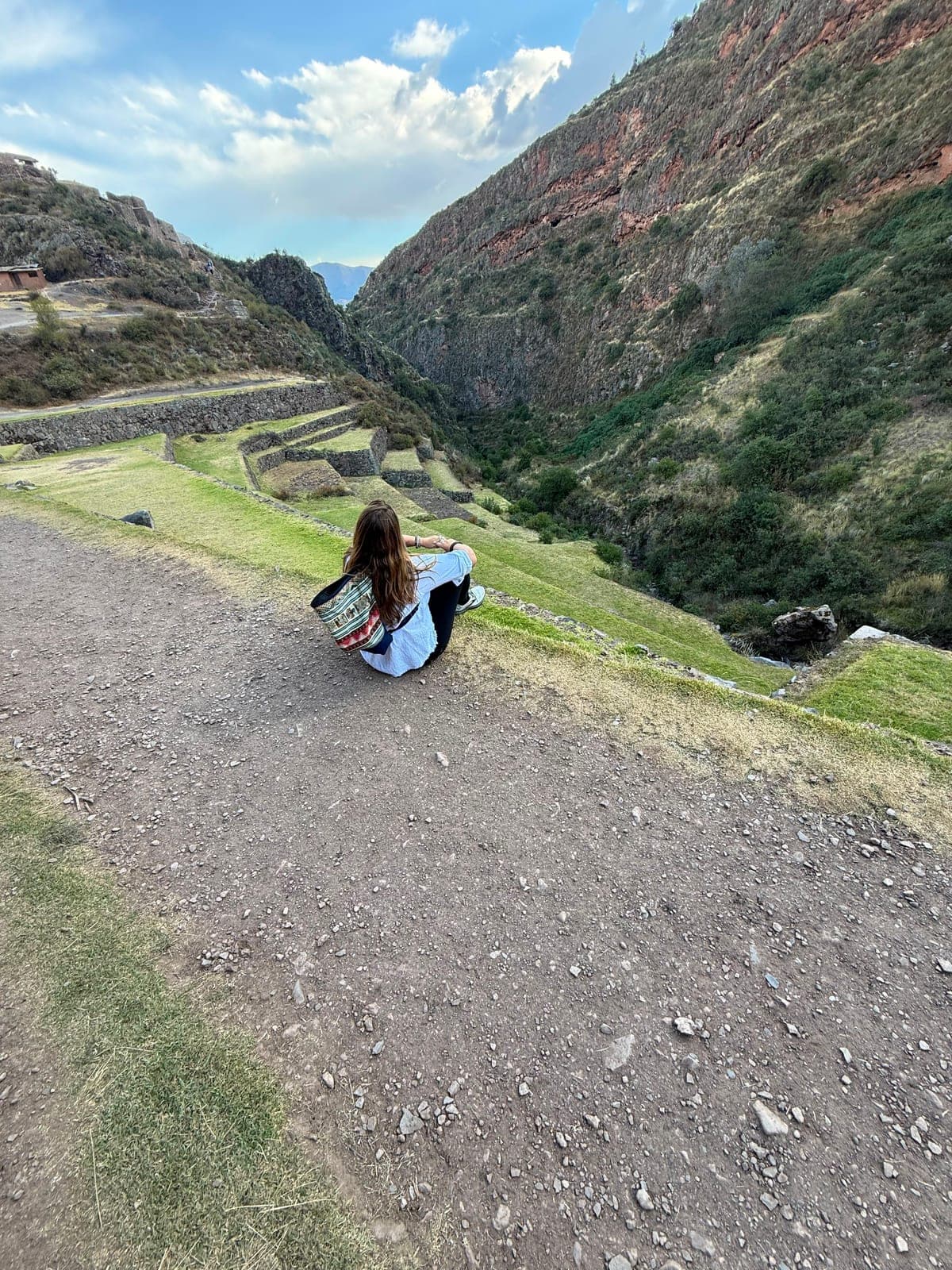
Eventually I came across a bridge overlooking what had once been part of the ancient settlement. Standing there in complete silence, I tried to imagine what daily life must have looked like hundreds of years ago. Children running. Farmers tending terraces. Families gathering where visitors now wandered with cameras.
Toward the end of our visit we met a small group of alpacas.
Alpacas have an expression that is impossible to describe. They simply stare at you with complete confidence, making you wonder whether they are about to become your best friend or spit directly in your face. Thankfully, ours seemed content simply observing us as carefully as we were observing them.
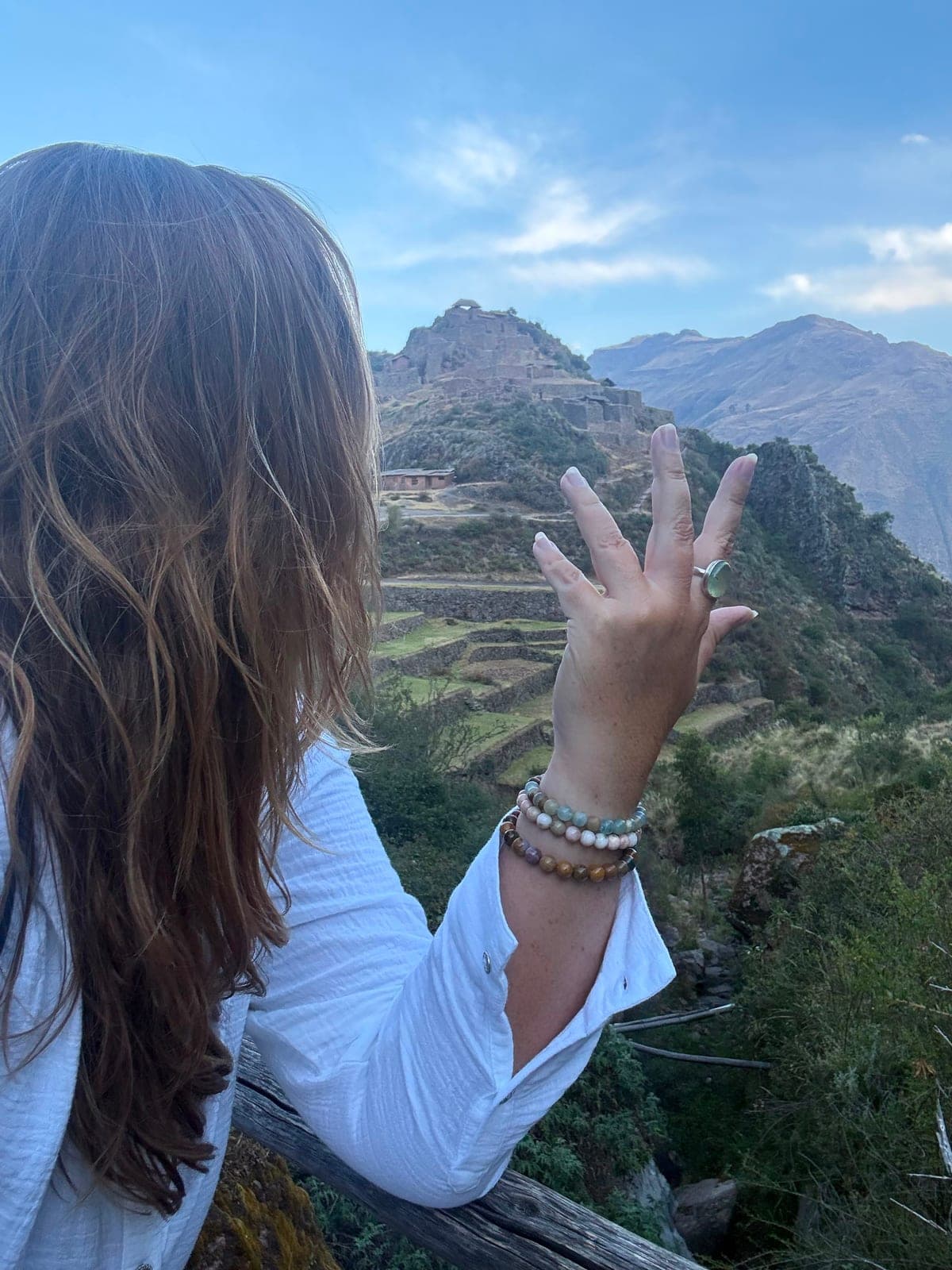
Whenever possible, I intentionally schedule my photography around sunrise or sunset. After fifteen years as a photographer, beautiful light has become second nature to me. Midday sunlight may seem perfect to most people, but photographers know it often creates the harshest shadows and the flattest images. I would choose an overcast sky over bright noon sunshine almost every time.
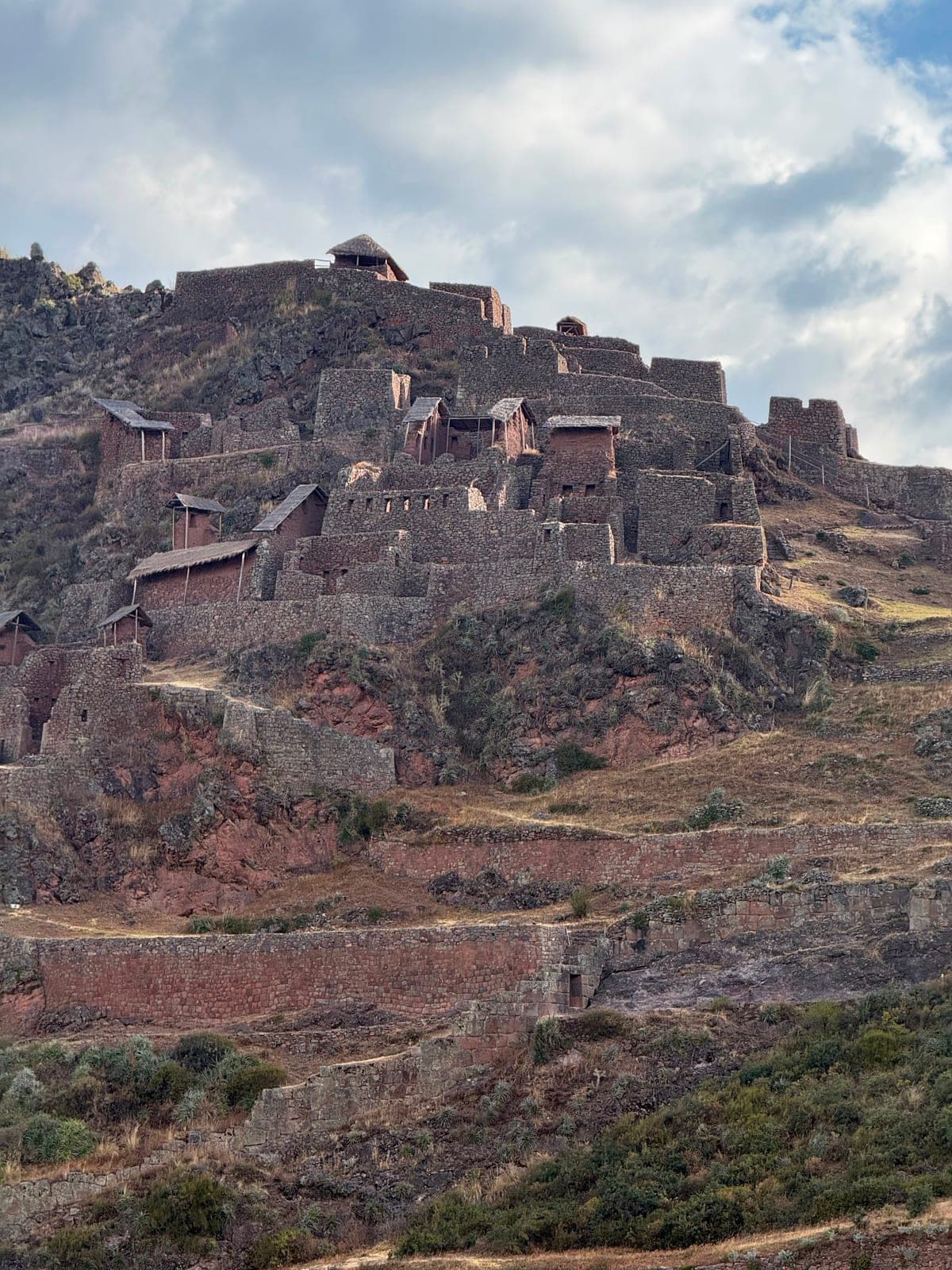
As the evening light softened across the terraces and mountains of Pisac, the ancient stones seemed to glow in warm shades of gold, making every direction feel worthy of one more photograph.
That evening we returned to our Airbnb tired, dusty, and hungry. Once again dinner was remarkably familiar: chicken and French fries. It became something of a running joke. No matter where we stopped, the menu almost always seemed to feature the same dependable combination.
We turned in early that night, knowing the next day’s destination would be very different.
Ollantaytambo Was Waiting
Unlike Pisac, Ollantaytambo would demand far more of us physically. The hike will be longer, the climbs steeper, and the altitude impossible to ignore.
But even more exciting than Ollantaytambo would be my meeting with the flute man after Pisac…