JUL 24 2026 · SACRED VALLEY, PERU · TRAVEL
Peru, Part Three: The Red Thread Flute and an Inipi Sweat Lodge
I spent months preparing for Peru long before I ever boarded the airplane.
One thing I knew I wanted to bring home wasn’t a souvenir. It was music.
I had been meditating and music kept coming up, especially the flute. I became fascinated with traditional Andean instruments. During my research I found Omar, a respected flute maker in Peru whose father was a music healer and a descendant of Quechua Indians of the Peruvian Andes. For many years, his father has been recovering, preserving, studying, and intuiting the ancestral music of Peru. Three months before leaving, I sent Omar a message telling him I’d be traveling through the Sacred Valley and hoped to visit if our schedules happened to align.
Three Hundred Feet
At the time I had no idea where I would actually be staying. My Airbnbs had already been booked, but Sacred Valley was still just a collection of names on a map.
After visiting Pisac, we returned to our Airbnb in Calca for the evening. I sent Omar another message.
“I’m here now. If you’re around tomorrow, I’d love to stop by.”
He replied with his address.
I opened the map on my phone and just stared.
He wasn’t across town.
He wasn’t twenty minutes away.
He was literally across the road.
Three hundred feet.
In an entire country, after months of planning, I had unknowingly booked an Airbnb beside the very craftsman I had hoped to meet.
I don’t believe every coincidence has to mean something.
But some moments refuse to feel accidental.
That was one of them.
He simply replied, “Come tonight.”
So I walked over.
Omar’s Workshop
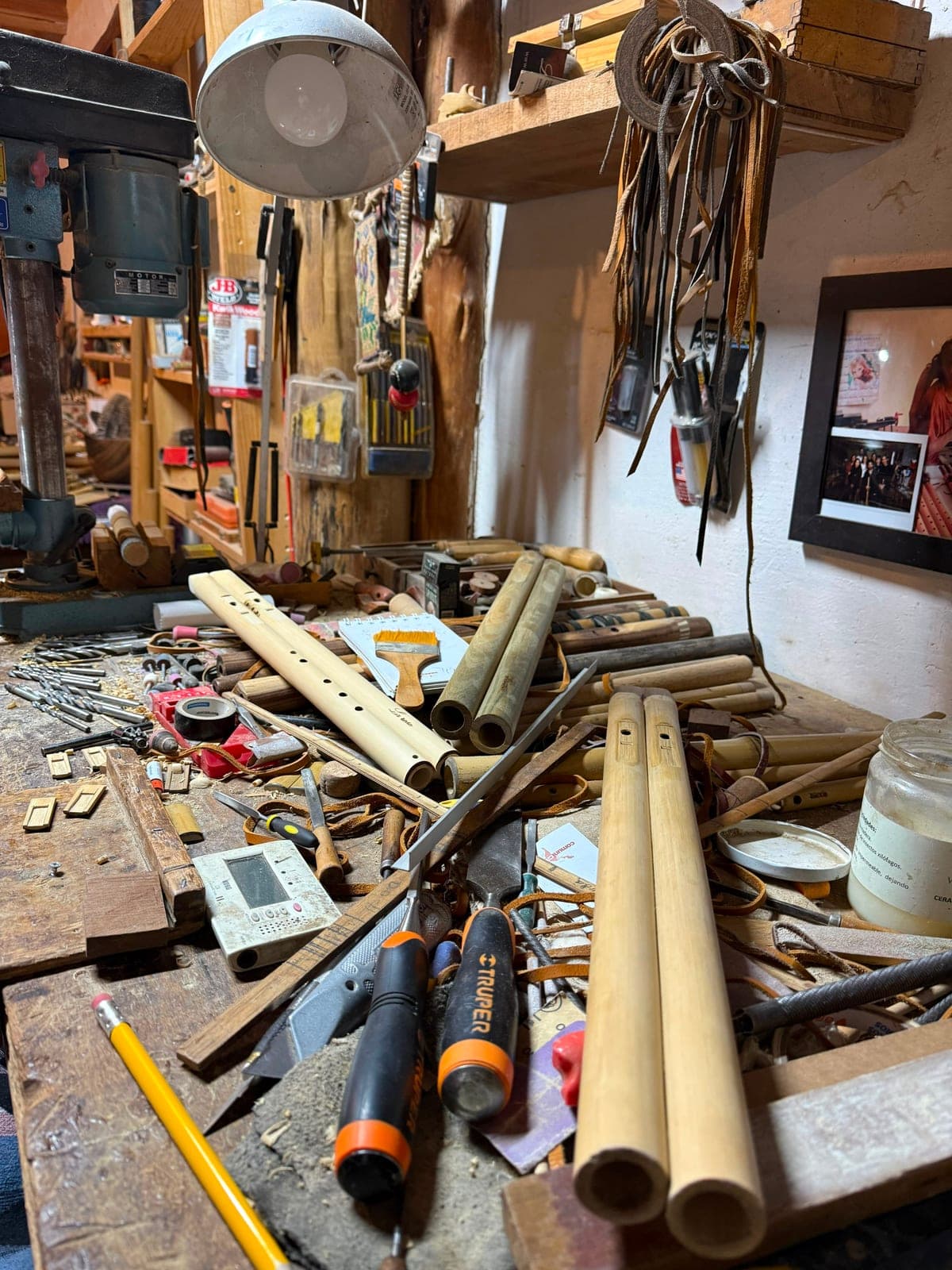
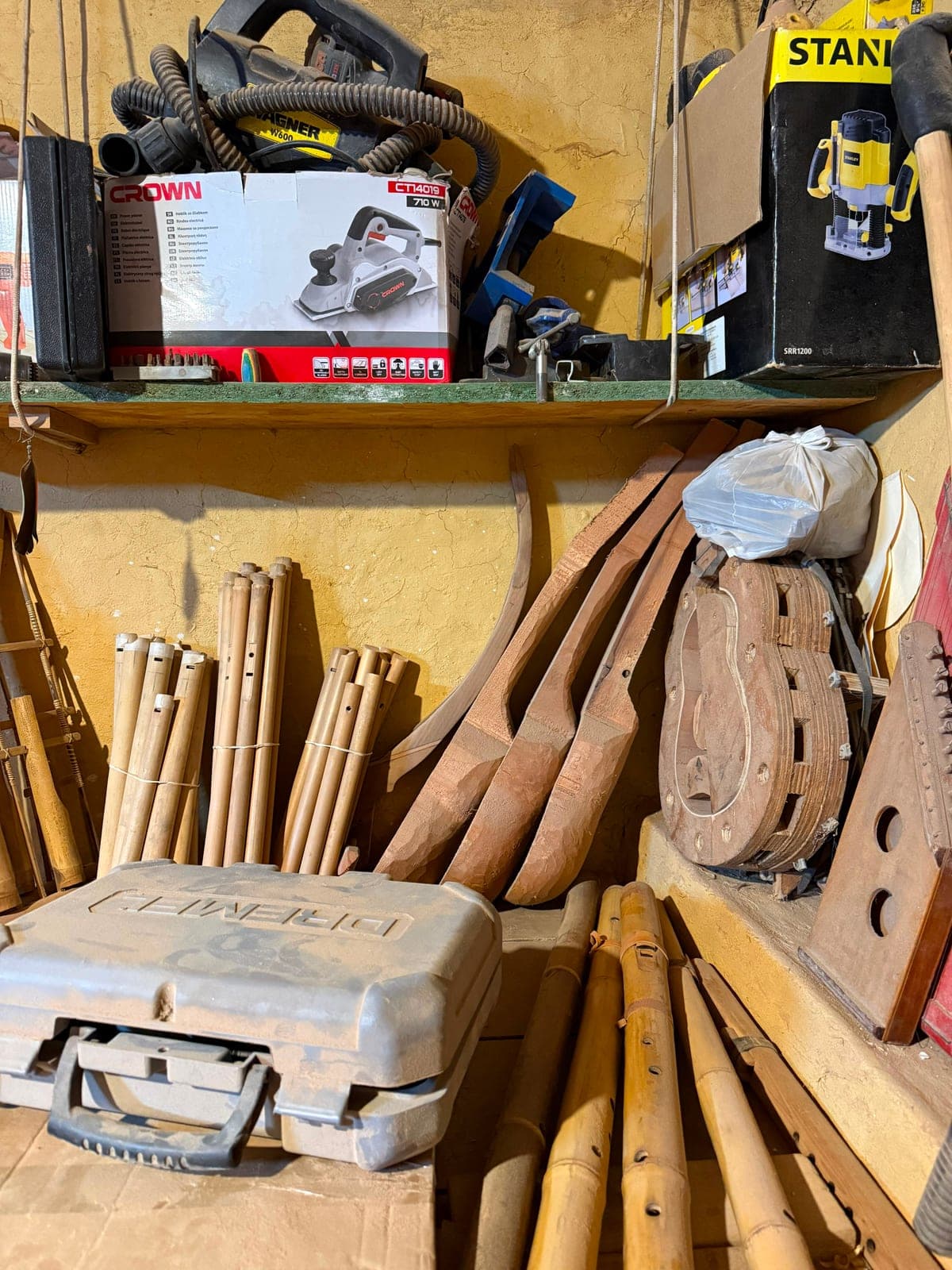
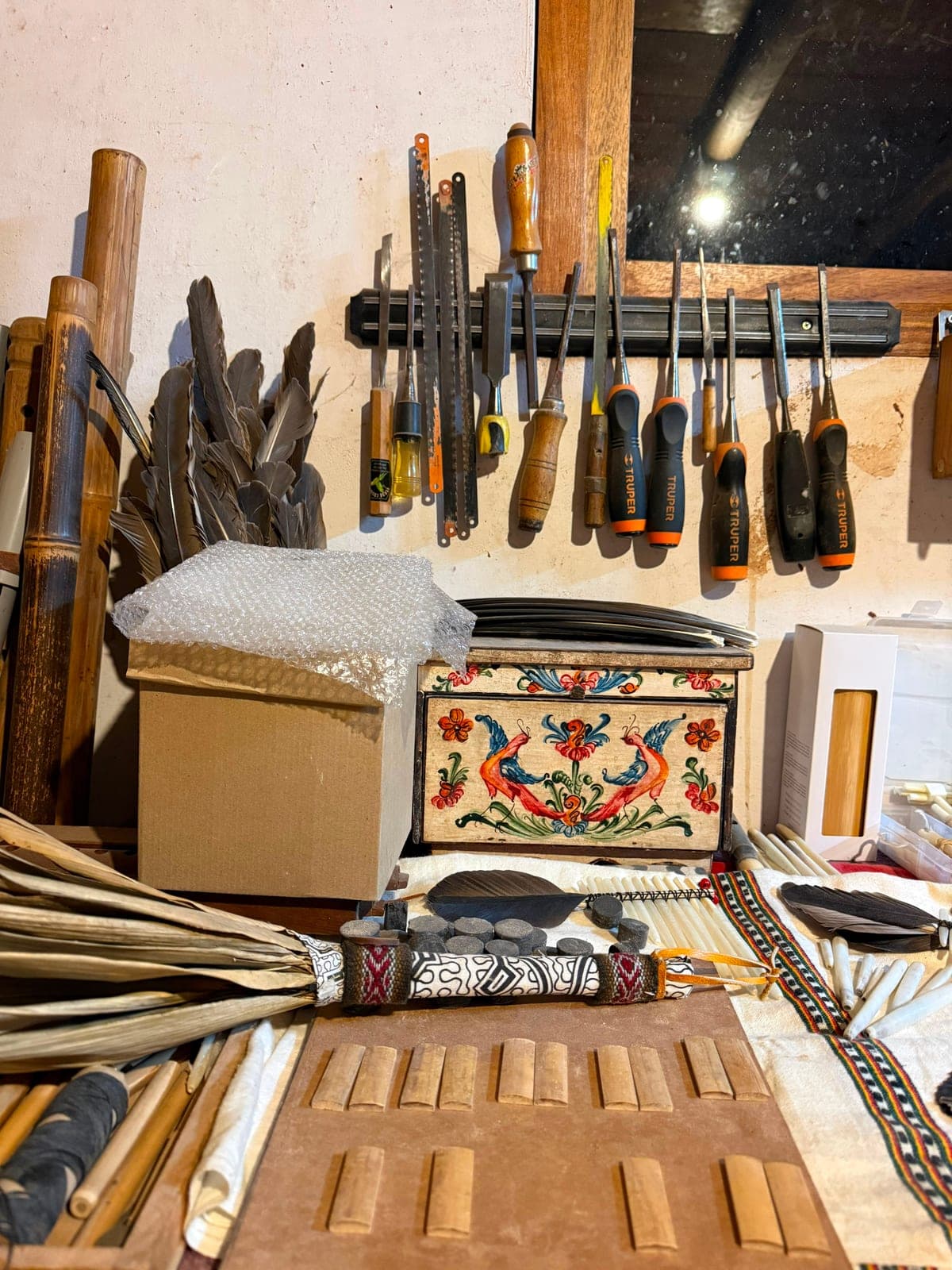
The moment I stepped into Omar’s workshop I felt completely at home. I’ve always loved people who build things with their hands.
Woodworkers. Artists. Blacksmiths. Instrument makers.
Artists whose fingerprints become part of what they create.
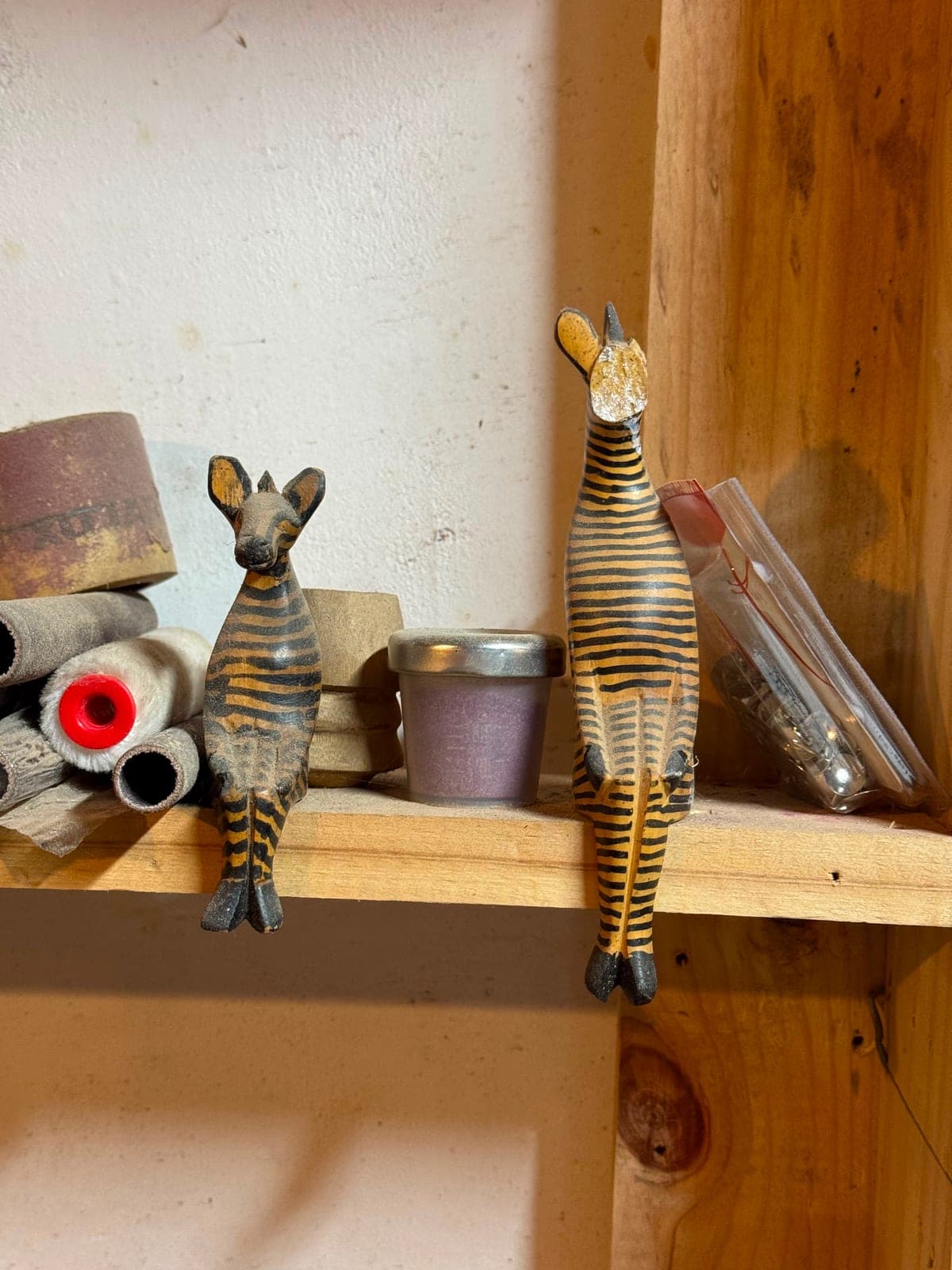
Their workshops always tell a story. Dust collects in forgotten corners. Half-finished ideas sit beside completed masterpieces. Every tool has earned its place. It feels less like entering a room and more like stepping inside someone’s mind.
Omar’s workshop was exactly that.
Bamboo flutes lined the walls, each one unique.
There was something unmistakably different about Omar from the moment we met. He moved through the world with an unusual stillness, as though he was paying attention to things most people never notice.
He would quietly lift his head and breathe in the air, not as someone catching a scent, but as if he were listening to something invisible. His gaze drifted beyond the immediate moment, lingering on the mountains or the horizon with a quiet curiosity that made it seem as though he was seeing far more than what was in front of him.
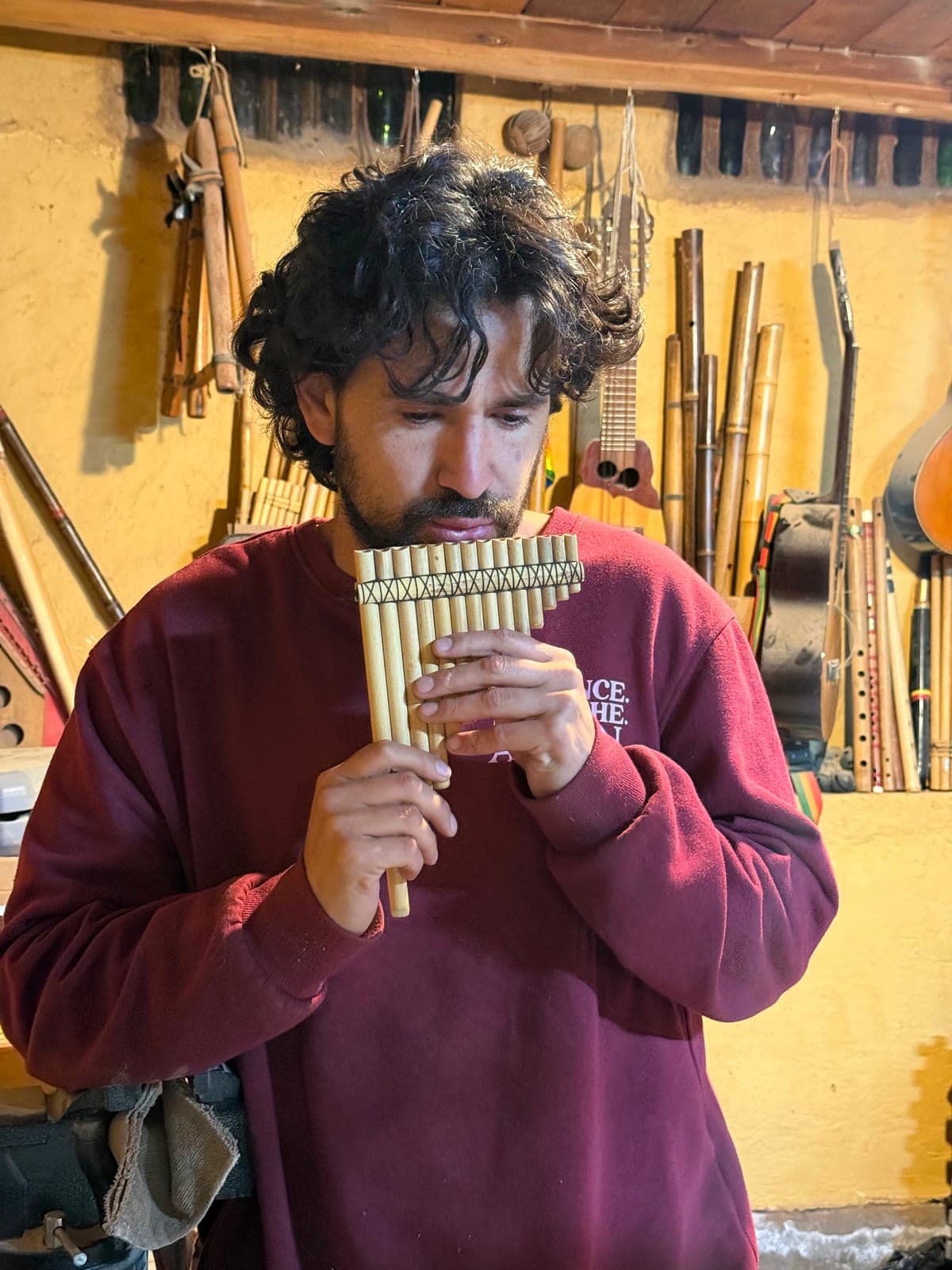
He spoke gently, without hurry, and carried himself with the kind of calm that can’t be manufactured. Whether you call it intuition, presence, or simply deep awareness, it felt as though he experienced the world through a different lens. Being around him made me slow down and pay closer attention to my own surroundings.
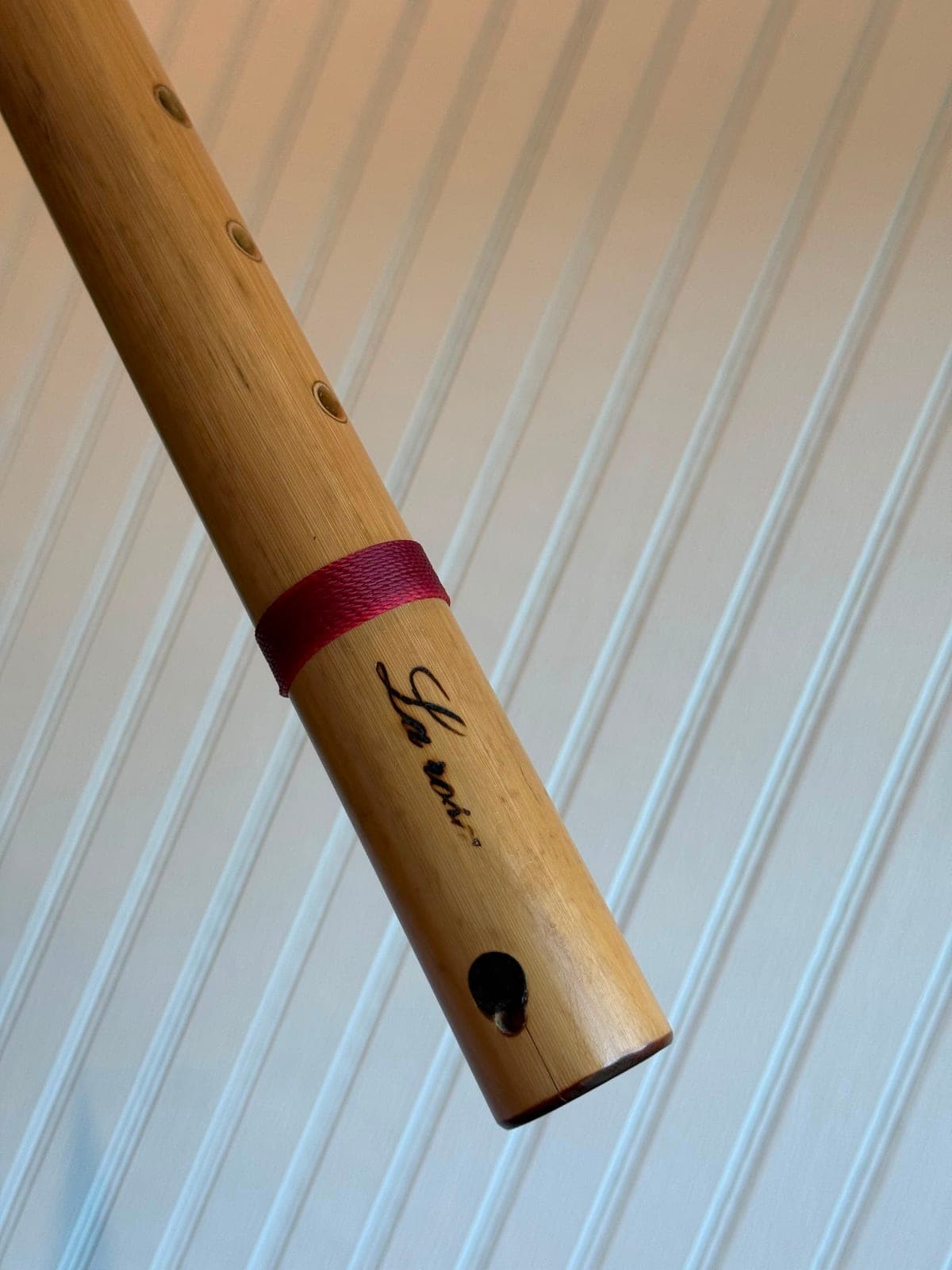
I eventually chose a flute with a small carved bird near the top. Before handing it to me, Omar wrapped it with a beautiful red waxed cord. I assume it was for protection. He also reminded me that flutes should always be wrapped in a blanket when not being played.
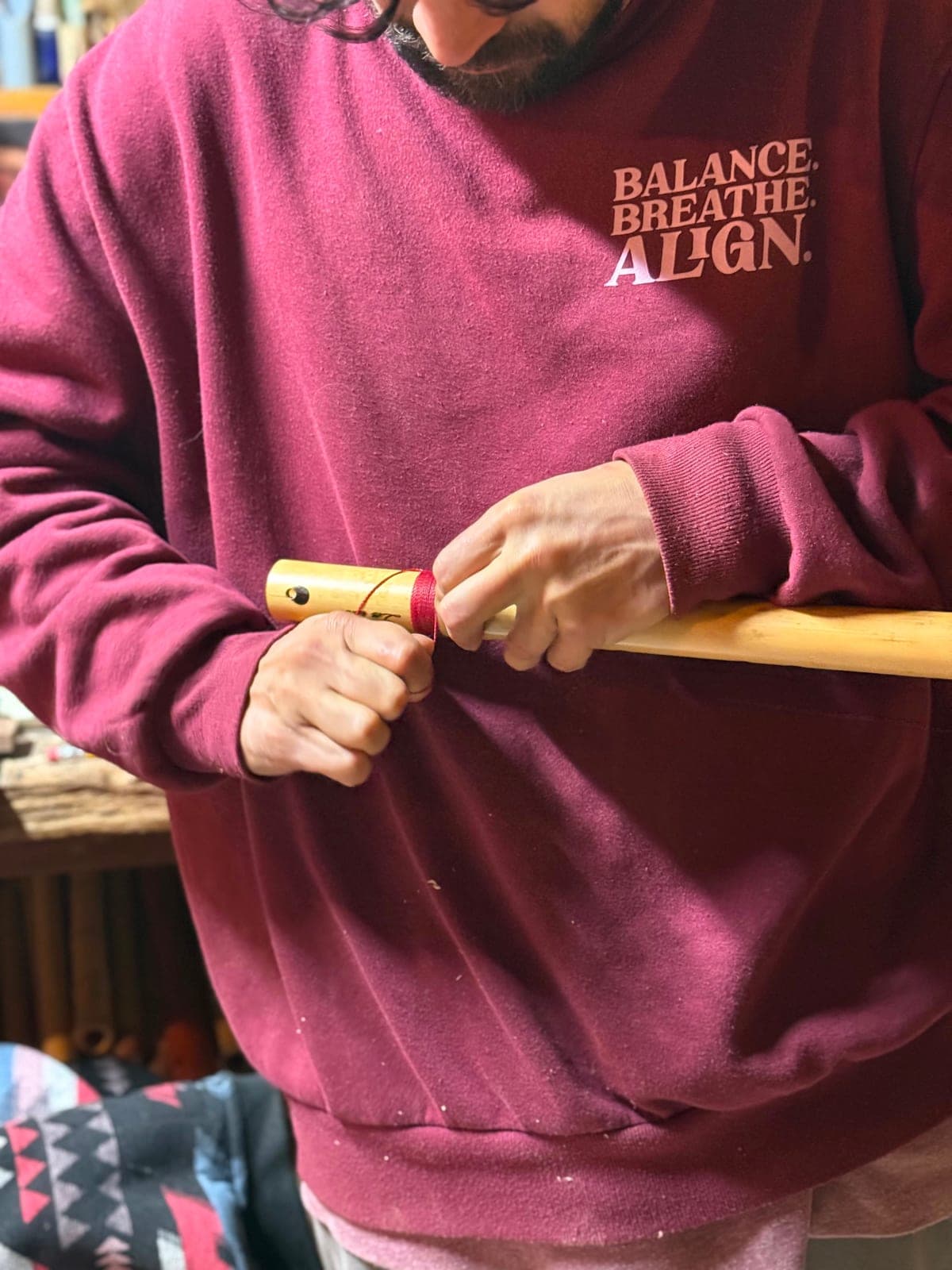
It wasn’t just a purchase.
It felt like receiving something that carried a history.
Before we left, Omar gave Jacob a small piece of ocote wood.
He explained that it should be burned while speaking prayers, blessings, or good intentions.
If harsh words had been spoken, if relationships had become strained, or if negative energy had settled into a home, the smoke was meant to symbolize letting those things go and making room for peace instead.
The timing wasn’t lost on me.
Relationships are delicate.
Sometimes the people closest to us misunderstand us the most. Sometimes people project their own fears onto others. Sometimes kindness isn’t returned in the same spirit it was offered.
The older I get, the more I realize that we don’t control how others interpret us.
We only control how we choose to show up.
That little piece of wood became much more than firewood.
It became a reminder to speak carefully.
To assume good intentions whenever possible.
And to leave people better than you found them.
The Kitten at the Gate
We said our goodbyes. I left in awe at the magic of Omar. And just as we left the gate, a small kitten walked up to my feet and lingered. I wasn’t shocked because, ironically, cats, dogs, animals are always drawn to me, usually stray animals. I picked it up, of course, and kissed it a few times.
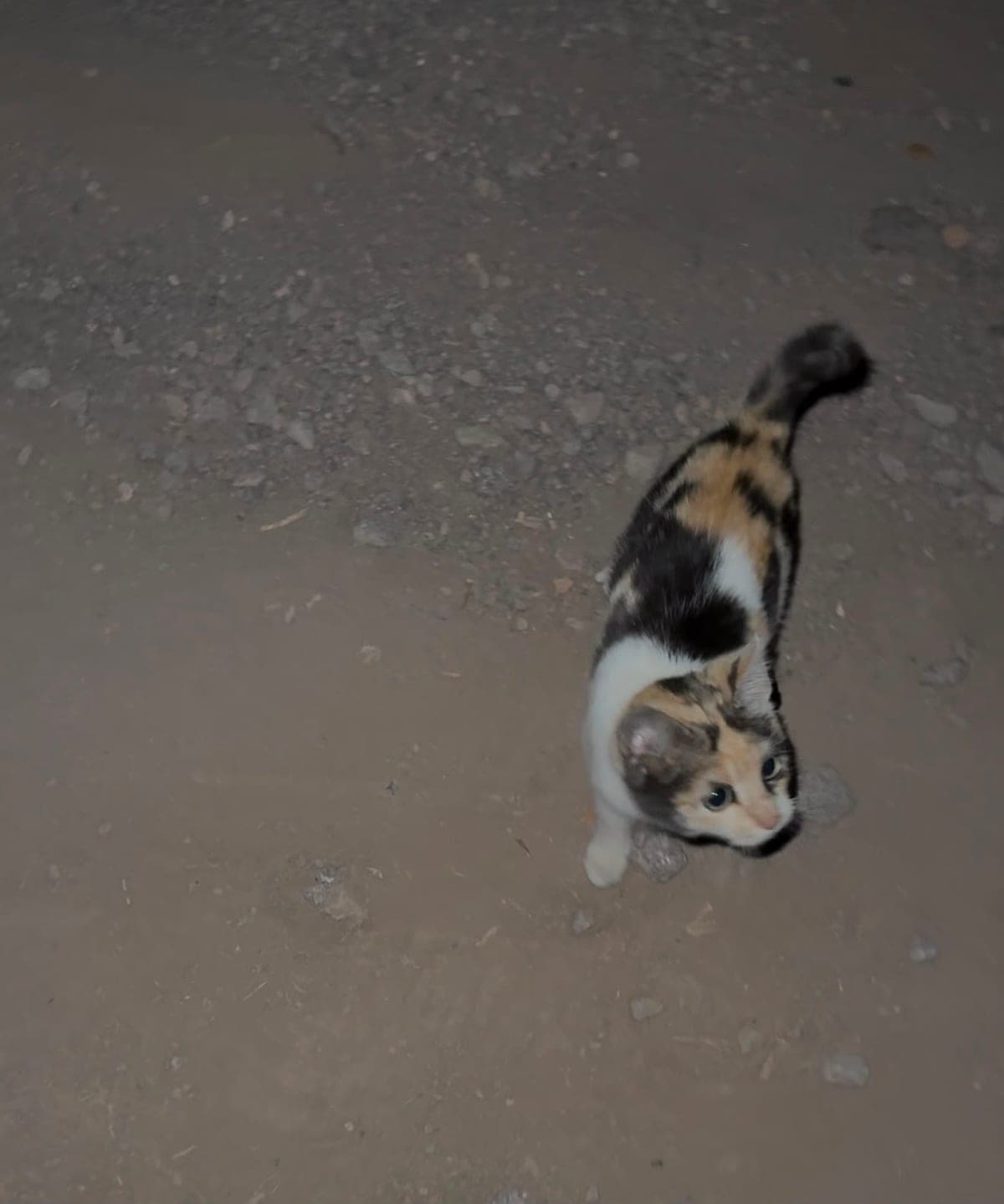
Ironically, the night before leaving for Peru, I discovered a tiny tuxedo kitten crying alone from a bush while riding my bike in Georgia. Somehow I was the one who heard it. After maybe an hour of trying to retrieve the kitten I finally succeeded. The kitten bit my thumb as I picked it up, leaving my hand swollen for days, but it also ended up changing my pet sitter’s life. After caring for both my cat, Phoenix, and the rescued kitten while I was away, she decided she wanted to become a full-time pet sitter.
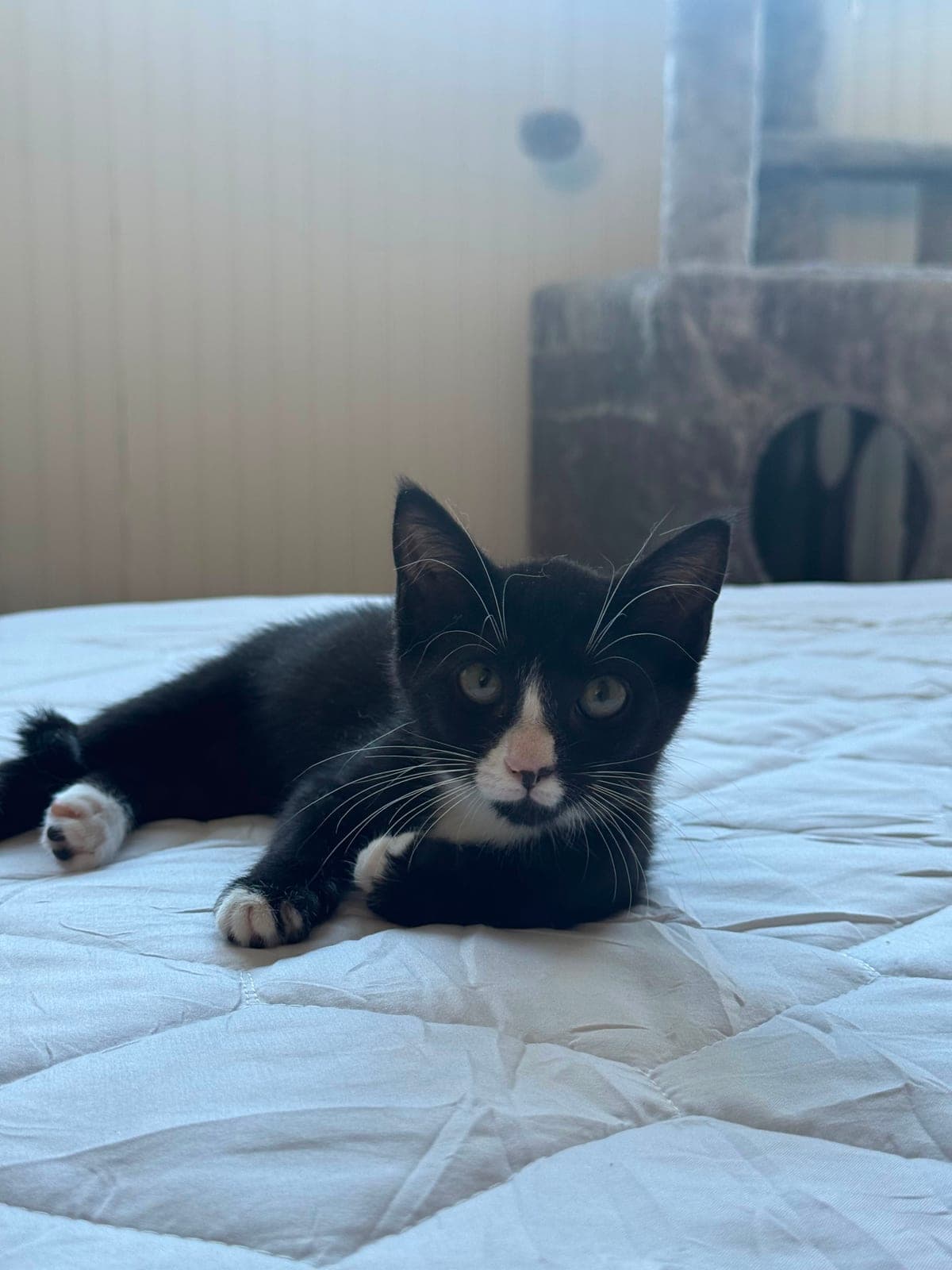
Animals have always appeared when I least expect them. This year I’ve had to rehome three stray animals, two dogs and a cat.
Later, at Lake Titicaca, another cat would do the same. I would give that cat some yummy sardines that I brought from the USA.
I’ve stopped asking why cats find me and I just accept it.
I went home that evening and just soaked in all of the goodness that I felt while visiting Omar and his flute shop.
Ollantaytambo
The following morning we drove to Ollantaytambo. It would be almost a two-hour drive.
The narrow streets were packed with traffic, barely wide enough for two vehicles to pass one another. Once inside the archaeological site, I quickly realized why people speak so highly of it.
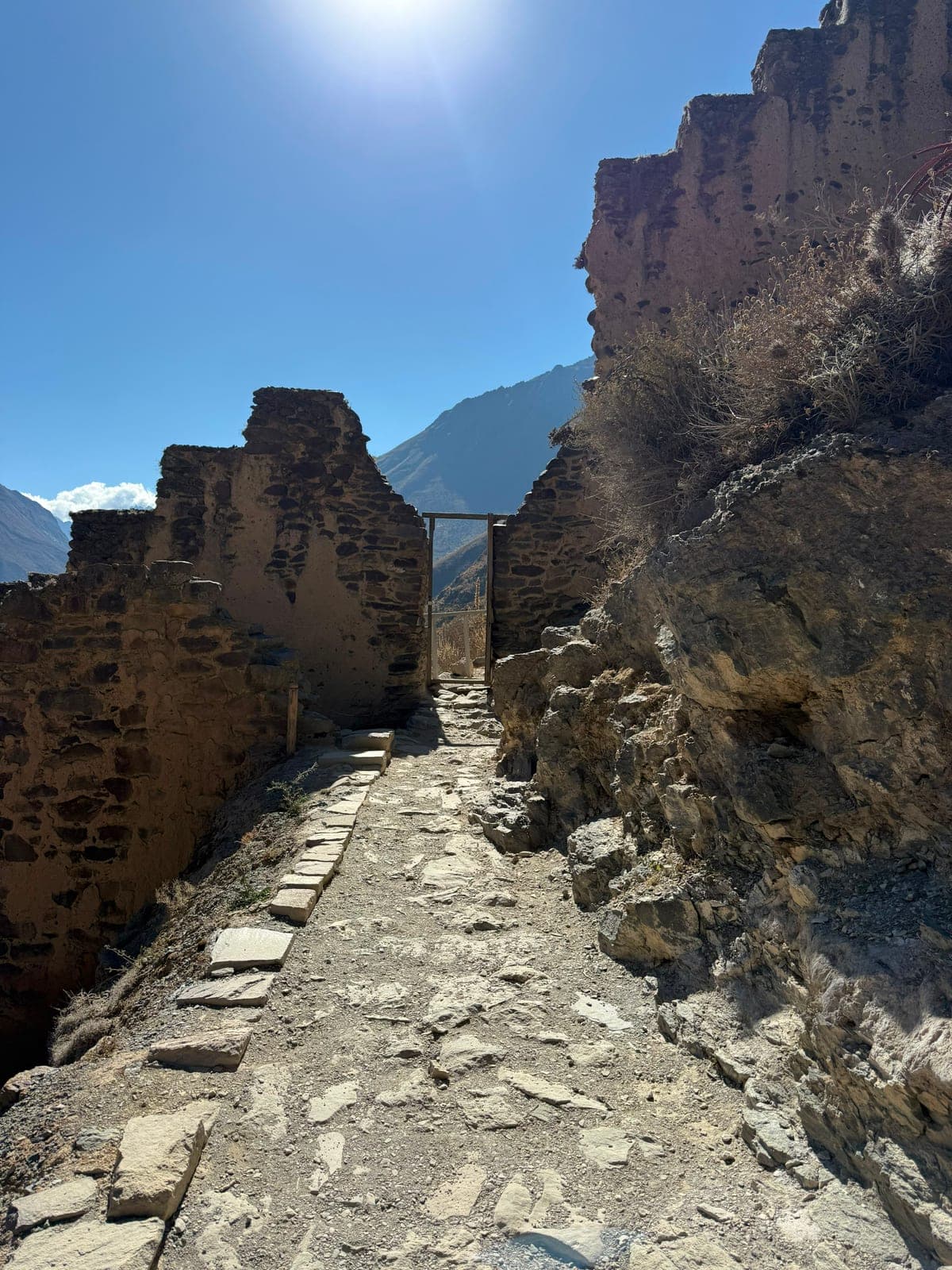
The climb was steep, especially at altitude.
When I lived in Colorado, I hiked a few 14ers with ease. My muscle memory came back surprisingly fast, even if my lungs and body reminded me I wasn’t quite in that shape anymore.
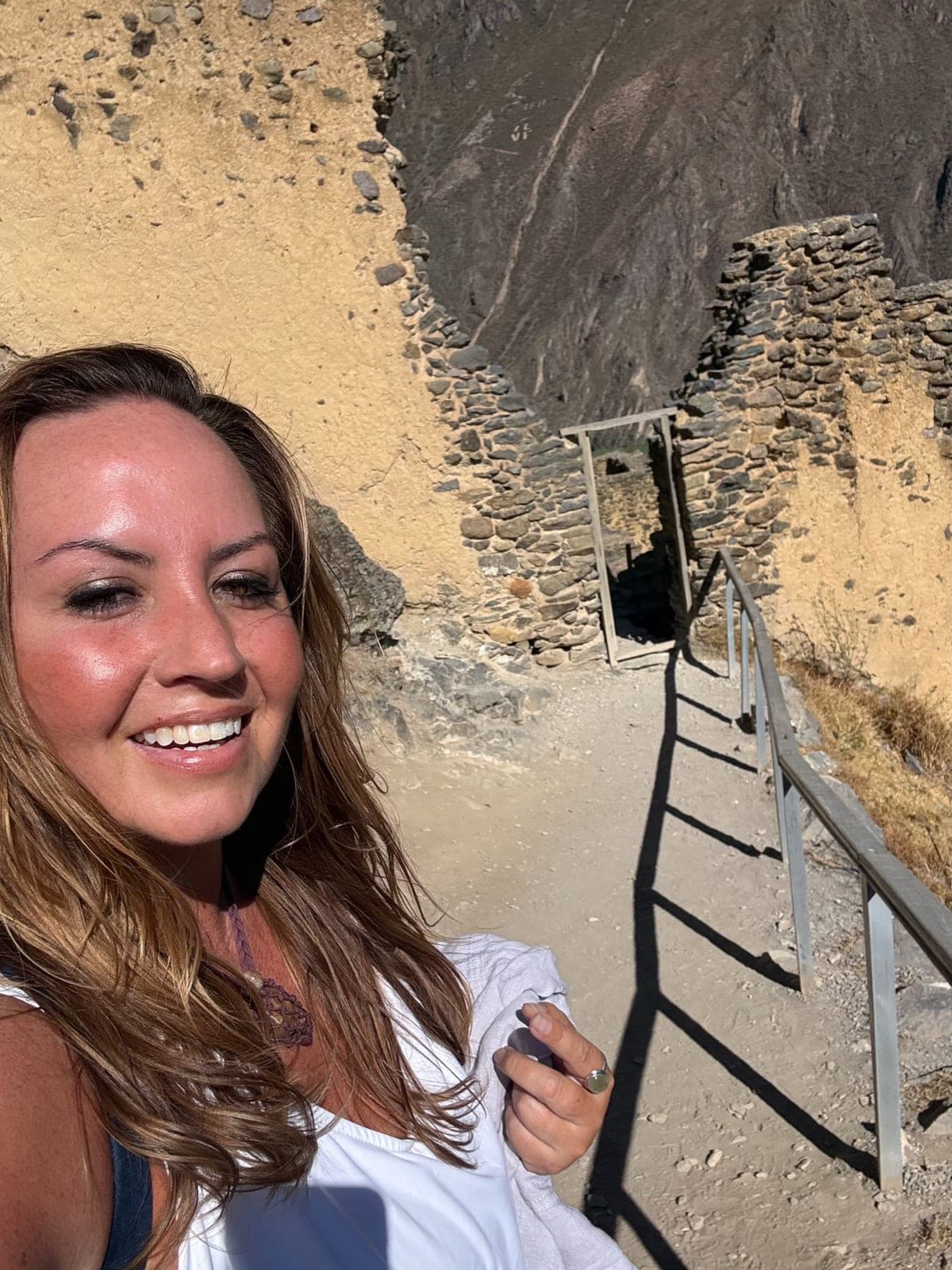
What surprised me most, though, was the weather.
Everyone talks about winter in Peru, but I was warm the entire trip. The high mountain sun was incredibly strong, and despite the elevation, I never once felt cold. If anything, I wished I had packed fewer layers.
We wandered through small artisan shops, looked at handmade drums and crystals. I also ordered a strawberry juice, which was just water and strawberries, I think it would’ve been better just eating strawberries plain.
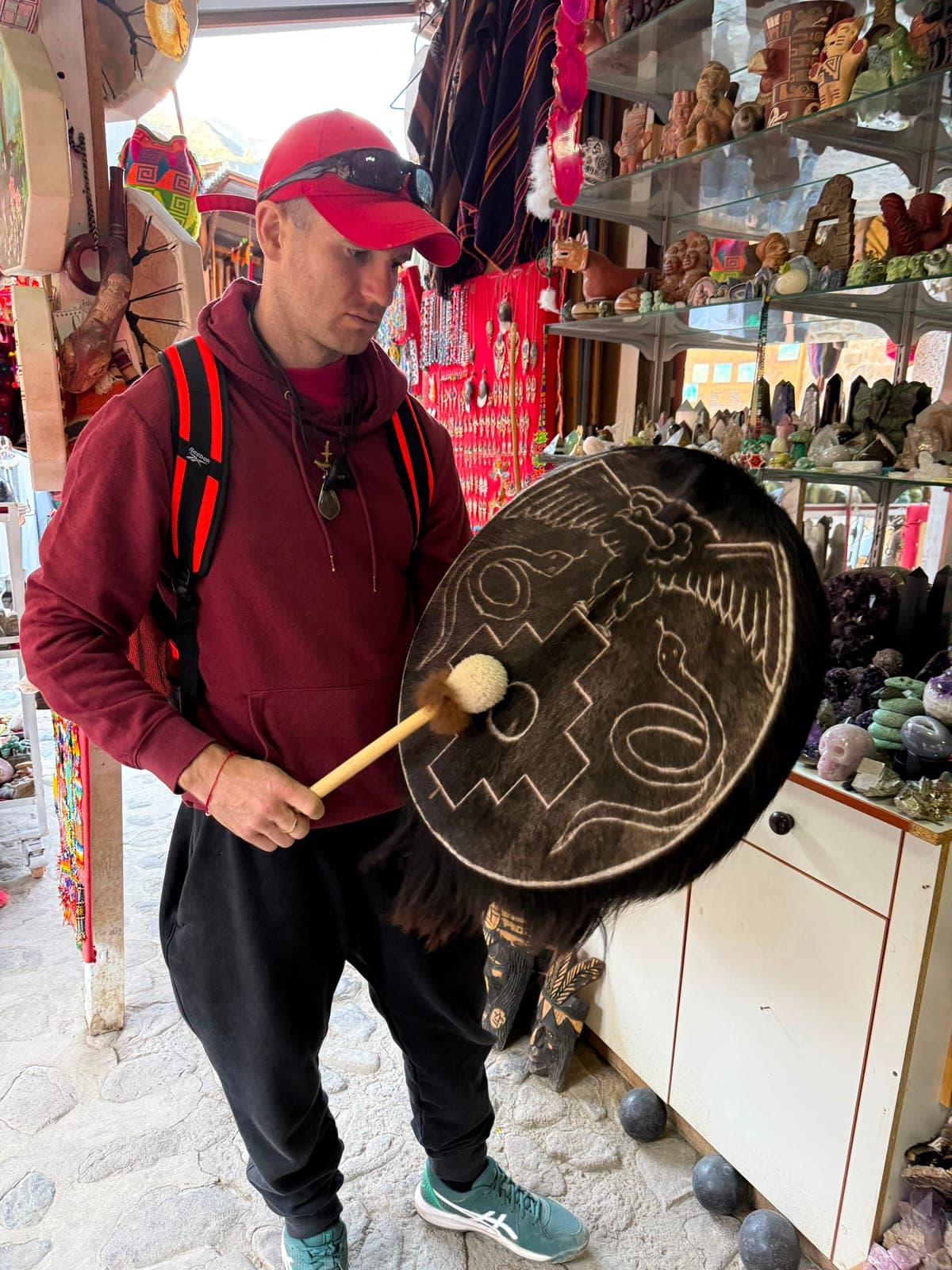
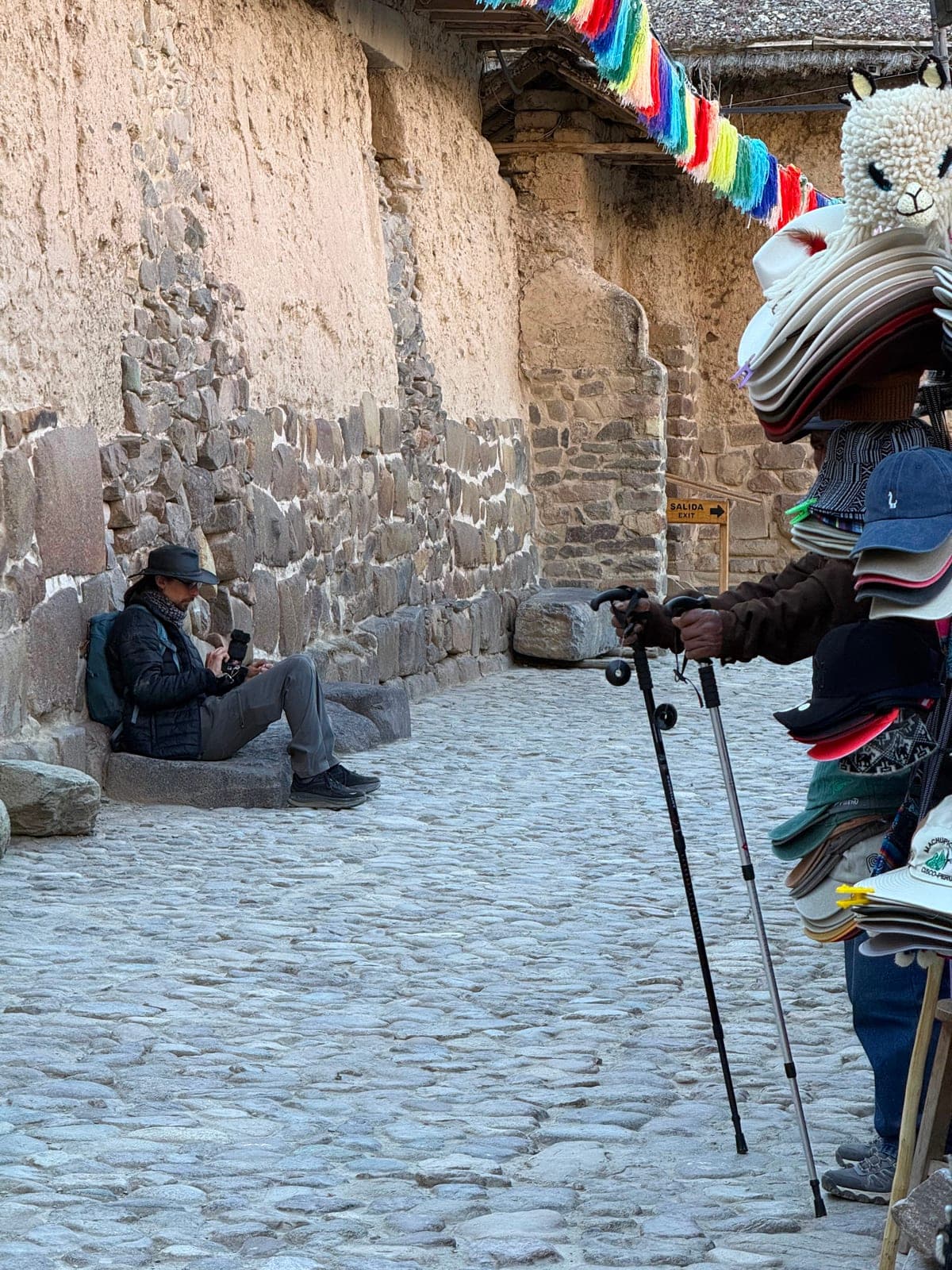
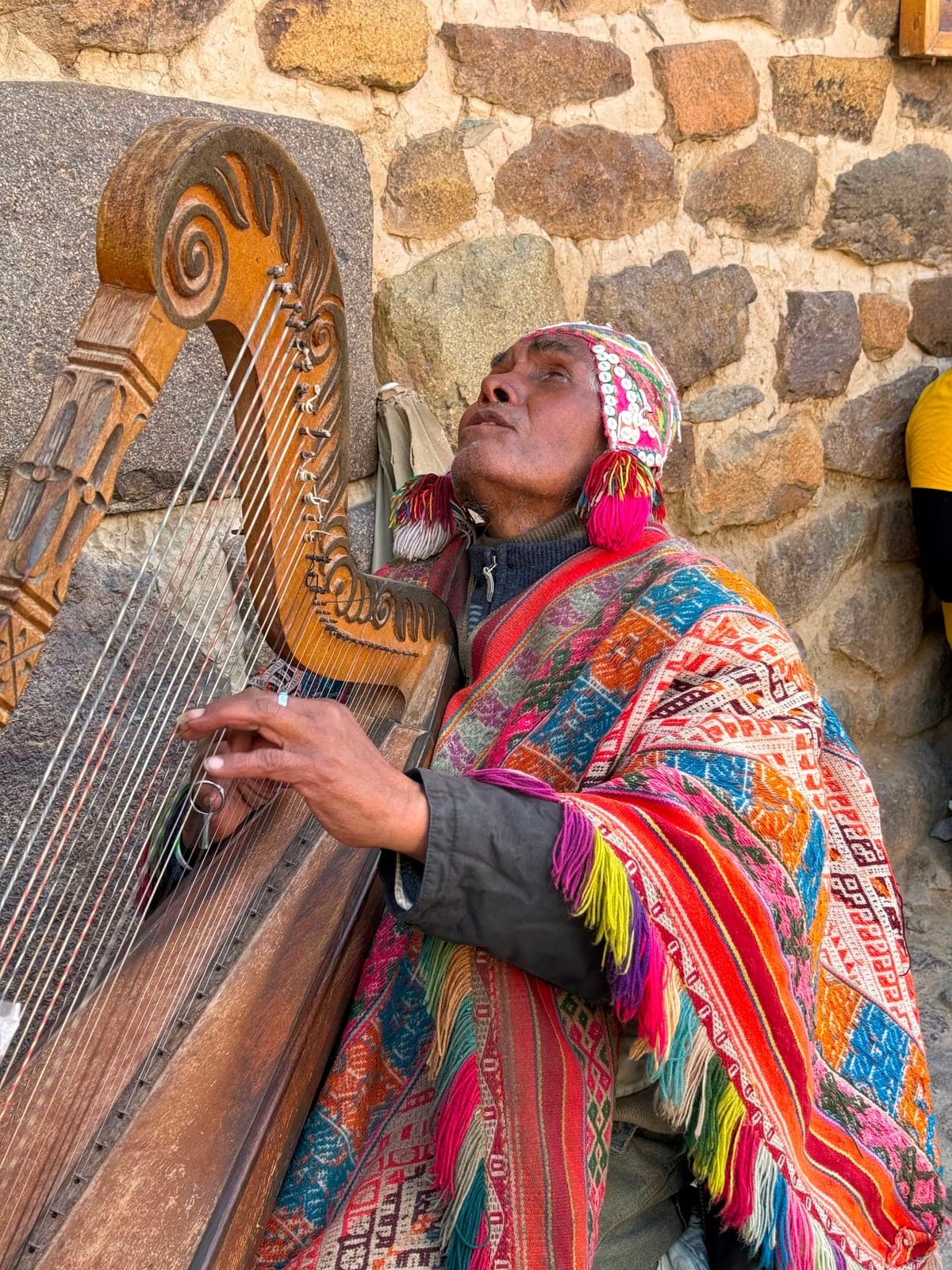
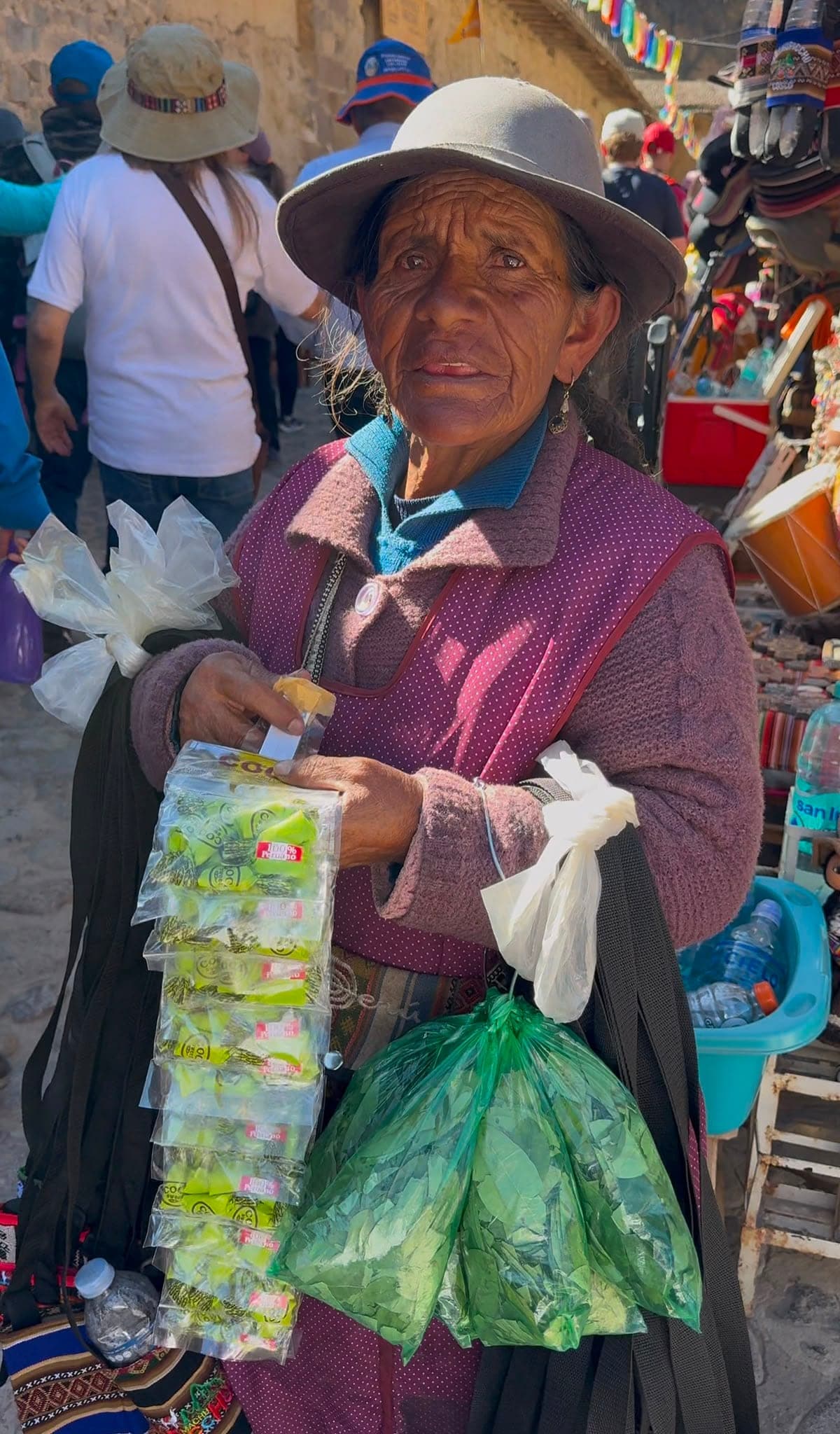
There was a blind man playing a harp, and numerous elderly women walking around trying to sell their trinkets with their leathery skin from the Peru sun beaming down on their faces daily for 60 years. It was fantastic. The crowds of people bothered me a little bit but the lines everywhere in Peru do move quite quickly.
We headed back another two hours to our Airbnb, the roads down the hill were so narrow that we had to wait almost 5 minutes sometimes just to pass. And the roads were so dusty along the way that you had to keep your window shut. Not to mention the erratic behaviour of every single driver in that country that passes every single car in front of it, since there is no speed limit only speed bumps, the drivers just learned to honk and drive fast.
An Invitation to the Inipi
When I arrived back, that evening Omar sent me a message.
He invited me to a Lakota-style Inipi sweat lodge at his home.
The moment I read it, something inside me quietly said yes.
But I couldn’t say yes just yet, because we had plans, but after we rearranged our schedules we made it work.
I had no idea what to expect. I worried about what to wear. I wondered if I’d feel out of place.
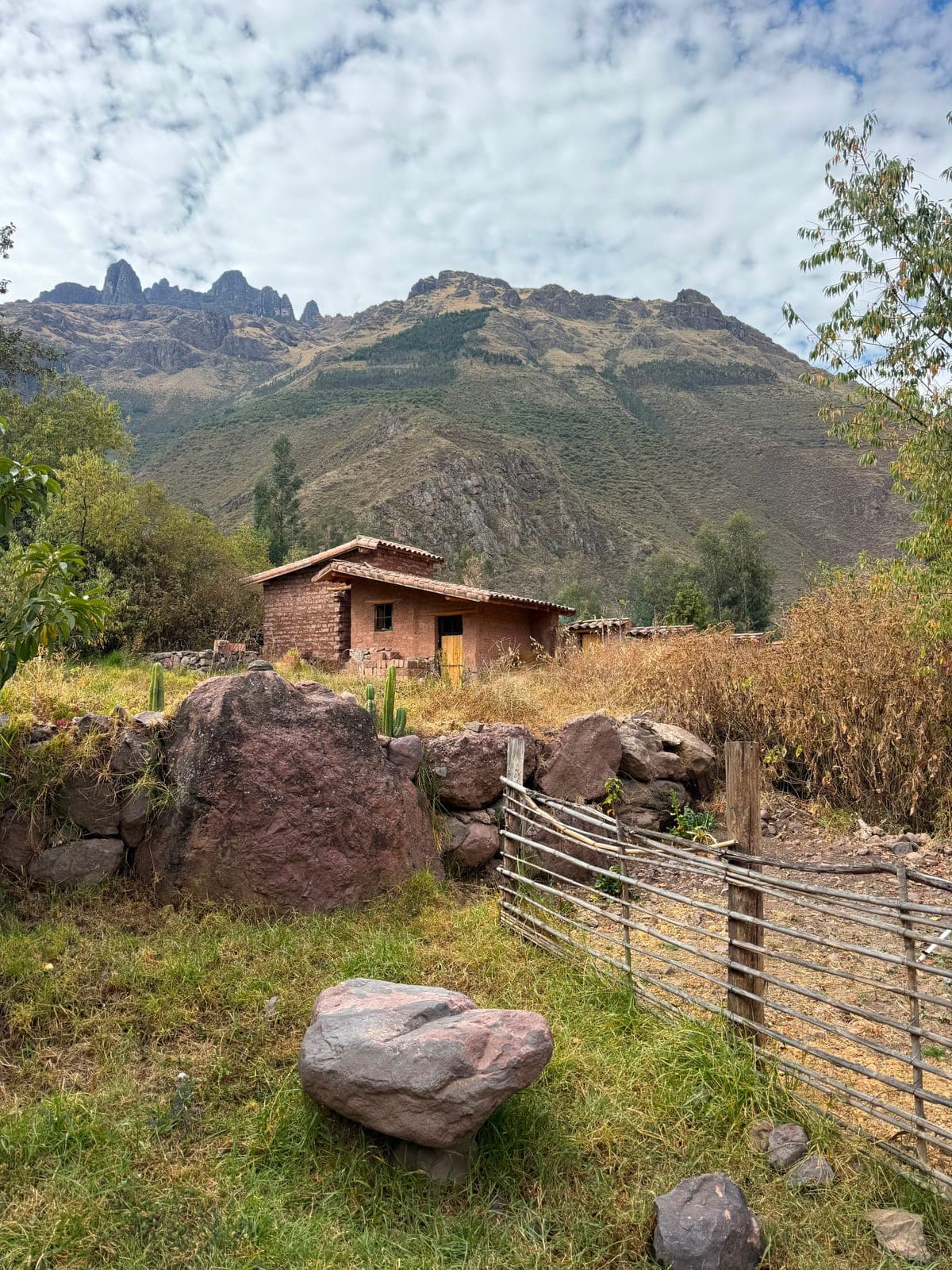
I walked up to where the sweat lodge was, and found about five other people sitting and standing around. My first thought was, are they going to look at me strange? Then I realised that they weren’t.
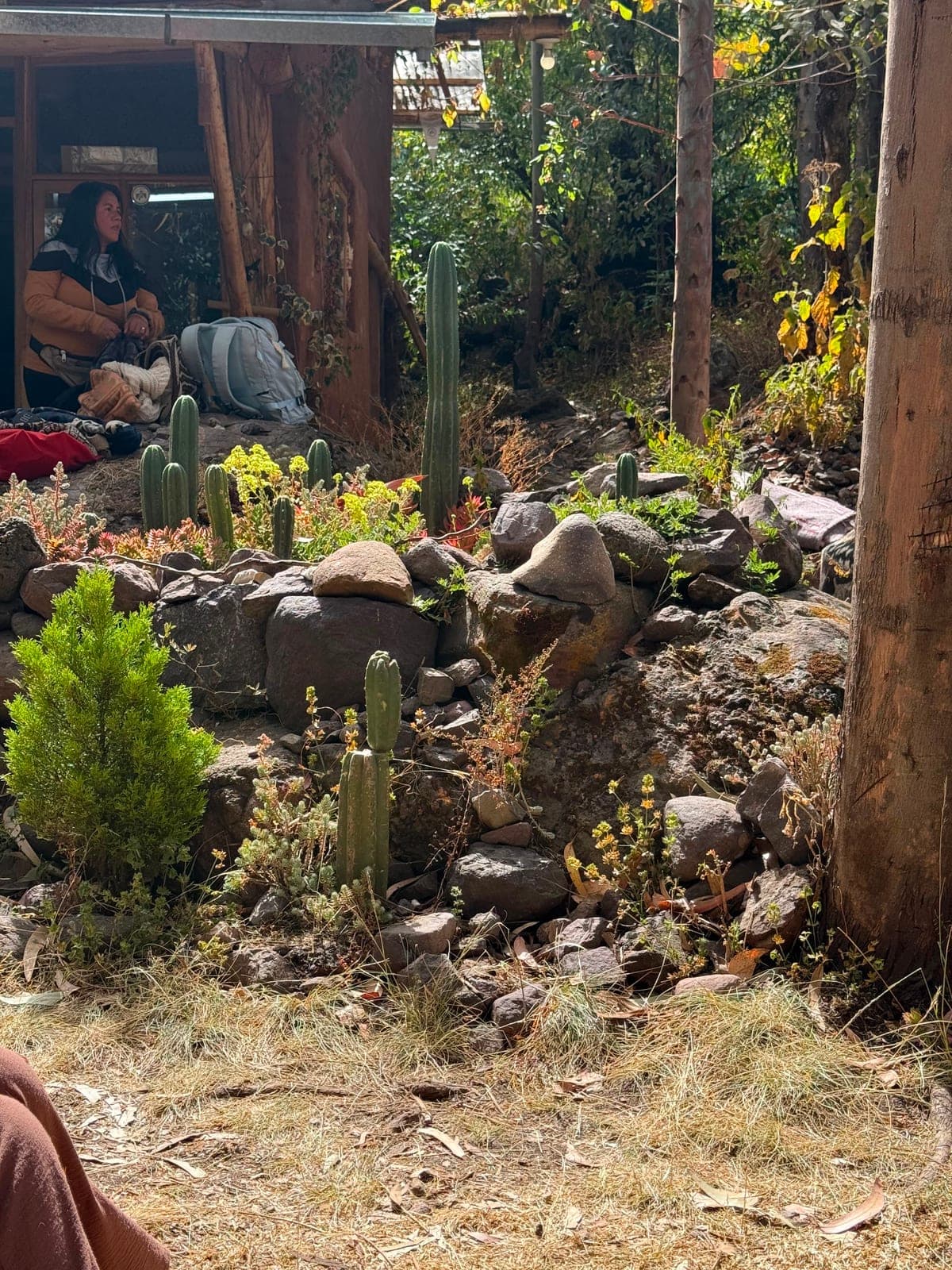
Sometimes by default, when I am around a group of people I pause for a moment to inspect the temperature, and when I say temperature, I mean what are their preconceived notions about me. Sometimes I’m right, sometimes I’m wrong, sometimes it can be a crutch of mine.
I started to examine every individual that was near me, and what I experienced and felt were some of the most enlightened, hospitable and authentic people I’ve ever met in my life.
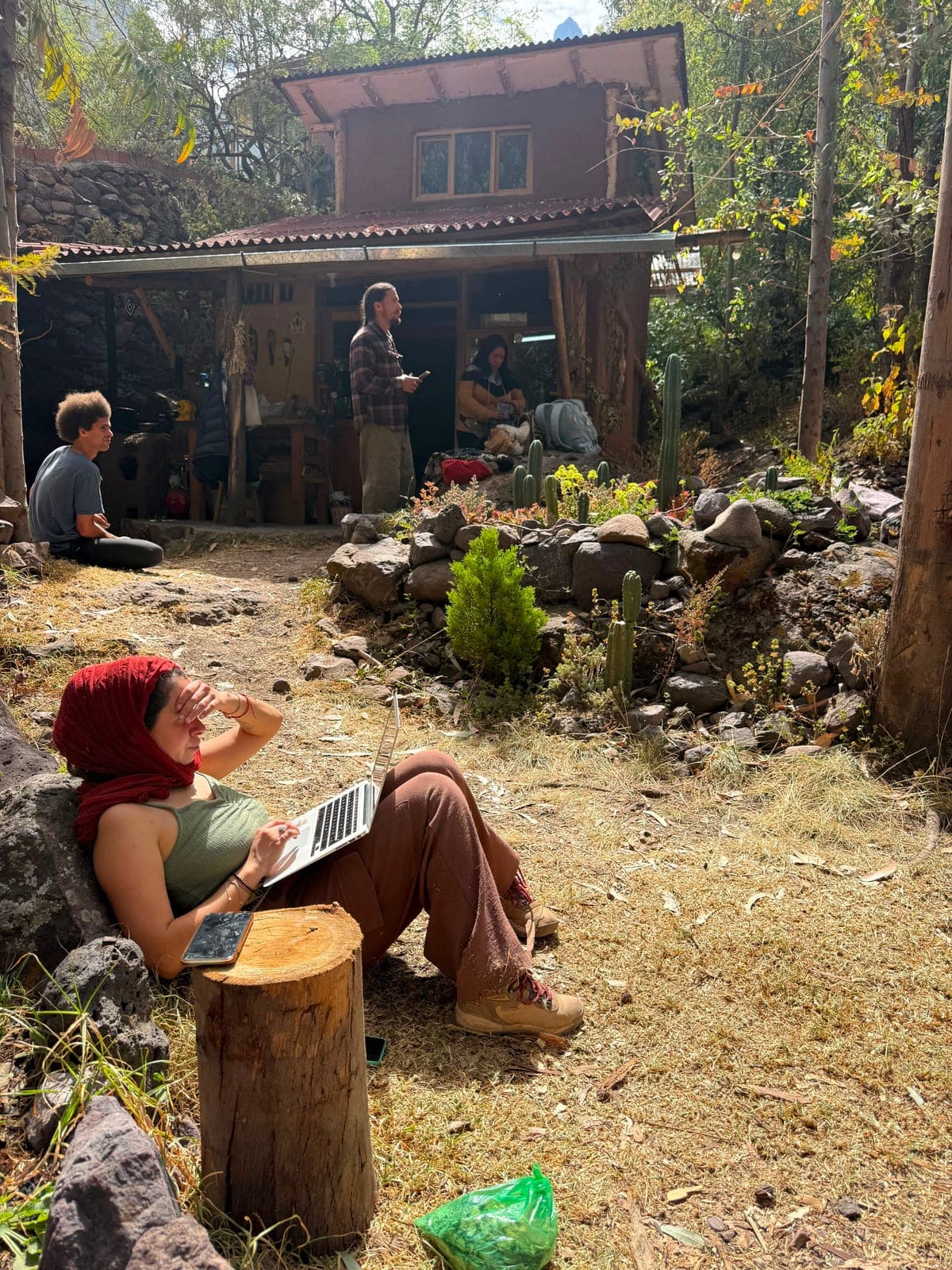
I found myself watching them talk to each other in Spanish, especially Adrian and Omar as they would converse. I found myself watching their facial movements, watching their hand gestures, and their eye contact, their dark hair and olive complexion, completely blowing away every paradigm in my head as they were speaking.
I’ve traveled enough to know that places are beautiful.
But people are what stay with you.
From the moment I arrived, everyone welcomed me as though I’d been part of the circle all along.
The two women, Carol and Fran, made me feel accepted. Adrián carried himself with a calm confidence that can only come from experience. He had spent years learning Lakota traditions in the United States before eventually making Peru home. Throughout the ceremony he led traditional Sundance songs, which he had learned from his grandfather who adopted him at a young age, that seemed to come from somewhere much older than himself.
There was EZ.
He had a huge, beautiful afro, large soft eyes, impossibly long eyelashes, and one of the gentlest presences I’ve ever encountered.
Watching him meditate was like watching someone who had completely made peace with himself and the world.
It was impossible not to feel calmer simply standing nearby.
Within minutes I felt like I belonged.
The Sweat Lodge
The sweat lodge itself was unlike anything I had ever experienced.
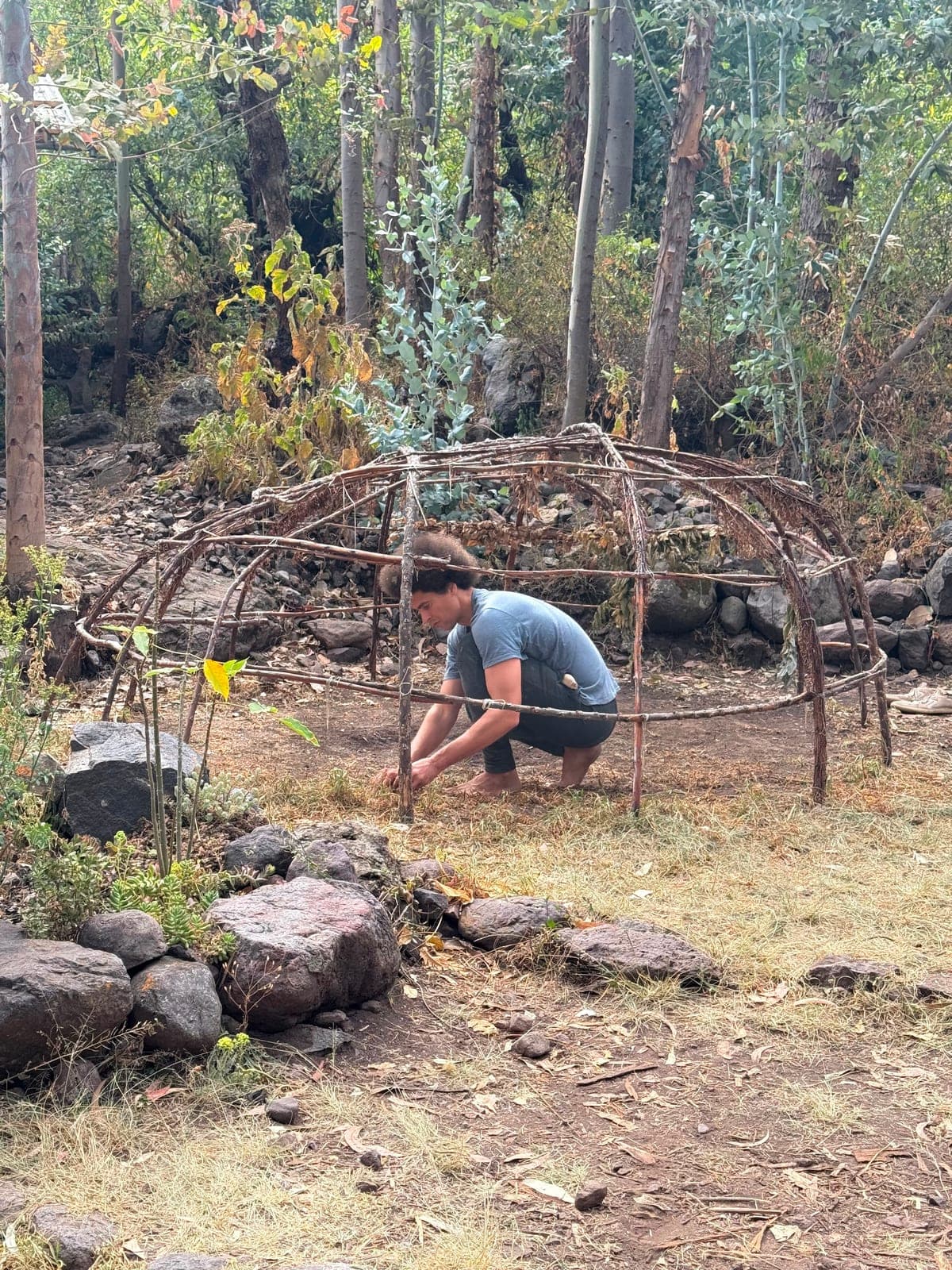
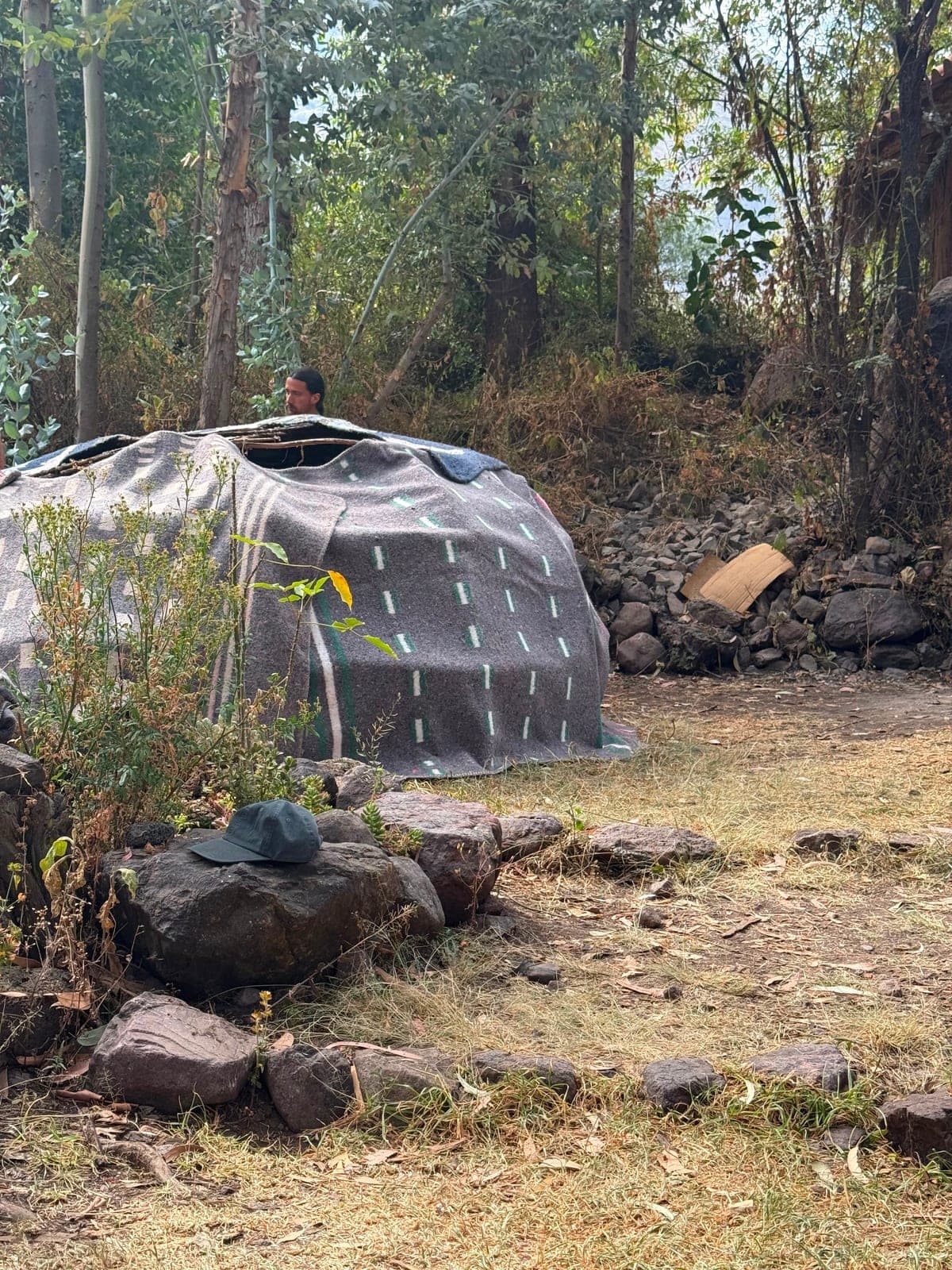
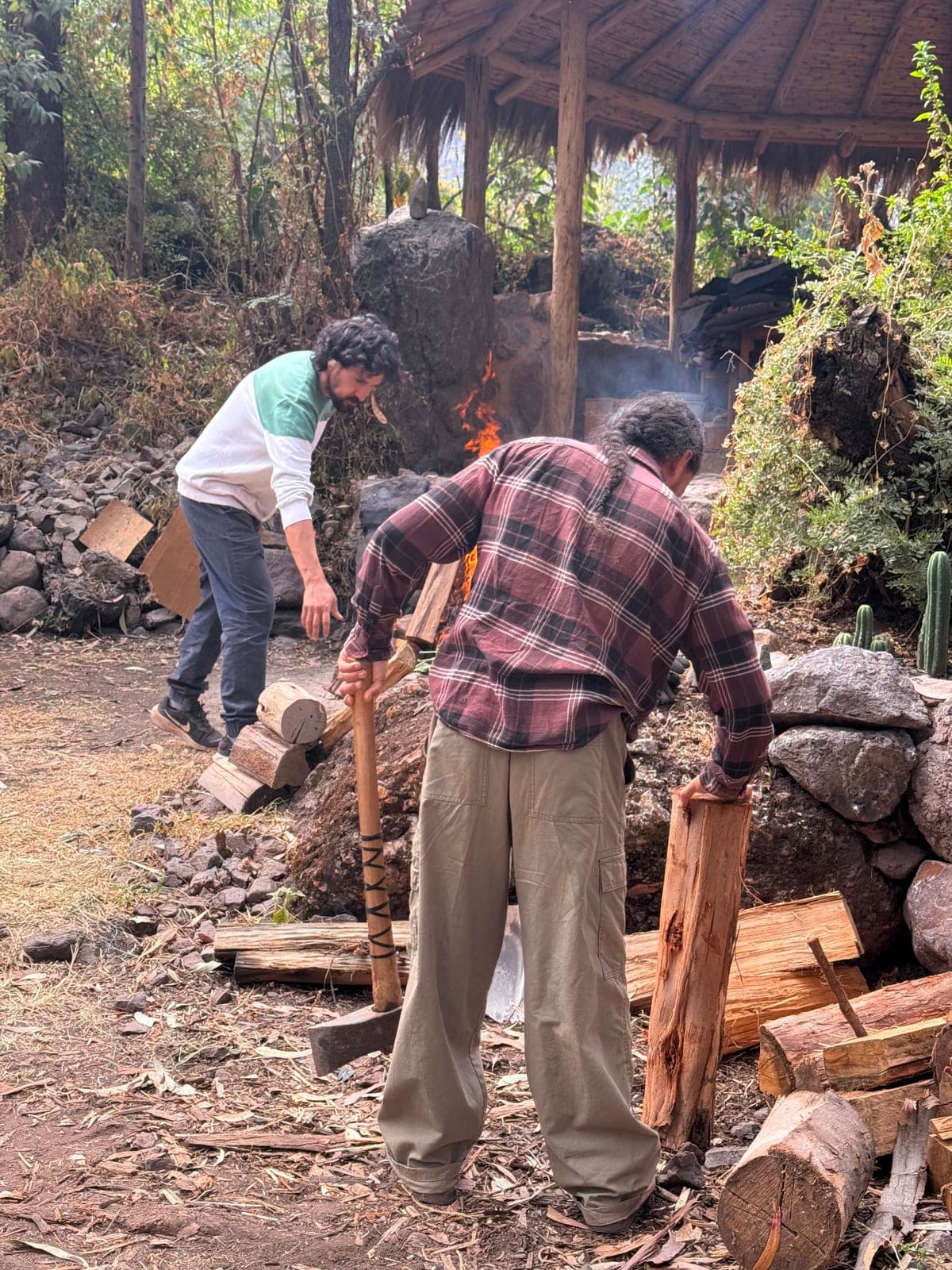
The lodge was covered with heavy natural blankets to hold the heat inside. Stones were heated in a fire until they glowed before being carried into the center of the lodge.
They offered us tobacco resin and cacao leaves to put in our gums before the ceremony. I’ve never done drugs or any mind altering meds, so I was a little wary but I knew that natural tobacco and natural cacao leaves were beneficial.
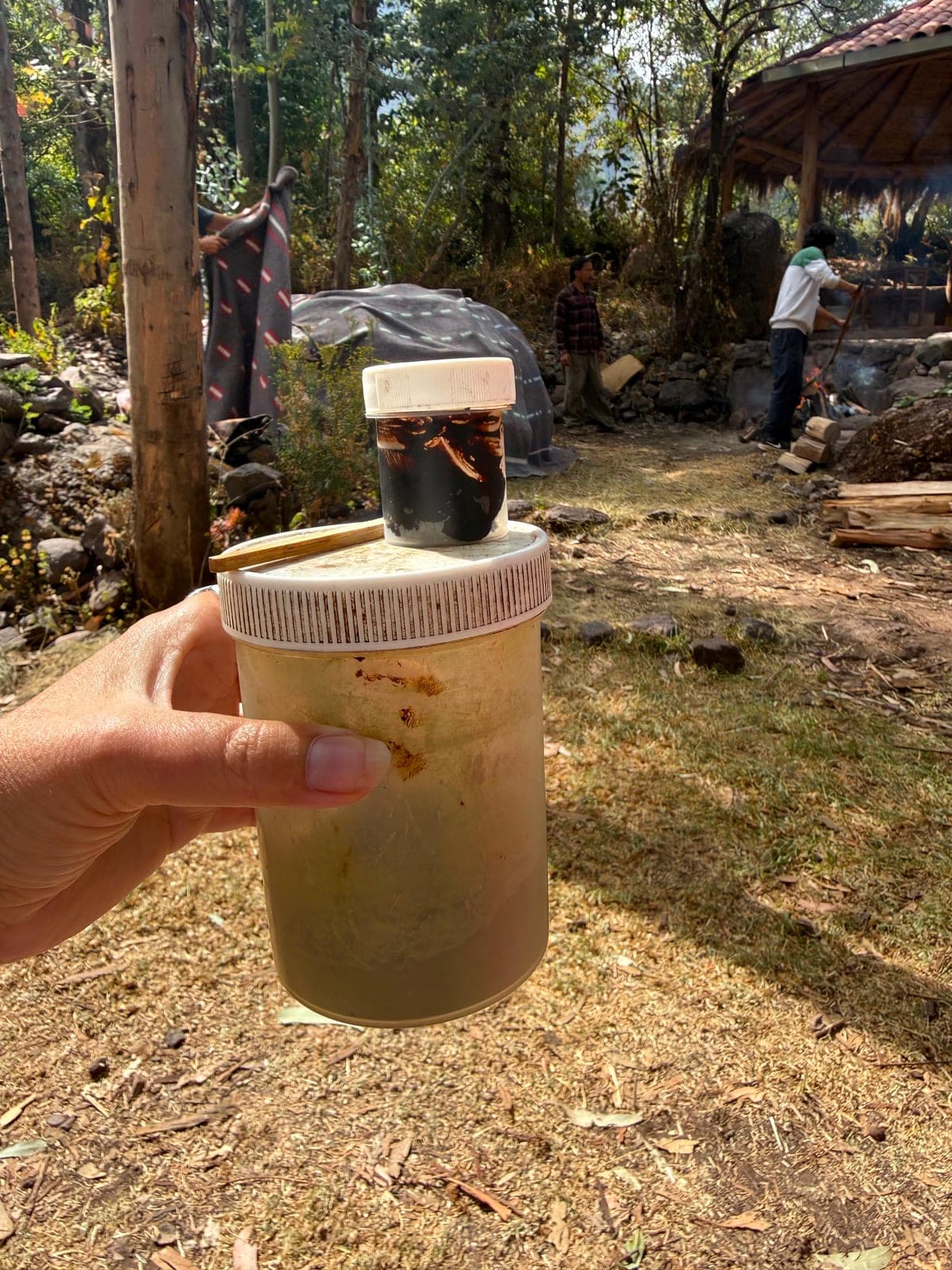
I noticed my gum getting a little numb from the cacao leaves.
We entered quietly. The women first.
The door closed behind us. Darkness. Like a womb.
Songs. Prayers.
Steam rising from water poured onto the glowing stones. In the darkness as the water splashed on the stones, the water also splashed on our bodies and it felt like we were swishing around in a womb.
Each wave of heat felt as though there were flames going at my nostrils it was so hot.
The ceremony moved in rounds. The door would open. Fresh air.
Then close again.
More songs. More silence. More reflection.
Time seemed to disappear.
When we finally crawled outside, the cool air felt entirely new.
We rinsed off with a garden hose, before sitting down to fresh watermelon, mango, and other fruit that had been lovingly prepared for us.
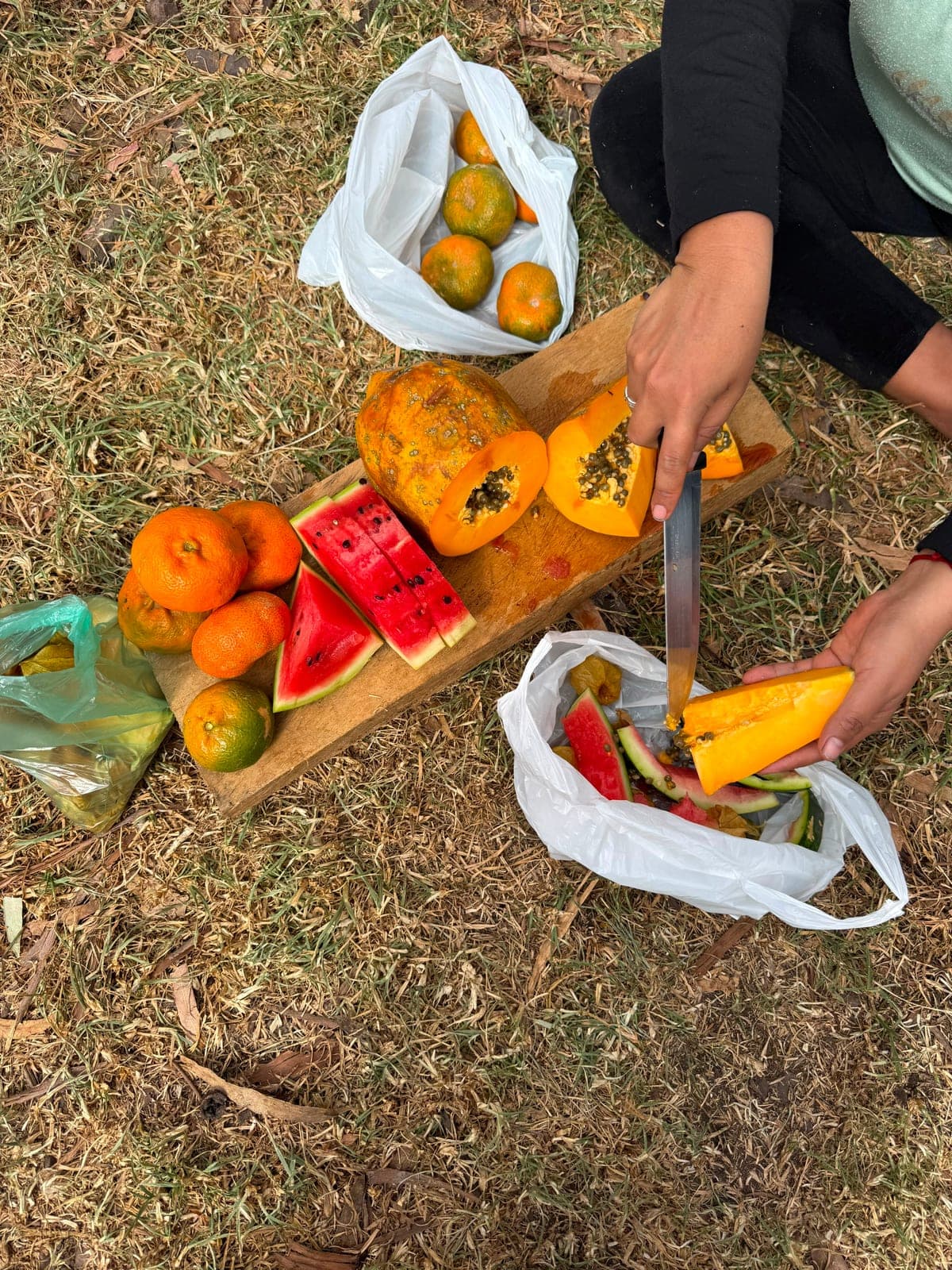
Simple. Sometimes those become the memories that last forever.
I walked over to Adrian to say goodbye. I looked in his eyes and I noticed how honey colored his eyes were, almost like a desert sun. The eyes are what I connect to. I gave him a hug as if I didn’t want to ever let go.
Then EZ walked up with his gigantic angel eyes, beautiful fro and calm presence and says thank you for coming. The amount of wisdom in each of their eyes was breathtaking. It’s like they were talking to my soul… it makes me emotional when I think about it.
We walk away and I can honestly say it was the best part of my trip.
What I Think About When I Think About Peru
When I think about Peru now, people assume I immediately think about Machu Picchu.
I don’t.
I think about walking across the road. I think about a bamboo flute wrapped in red cord.
A wandering kitten.
A small piece of sacred wood.
Honey-colored eyes.
Traditional Lakota Sundance songs echoing inside a dark lodge.
And a group of strangers who somehow felt like old friends.
Those few days reminded me that the most meaningful parts of travel are almost never the famous landmarks.
They’re the people who quietly change something inside you before you even realize it has happened.
Looking back, I don’t think I found Omar.
I think the journey found me.